
Meet the Strelitzia juncea, a plant that's more like a piece of living sculpture than your average houseplant. Often called the Leafless or Rush-Leaved Bird of Paradise, this architectural wonder is known for its stark, minimalist form.
Unlike its more famous, leafy cousins, the juncea features a tight clump of upright, reed-like stems. This creates a stunning vertical silhouette, making it a seriously sought-after statement piece for modern Kiwi homes and gardens.
The Modern Design Choice
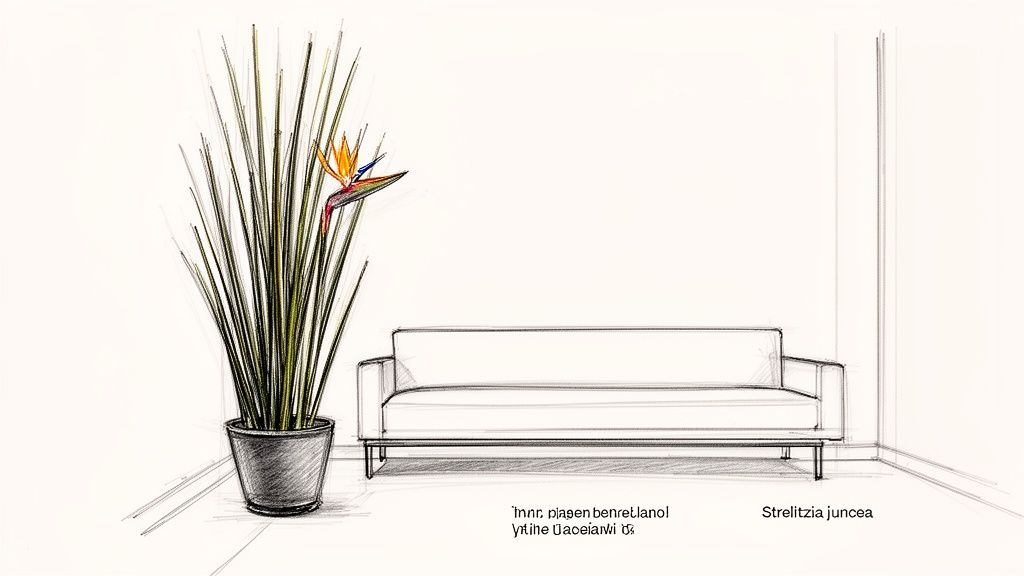
Imagine combining the drama of a tropical flower with the clean, sharp lines of contemporary sculpture. That’s the Strelitzia juncea in a nutshell. Originally from the Eastern Cape of South Africa, it’s found a happy second home here in New Zealand, where its unique look fits perfectly with our design aesthetic. Its form is a masterclass in elegant simplicity: a cluster of grey-green, spear-like stalks standing tall and proud.
But don't let its refined appearance fool you. This plant is tough. It’s built to handle dry spells, making it a fantastic choice for busy Kiwis or anyone wanting a more water-wise garden. The fact that it looks just as good indoors as a feature plant as it does out on a sunny, sheltered deck makes it incredibly versatile.
Why Is It a Kiwi Favourite?
It's no surprise the Strelitzia juncea has become so popular lately. Its sleek profile and easy-going nature have turned it into a must-have for plant lovers. It's more than just a plant; it’s a piece of art that brings a touch of exotic elegance to a room without making it feel cluttered.
The appeal is obvious when you look at its best features:
- Unique Form: Those leafless stems create a strong vertical line that naturally draws your eye upward.
- Stunning Flowers: It still produces the iconic bird-like orange and blue flowers—a spectacular pop of colour against its minimalist stems.
- Hardy Nature: It’s drought-tolerant and can handle a range of conditions once it gets settled in.
- Versatile Use: It shines in pots indoors, on decks, or planted in garden beds to add structure and height.
The rise of Strelitzia juncea in New Zealand is a testament to its perfect fit for our lifestyle. Its architectural form offers a strong design statement, while its resilience suits our often-unpredictable climate, making it both beautiful and practical.
This plant’s clean silhouette has made it a darling of interior designers and landscape architects. In fact, demand from indoor plant collectors and gift-givers has seen a massive 150% growth between 2010 and 2025. Specimens reaching 1.5-1.8m are especially popular, a perfect height for space-conscious urban dwellers in cities like Hamilton and Tauranga.
Whether you're already a fan of its leafy relatives or are new to the Strelitzia family, this guide will walk you through everything. And if you're curious about its more common cousin, our guide on the classic Bird of Paradise plant is a great place to start. Let’s dive into how you can identify, care for, and style your very own Strelitzia juncea.
How to Identify Strelitzia Juncea
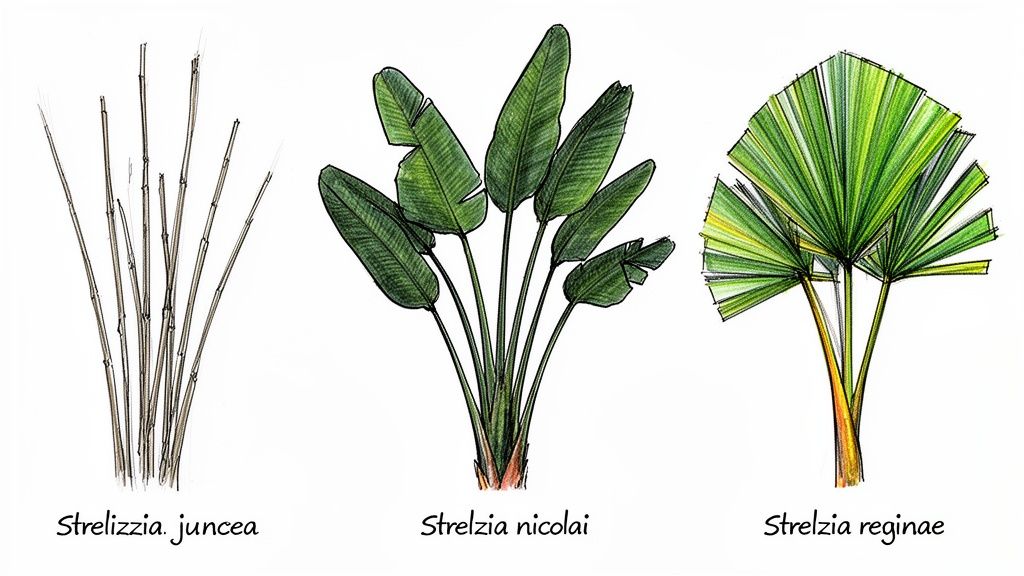
At first glance, telling the different Bird of Paradise varieties apart can feel a bit tricky. But once you know what to look for, Strelitzia juncea has some dead giveaways. Its defining feature, and the one that really makes it a showstopper, is its striking cluster of upright, leafless stalks.
These smooth, grey-green stems look more like elegant reeds than your typical tropical foliage. They shoot up from the base in a tight clump, creating a strong vertical accent that’s both sculptural and architectural. This incredible leafless form is what truly sets Strelitzia juncea apart from its relatives.
Spotting The Difference
The quickest way to confirm you’ve got a Strelitzia juncea is to compare it to its popular cousins, Strelitzia nicolai and Strelitzia reginae. The difference in the leaves—or lack thereof—is immediate.
- Strelitzia juncea: This is the one with the leafless, reed-like stems. Its entire look is built around these sleek, vertical spears.
- Strelitzia reginae: The classic Orange Bird of Paradise. You'll know it by its long-stalked, paddle-shaped leaves. They're broad and create that lush, full look everyone loves.
- Strelitzia nicolai: Often called the Giant White Bird of Paradise, this one has enormous, banana-like leaves that can form a dense, jungle-style canopy.
It's really that simple. Juncea is all about the stems, while reginae and nicolai are defined by their big, beautiful leaves.
The Curious Case of Juvenile Leaves
Now, here’s a fascinating little quirk that can throw people off. If you buy a young Strelitzia juncea, you might notice it has small, slender leaves at the tips of its stems. It's easy to second-guess what you've bought.
Don’t worry—this is completely normal. It’s just a temporary phase. As the plant matures over its first couple of years, these juvenile leaves will naturally wither and drop off. The new growth that follows will be the signature leafless stalks the plant is famous for. It's all part of its journey to adulthood.
Strelitzia Species Comparison Guide
To make things crystal clear, here’s a quick breakdown of the main differences between the three Strelitzia species you’re most likely to come across here in New Zealand. This should help you know exactly what you're looking at, whether you're at a garden centre or admiring a friend's collection.
| Feature | Strelitzia Juncea (Leafless) | Strelitzia Reginae (Common) | Strelitzia Nicolai (Giant White) |
|---|---|---|---|
| Primary Foliage | Upright, reed-like, leafless stems. | Broad, paddle-shaped green leaves on long stalks. | Very large, banana-like leaves that can tatter. |
| Typical Height | 1.2 – 2 metres. | 1 – 1.5 metres. | Can reach over 6 metres tall. |
| Flower Colour | Classic orange and blue. | Classic orange and blue. | Striking white and deep blue-purple. |
| Overall Form | A tight, vertical clump of slender stems. | A dense, spreading clump of broad leaves. | A tall, tree-like form with a trunk. |
Knowing these differences isn’t just about getting the right plant for your space; it’s about giving it the right care. Each has slightly different needs, especially when it comes to size and light, so confident identification is always the first step to success.
Your Strelitzia Juncea Care Guide for NZ Climates
Now that you can confidently pick a Strelitzia juncea out of a lineup, let’s get into how to care for it. It has a well-earned reputation for being tough, but getting to know its core needs—especially within our unique New Zealand climate—is how you unlock its full, stunning potential.
Getting these fundamentals right from the start sets your plant up for a long, healthy life. Whether it’s destined for a sun-drenched spot on your deck or as a showstopper in your living room, these are the pillars of its care. We’ll start with the most important one: light.
Finding the Perfect Amount of Light
Think of Strelitzia juncea as a total sun worshipper. In its native South Africa, it basks in open, sun-drenched landscapes. The closer you can get to replicating this, the faster you’ll see strong growth and, hopefully, those iconic bird-like flowers.
Planted outdoors in New Zealand, a spot that gets at least six hours of direct sun is perfect. It’s a brilliant choice for coastal gardens in places like the Bay of Plenty or Nelson, where it can handle the bright light and a bit of wind without fuss.
Indoors, your mission is to find the brightest light you possibly can. A position right beside a north-facing window is the absolute ideal. If you only have east or west-facing windows, that’s okay too—it will still get a solid few hours of direct sun each day. A lack of light is the number one reason an indoor juncea fails to thrive.
The Critical Role of Soil and Drainage
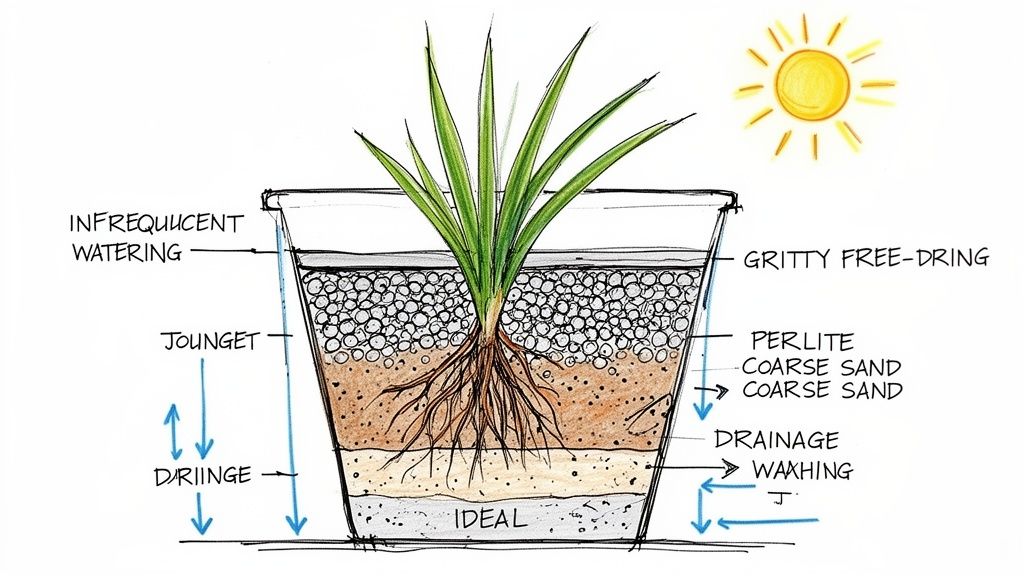
If light is the plant's fuel, then well-draining soil is its life support. Honestly, this is the single most important part of keeping a Strelitzia juncea happy. These plants absolutely hate having "wet feet" and are prone to root rot if their soil stays soggy—a real risk during our damp Kiwi winters.
Think of the soil as a filter, not a sponge. It needs to let water pass through easily, holding on to just enough moisture for the roots to drink. Your standard potting mix is often too heavy and dense on its own.
The secret to a happy Strelitzia juncea is drainage, drainage, and more drainage. Getting the soil mix right prevents the most common care mistake—root rot from waterlogged soil—and ensures your plant has a solid foundation for healthy growth.
To create the perfect blend, you need to add things that create air pockets and help water escape. Here’s a simple recipe for success:
- 50% High-Quality Potting Mix: This provides the basic nutrients and structure.
- 30% Pumice or Perlite: These lightweight volcanic rocks are non-negotiable for creating aeration and improving drainage.
- 20% Orchid Bark: This adds a chunky texture, which stops the soil from compacting and holding on to too much water.
This kind of gritty, free-draining mix is a great imitation of the sandy, rocky soils it's used to, setting your Strelitzia juncea up for a great start.
Mastering the Art of Watering
When it comes to watering your Strelitzia juncea, it’s better to think of it as a succulent rather than a thirsty tropical. It has thick, fleshy roots (called rhizomes) that are brilliant at storing water, which makes it incredibly drought-tolerant once it’s established. Overwatering is a far bigger risk than underwatering.
The golden rule is to let the soil dry out completely between waterings. The easiest way to check is to stick your finger about 5-7 cm into the soil. If you feel any dampness at all, hold off.
During the warmer months from spring through autumn, you might find yourself watering every one to two weeks, depending on the heat and sun. But in winter, when growth slows right down, you need to reduce watering drastically. For an indoor plant, this might mean watering only once a month, or even less.
Did you know Strelitzia juncea has carved out a niche in NZ gardens despite hailing from South Africa? Its adaptability is remarkable. Over 70% of Kiwi gardeners surveyed found it thrived in full-sun spots with sandy, free-draining soils—perfect for a windy Wellington exposure or a sunny Christchurch backyard. You can find more insights on how Kiwi gardeners are succeeding with this plant on Houzz.co.nz.
A Simple Feeding Schedule for NZ Seasons
To encourage strong growth and those spectacular flowers, a bit of fertiliser helps. But timing is everything, especially down here in the Southern Hemisphere.
- Growing Season (Spring and Summer): From about September to March, feed your plant every four to six weeks. A balanced liquid fertiliser diluted to half-strength is perfect.
- Dormant Season (Autumn and Winter): From April to August, stop feeding completely. The plant is resting, and adding fertiliser now can burn the roots.
This simple routine provides nutrients when the plant is actively growing and lets it rest during the cooler months, just like it would in nature. And while the classic orange flower is iconic, have you seen the yellow variety? If you're curious, check out our guide on the rare and beautiful Strelitzia Mandela's Gold.
Propagating and Repotting Your Plant
One of the best parts of growing a happy, healthy Strelitzia juncea is turning one plant into many. Propagation is a fantastic way to fill your home with more of these beauties or share them with friends, and for this species, division is the simplest and most reliable method.
Because Strelitzia juncea grows from an underground rhizome, it naturally sends up new stems from its base, forming dense clumps over time. Division is simply the process of separating these clumps into smaller, independent plants that are exact copies of the parent.
The Best Time to Divide Your Plant in New Zealand
Timing is everything when it comes to a successful division. You want to avoid stressing the plant when it's in a period of active growth. For us here in New Zealand, the sweet spot is in autumn, roughly from late March through to May, just as the plant’s growth is starting to slow for winter.
Giving it the chop in autumn means the new divisions have the whole cooler season to recover from the shock. They can focus on establishing their roots without the pressure of pushing out new growth. Come spring, they’ll be settled in and ready for a fresh burst of growth.
A Step-By-Step Guide to Division
Dividing a Strelitzia juncea might sound intimidating, but it's a straightforward job. Just be ready to put a bit of muscle into it – those mature rhizomes can be surprisingly tough.
- Get the plant out: Gently slide the entire plant out of its pot. If it’s in the garden, you’ll need to dig around the clump to lift the whole root ball.
- Clean the roots: Shake off the old soil and give the roots a rinse. This helps you get a clear look at the rhizome and see the natural separation points.
- Find your divisions: Look for clusters of stems that already have a decent set of roots attached. To give it the best chance, make sure each new piece has at least three to four upright stems.
- Make the cut: With a sharp, sterilised knife (or even a small saw for very tough rhizomes), make a clean, firm cut to separate the sections.
- Pot them up: Plant each new division in its own pot with fresh, well-draining potting mix. Choose a pot that’s just big enough to comfortably fit the new root system.
After potting, give them a light watering and find them a spot with bright, indirect light to recover. Hold off on any direct sun or fertiliser for at least a month to let them settle in.
Knowing When It's Time to Repot
Repotting is another crucial part of keeping your plant happy long-term. Strelitzia juncea actually quite likes being a little snug in its pot, which can even encourage it to flower. But eventually, every plant needs a bigger home.
Keep an eye out for these tell-tale signs:
- Roots are sneaking out of the drainage holes.
- The plant is literally pushing itself up and out of the pot.
- The soil dries out incredibly fast, even just a day or two after watering.
- Growth seems to have stalled during the warmer months.
When you see this happening, it’s time to act. Go for a new pot that is only 5-10 cm wider than the current one. A pot that’s too big can hold excess water, creating soggy soil and leading to root rot.
When you do repot, always start with a fresh, quality mix. Old soil gets compacted and loses its nutrients over time, which suffocates the roots and stops water from draining properly—two things a Strelitzia juncea absolutely hates.
Even the toughest plants can have an off day, and the architectural Strelitzia juncea is no exception. Think of this as your plant's first-aid guide, helping you spot and sort out common issues before they become a real headache.
The great news is that most problems are simple fixes once you know what to look for. From funny-looking spots on the stems to a flat-out refusal to flower, your juncea is always trying to tell you something. Let's learn its language.
Identifying and Treating Common Pests
While generally a pest-free plant, your Strelitzia juncea can sometimes attract a few unwelcome visitors, especially when it's living indoors without any natural predators to keep them in check. Spotting them early is the key to stopping a minor nuisance from turning into a full-blown infestation.
The two main culprits you might encounter are mealybugs and scale insects. Both are sneaky sap-suckers that will weaken your plant over time if you let them hang around.
- Mealybugs: These pests look like little bits of white fluff or cotton, often tucked away in the tight gaps where the stems meet the base. They also leave behind a sticky, clear residue called honeydew.
- Scale: These look like small, hard brown or grey lumps clinging tightly to the stems. It's easy to mistake them for a natural part of the plant.
For a small number of pests, the fix is easy. Just dip a cotton bud in a bit of rubbing alcohol and dab it directly on them – they'll come right off. If you’re dealing with a bigger crowd, a weekly spray with a gentle neem oil or insecticidal soap solution will get the job done without harming your plant.
Decoding Your Plant’s Visual Cues
Learning to read the signs your Strelitzia juncea is giving you is the best skill you can have. Its stems will tell you everything you need to know.
Yellowing Stems This almost always points to one thing: overwatering. A juncea has thick, fleshy roots that are prone to rot if left sitting in soggy soil. If you spot yellowing stems, hold off on the water immediately. Don't even think about watering again until you've checked that the soil is completely dry. In a cool, damp Kiwi winter, that could easily mean a month or more between drinks.
Brown, Crispy Tips Crispy brown tips can mean a couple of different things. It might be underwatering, where the plant has gone bone-dry for too long. But it can also signal low humidity, or even a build-up of salts in the soil from our tap water. Start by giving it a really good, deep watering (letting all the excess drain away freely) and see how the new growth looks.
One of the biggest frustrations for growers is having a perfectly healthy Strelitzia juncea that just won't flower. The answer is almost always light. To push out those incredible orange and blue blooms, your plant needs at least six hours of direct sun every day. Shift it to your brightest spot, and you'll give it the best possible chance to put on a show.
Growing Strelitzia juncea here in New Zealand is a real success story, especially since it's listed as Vulnerable back in its native South Africa. Our local success is built on ethical sourcing, with 98% of vendors meeting MPI biosecurity standards since 2015. With the right care, these plants typically flower within three years, and surveys show an 88% flowering rate for those grown in full sun. They're incredibly water-wise too, needing 50% less water than a Strelitzia nicolai and breezing through the humidity drops of a classic Kiwi summer. You can explore the conservation status and plant details further at SANBI.
How To Style With Strelitzia Juncea
The Strelitzia juncea is far more than just another plant; it's a living sculpture. Its strong, vertical lines and minimalist form make it an absolute powerhouse as a design element, capable of transforming a space both inside and out. To really get the most out of it, you need to understand how to showcase its unique shape.
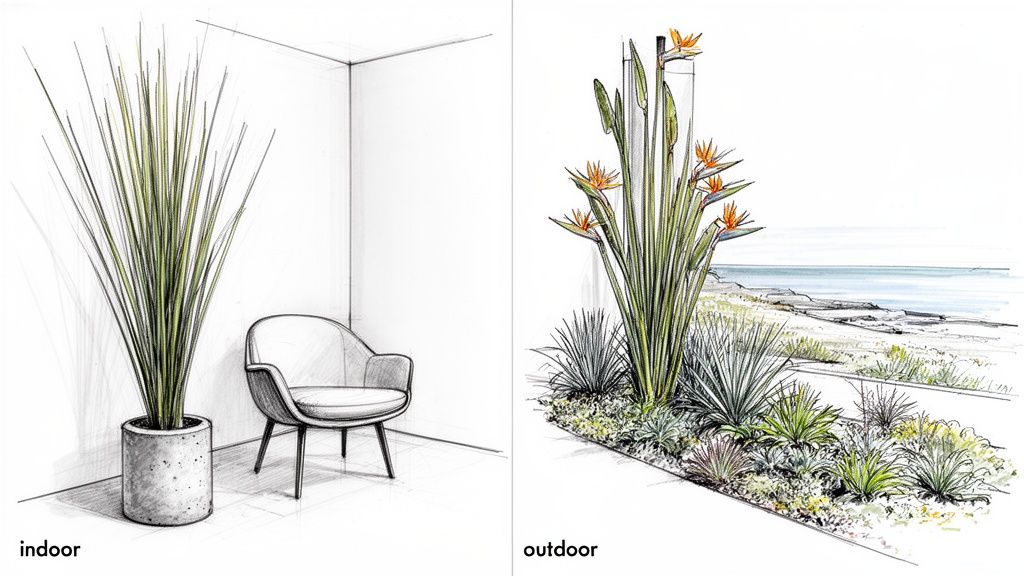
Inside the home, this plant is a natural fit for contemporary and minimalist interiors. Its clean, architectural presence brings height and a touch of drama to a room without adding any visual clutter. I like to think of it as a piece of organic art that instinctively draws your eye upward, which has the brilliant effect of making ceilings feel higher and the whole space feel more open and intentional.
Styling Your Indoor Statement Piece
The secret to styling a Strelitzia juncea indoors is simply to let its form do all the talking. You'll want to avoid fussy, ornate pots that just end up competing for attention. Instead, pick a planter that complements its sleek, modern silhouette.
Simple pots in neutral colours like charcoal, matte white, or even a classic terracotta work beautifully. A tall, cylindrical pot will really accentuate its vertical lines, while a lower, wider bowl can create a striking and unexpected contrast. The goal is to create a single, unified look where the plant and pot work together as one sculptural feature.
When styling your Strelitzia juncea, think 'less is more'. Place it where its striking silhouette can be appreciated against a plain wall or in an uncluttered corner. Its minimalist elegance is best celebrated with simplicity.
If you're looking to integrate your juncea into a more sophisticated living space, you can find a wealth of inspiration by looking into high-end interior design principles. Understanding these concepts will help you position your plant for maximum visual impact, turning it into a true centrepiece of your home's design.
Landscaping With Architectural Flair in NZ Gardens
Outdoors, Strelitzia juncea brings year-round structure and an exotic vibe to Kiwi gardens. Its resilience and striking form make it an incredibly versatile landscaping tool, perfect for adding that much-needed height and texture to mixed plantings.
Its drought tolerance makes it a star player in water-wise gardens. Just picture it alongside other tough, sun-loving plants like succulents, agaves, or ornamental grasses. That kind of combination creates a visually interesting garden that can easily handle the hot, dry summers we get in regions like Hawke's Bay or Marlborough.
The plant's strong, reed-like stems also provide an excellent contrast to softer, mounding plants. For a dynamic Kiwi garden, consider these pairings:
- Coastal Gardens: Its ability to handle salt spray and wind makes it a fantastic choice for coastal properties. Plant it alongside native New Zealand flaxes (Harakeke) and coastal daisies for a tough, beautiful, and distinctly local look.
- Modern Landscapes: Use it to create clean, sharp lines along a pathway or as a bold focal point in a gravel garden. Its upright habit provides structure that lasts all year, even when other plants have died back for winter.
- Tropical Schemes: In warmer parts of the country like Northland, group it with other bold foliage plants like canna lilies or clivia for a lush, subtropical feel. The juncea's vertical form will cut right through the broad leaves, adding a whole new layer of architectural interest.
Your Strelitzia Juncea Questions Answered
We get asked a lot about the incredible Strelitzia juncea, especially from Kiwis trying to get the best out of their plant. I've pulled together the most common questions we hear at the nursery, so you can get quick, straight-to-the-point answers and help your plant thrive.
Let's dive into everything from flowering times in our unique climate to pet safety and whether you can risk planting one down south.
When Will My Strelitzia Juncea Flower in New Zealand?
This is where a bit of patience comes in handy. A young Strelitzia juncea you pick up from a nursery usually needs about three to four years to get settled and mature enough to start producing those iconic, bird-like flowers.
If you want to hurry things along, the absolute biggest factor is light. An outdoor plant soaking up the sun will almost always flower more reliably than an indoor one. Make sure it’s getting plenty of direct sun, especially during our long spring and summer days.
Is This Plant Toxic to Pets?
Yes, this is definitely one to be careful with. Strelitzia juncea is considered mildly toxic to both cats and dogs if they decide to have a chew. Ingesting the stems or flowers can cause some mild tummy troubles, like drooling, vomiting, or diarrhoea.
It’s not generally life-threatening, but it's always best to be safe and pop the plant somewhere your curious pets can't reach. If you think your furry friend has had a nibble, it's always a good idea to ring your vet for advice.
One of the most common troubleshooting questions we receive is about drooping stems. More often than not, this is your plant's way of telling you it's either thirsty or not getting enough bright, direct light to keep its stems strong and upright.
Can I Grow It Outside in the South Island?
You absolutely can, but you'll need to be a bit strategic in the colder spots. Once it's established, Strelitzia juncea is surprisingly tough and can handle a light frost. This makes it a great candidate for many South Island gardens, especially in milder coastal areas like Nelson or parts of Canterbury.
The key is protecting it from heavy or long-lasting frosts. If you live somewhere with properly harsh winters, like Central Otago or inland Southland, your best bet is to grow it in a large pot. That way, you can easily shift it onto a covered deck or even bring it indoors during the coldest snaps to avoid frost damage.
Why Are the Stems Bending or Drooping?
Drooping stems are a classic sign that your Strelitzia juncea is trying to tell you something isn't quite right. It nearly always comes down to one of two things.
The first and most common culprit is a lack of light. Without enough bright, direct sun, the stems just don't develop the strength to hold themselves up, and they'll start to bend over.
The second reason is simply improper watering. If the soil is bone dry, the stems will droop from dehydration. Give it a really deep drink, letting water run right through the drainage holes, and you should see it perk back up within a day or so.
Ready to add this architectural masterpiece to your collection? At Jungle Story, we connect you with New Zealand's best growers to deliver healthy, beautiful plants right to your door. Find your perfect Strelitzia juncea today!