
When it comes to planting tomatoes in New Zealand, the old wisdom of waiting for Labour Weekend is a great starting point, but it's not the whole story. The real secret to a bumper crop lies in tuning into your local climate. A planting schedule for subtropical Northland will look completely different to one for the chilly depths of the South Island.
Your Guide to Tomato Planting Times Across New Zealand
Pinpointing that perfect moment to get your tomatoes in the ground is far less about a specific date on the calendar and much more about your region's unique weather patterns. New Zealand's geography is so diverse that a one-size-fits-all approach just won't cut it. A gardener in Auckland could be tucking seedlings into the ground while someone in Invercargill is still patiently waiting for the soil to warm up.
This is where local knowledge becomes your greatest asset. In the balmy, subtropical north, some gardeners can get away with planting as early as September. But if you're in a central region like Hawke's Bay, it pays to wait until at least mid-October to dodge those sneaky late spring frosts.
Further down, around Wellington, that window shrinks to late October through December. And for much of the South Island, you might not even think about planting until November or even early January. For a deeper dive into these regional differences, The Greenhouse Co's detailed guide is an excellent resource.
To make things a bit easier, here’s a quick-glance guide to help you plan your tomato season.
Quick Guide to Regional Tomato Planting Times in NZ
Think of the following table as your cheat sheet for getting your timing right. It breaks down the ideal windows for planting tomato seedlings outdoors across the motu.
| Region | Ideal Planting Window | Key Considerations |
|---|---|---|
| Northland & Auckland | Early September – November | Subtropical climate allows for a very early start and an extended growing season. |
| Waikato & Bay of Plenty | Mid-October – Early December | Wait for the risk of surprise spring frosts to pass completely before planting out. |
| Wellington & Lower NI | Late October – December | Cooler springs mean patience is key; ensure soil has warmed sufficiently. |
| Nelson & Marlborough | Mid-October – December | These sunny regions have a favourable window, similar to the central North Island. |
| Canterbury & Otago | Early November – Early January | A much later start is crucial to avoid frost damage to young, vulnerable plants. |
Remember, these are guidelines, not hard-and-fast rules. Always keep an eye on the long-range forecast and trust your instincts—if the soil still feels cold to the touch, it’s worth waiting another week or two.
Reading the Signs: Soil Temperature and Frost Dates
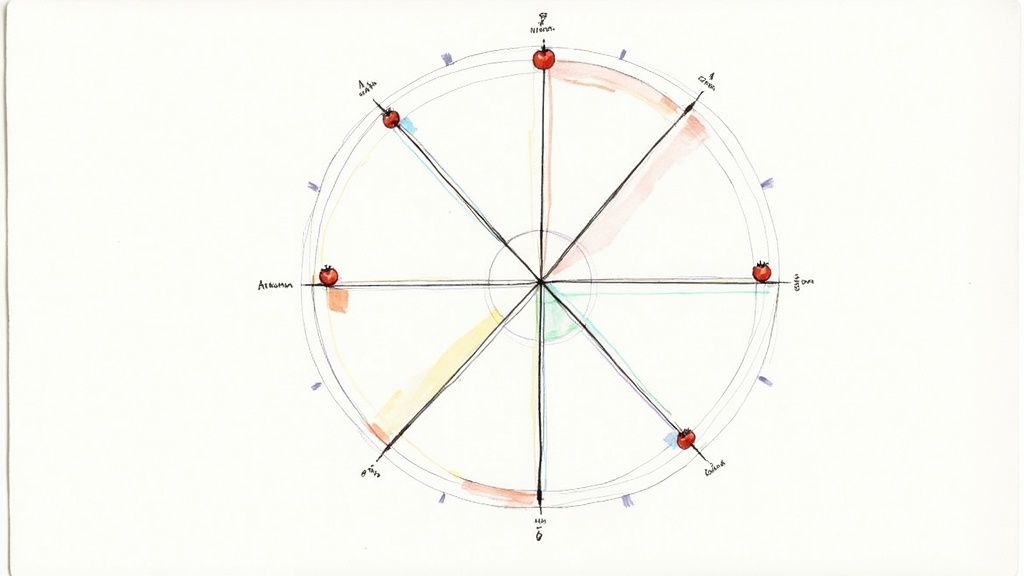
While the calendar gives us a rough idea, your garden itself holds the most honest clues for planting time. Two things trump everything else when deciding when to get your tomatoes in the ground here in New Zealand: the warmth of your soil and the date of your last expected frost. Getting these right is the difference between a plant that just survives and one that truly thrives.
Tomatoes are notoriously fussy about having cold feet. If the soil is too chilly, their roots just can't absorb water and nutrients properly. This leads to sad, stunted plants with off-coloured leaves. You're looking for a consistent soil temperature of at least 13°C, though I always feel better when it’s closer to 15°C, before even thinking about transplanting seedlings.
The easiest way to check is with a simple soil or meat thermometer. Just push it about 10-15 cm deep into the garden bed first thing in the morning—that’ll give you the most accurate reading of the day.
Navigating the Frost Risk
The other major hurdle for young tomatoes is the dreaded late frost. A single, unexpected cold snap can wipe out your entire crop overnight. Every region has a different "last frost date," which is really just the average final day you can expect a frost.
Your goal is simple: plant after this date has safely passed. A quick search for your specific town's last frost date gives you a crucial piece of the puzzle and a safe deadline to work towards.
If you find your soil is still too cool even as the frost risk fades, you can give it a helping hand to warm up a bit faster:
- Lay down black plastic: Cover the garden bed with black polythene for a week or two before planting. The dark colour does a fantastic job of absorbing the sun’s heat and transferring it right into the soil.
- Use cloches: These individual plastic covers or mini-greenhouses create a cosy, warm microclimate for each plant, protecting it from the elements.
- Build raised beds: It’s a well-known trick for a reason—raised garden beds always warm up much quicker in spring than ground-level soil.
These techniques are brilliant for giving fruiting plants like tomatoes a strong start, but they're just as effective for their companions. If you're planning a mixed garden, you might find our guide to growing https://junglestory.co.nz/blogs/plant-care/herbs useful, as many of them benefit from the very same soil preparation.
Seeds or Seedlings: Which Path is for You?
Every great tomato patch starts with a choice: do you raise your own from tiny seeds, or grab some established seedlings and get a head start? There’s no right or wrong answer, as each has its own rewards and challenges. The best option really just depends on your own gardening style, how much time you have, and what you want to get out of the season.
Sowing your own seeds opens up a whole world of unique and heirloom varieties you’ll almost never find at a garden centre. If you’re chasing unusual flavours, odd colours, or specific preserving qualities, this is definitely the way to go. You’ll want to get them started indoors about six to eight weeks before your region's last expected frost date. This gives them just enough time to grow into sturdy little plantlets, ready for the great outdoors.
Growing from seed gives you total control over your tomato's entire life. From the potting mix you choose to the final hardening off, you know your plants have had the strongest, healthiest start possible, completely free from any nursery-acquired pests.
Going the Seedling Route
On the other hand, buying seedlings is all about convenience. Life gets busy, and if spring has snuck up on you, grabbing a few healthy plants from your local nursery is a fantastic, stress-free way to get started. It's a great shortcut, especially for beginner gardeners.
When you're picking out a seedling, keep an eye out for a few tell-tale signs of a healthy plant:
- A strong, thick stem: You want something that looks robust, not spindly or weak.
- Vibrant green leaves: Steer clear of any with yellowing, spots, or curled edges.
- No signs of pests: Always have a quick peek under the leaves for any unwelcome hitchhikers.
Now for a crucial step, whether your plants are homegrown or store-bought: ‘hardening off’. This is the process of gradually getting your tender seedlings used to outdoor life—the sun, the wind, and the changing temperatures—over a week or two. Skipping this is a classic mistake that can seriously shock your plants and set their growth back by weeks.
Getting Your Tomatoes in the Ground
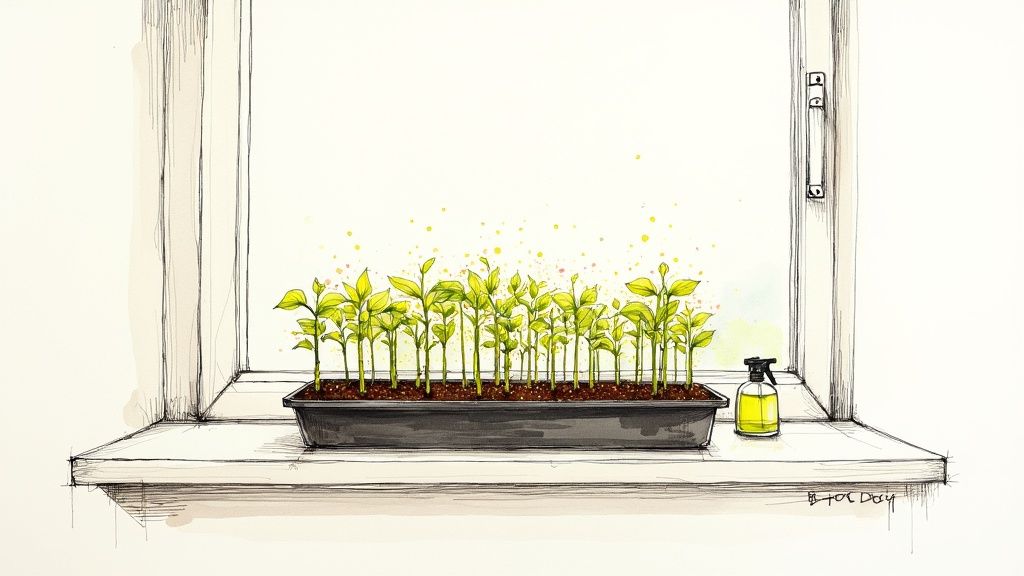
After all that prep work, planting day is a genuinely satisfying moment. This is when your hardened-off seedlings finally move into their forever home, ready for a long and fruitful season. For generations of Kiwi gardeners, this day often lands on or around Labour Weekend in late October.
This isn't just an old tradition; it's smart gardening based on our unique climate. Labour Weekend usually signals that the soil has warmed up enough and the risk of a nasty late frost has passed for most of the country. You might spot seedlings for sale in garden centres as early as August, but waiting until this benchmark gives your tomatoes the warm, welcoming start they need to really take off.
Creating the Perfect Planting Spot
To give your seedlings the best possible start, dig a hole that’s a fair bit deeper and wider than the pot they came in. Chuck a generous scoop of rich, mature compost or a handful of sheep pellets into the bottom. This creates a nutrient-rich base that encourages the roots to grow deep, searching for all that goodness.
A fantastic tip passed down through my family is to add a small handful of crushed eggshells or a pinch of Epsom salts to the bottom of the hole. The eggshells provide a slow release of calcium, which is a great trick for helping prevent blossom end rot later on.
Before you pop the plant in, gently pinch off the lowest one or two sets of leaves from the main stem. When you place the seedling in the hole, bury it deep enough so the new soil level sits just below the next set of leaves.
This is a game-changer for tomatoes. The tiny hairs on the now-buried part of the stem will actually transform into new roots, creating a much stronger, more extensive root system. A robust foundation like this makes for a healthier plant that’s far more resilient to dry spells. For a more detailed walkthrough, check out our complete article on how to grow tomatoes in New Zealand.
Finally, put your stake, cage, or other support in the ground now, right next to the seedling. If you try to do it later, you risk damaging that crucial new root system you've just worked so hard to encourage. Give the plant a good watering-in to settle the soil around the roots and get rid of any air pockets.
How Planting Time Shapes Your Tomato Harvest
Getting your planting schedule right is the secret to those overflowing baskets of ripe, juicy tomatoes later in the season. It’s not just about popping a plant in the ground; nailing the timing directly impacts how long your harvest season will be and the quality of the fruit you pick. This is the exact kind of strategic thinking that powers New Zealand's commercial tomato industry.
If your regional climate allows for it, planting as early as safely possible can give you months and months of harvesting. A gardener up in sunny Northland who gets their tomatoes in the ground in September could easily still be picking fresh fruit well into April. This long season is exactly what commercial growers aim for, ensuring a steady supply for all of us.
The Downside of a Late Start
On the other hand, planting too late can really shorten your window for beautiful, ripe fruit. Down in cooler spots like Otago or Southland, a November start is pretty standard. But if you delay until December, you might find your tomatoes are still green when those first autumn chills creep in. This forces you to pick them before they’ve had a chance to develop that incredible, sun-ripened flavour.
This connection between timing and yield is serious business. New Zealand's commercial growers, with a combined farm gate value hitting over NZD $161.6 million, meticulously plan their planting around these seasonal patterns. It's this precision that ensures fruit is ready for the main export season from October to April. If you're curious about the numbers, Tomatoes New Zealand has some fascinating industry stats.
At the end of the day, it's all about giving your plants the longest possible stretch of warmth and sunlight to do their thing. Think of planting not just as a task, but as your first strategic move for a massive harvest.
This isn't just a tomato-specific rule, either. Maximising the growing season is a key principle for most things you'll grow in the garden. If you’re thinking bigger and planning an orchard, we talk about similar timing strategies in our guide to planting fruit trees in NZ. Start thinking like a pro, and you'll be rewarded with a long and delicious tomato season.
Got a Few Tomato Troubles? Let's Sort Them Out
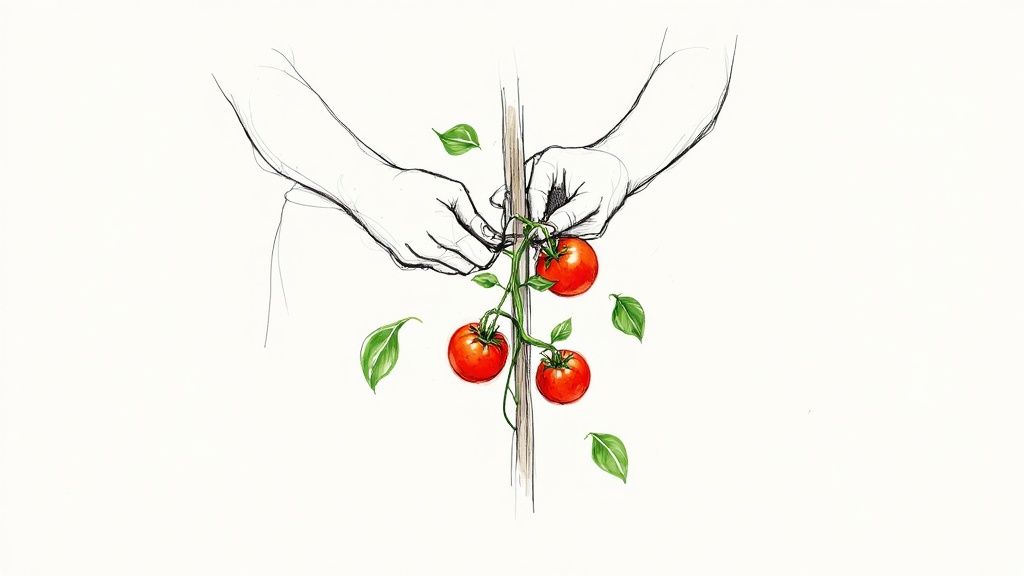
Even the most seasoned gardener runs into a few head-scratchers when it's time to get tomatoes in the ground. You’ve done your prep, but a few questions always seem to pop up. Let's dig into some of the most common queries we hear from fellow Kiwi gardeners and get you some straightforward answers.
What If I Planted Too Early and Frost is on the Way?
It’s a heart-sinking moment, isn’t it? You’ve put your precious seedlings out, and suddenly the forecast predicts a late frost. Don’t panic—you can definitely save them.
- Get them covered. A cloche, an upside-down bucket, or even some frost cloth draped over a simple frame will do the trick. The most important thing is making sure the cover doesn't actually touch the leaves.
- Tuck them in. A nice, thick layer of mulch like straw or even shredded newspaper around the base helps insulate the soil and keep the roots from freezing.
- Give them a drink. A good watering the afternoon before a frost can actually help the soil hold onto warmth overnight.
Can I Actually Grow Decent Tomatoes in Pots?
You absolutely can! Growing tomatoes in containers is a brilliant way to get a harvest even if you only have a balcony or a small patio. You can stick to the same regional planting schedule, just keep a closer eye on watering. Pots dry out way faster than a garden bed, so consistency is your best friend here.
My best tip for containers? Go big. You'll want a pot that holds at least 20-30 litres. Anything smaller will cramp the roots, and you'll end up with a pretty disappointing harvest. It’s also a good idea to stick with determinate or "bush" varieties, as they stay a much more manageable size.
How Do I Know for Sure My Soil is Warm Enough?
While the calendar gives us a good steer, the only way to know for sure is to take the soil’s temperature. It's easier than it sounds—a basic soil thermometer or even a meat thermometer will work perfectly.
Just poke the thermometer about 10-15 cm deep into the soil first thing in the morning. For happy tomato roots, you're looking for a steady 13°C or higher. If it’s still a bit chilly, laying some black plastic over the garden bed for a week is a great trick to warm it up.
Which Varieties Should I Plant for a Cooler Climate?
If you're gardening down in the South Island or in another one of NZ’s cooler spots, choosing the right variety is more than half the battle. You need plants that will fruit and ripen quickly, well before that first autumn frost arrives. Always check the seed packet or plant tag for a short "days to maturity" number.
A few tried-and-true performers that do well in cooler Kiwi gardens include:
- Russian Red: A classic heirloom that’s known for being tough in the cold.
- Subarctic Plenty: The name says it all! This one was bred specifically for short, cool growing seasons.
- Early Girl: A very popular hybrid for a reason—it starts pumping out fruit nice and early.
Feeling ready to start your garden journey? Find everything you need, from the perfect seeds to sturdy stakes, right here at Jungle Story. Explore our collection and get growing today at https://junglestory.co.nz.