
When it comes to the best hedging plants for NZ, it’s all about matching the plant to your garden's purpose, climate, and soil. Popular choices range from natives like the hardy Griselinia littoralis for a dense, lush screen, to the classic English Box (Buxus sempervirens) for those sharp, formal borders.
A great hedge is more than just a plant—it’s a living wall that can offer privacy, shelter from the wind, and beautiful structure, completely transforming any Kiwi backyard. This guide will walk you through everything you need to know to select, plant, and care for your perfect hedge.
Why a Great Hedge Is a Kiwi Garden's Best Asset
A well-chosen hedge isn't just a line of shrubs; it’s the living architecture of your garden. Think of it as creating rooms in your outdoor space. A dense hedge can turn a patio into a private sanctuary, form a sturdy windbreak to shield delicate plants from a southerly blast, or create a stunning, structured backdrop that makes your flowerbeds pop with colour.
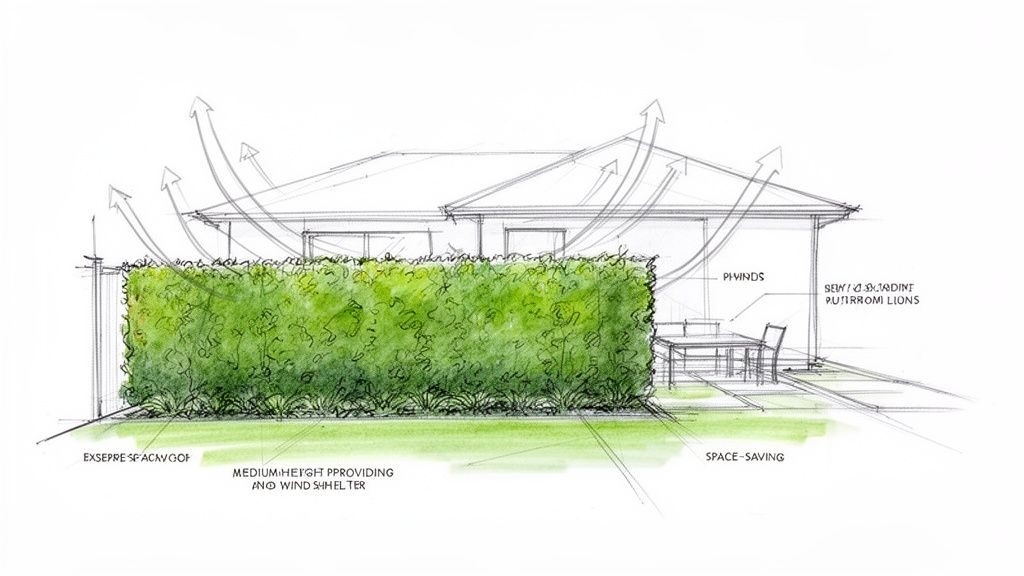
Here in New Zealand, the humble hedge is making a real comeback, especially in our cities. With section sizes shrinking and houses being built closer together, the need for effective, space-saving screening has never been more pressing. A well-kept hedge is a much softer, greener alternative to a stark wooden fence, and it has the added benefits of reducing noise and providing a habitat for native birds.
The Modern Demand for Living Fences
You can see this trend reflected in the garden supplies industry. The number of businesses in this sector has grown by 4.5% each year recently, now sitting at 479 enterprises across the country. A major driver is urbanisation; as more of us live in homes with smaller gardens, the demand for compact and fast-growing hedging plants has shot up. You can discover more insights about NZ's garden retail market growth and trends online.
A hedge is a dynamic part of your garden. It changes with the seasons, gives a home to wildlife, and contributes to a healthier microclimate by filtering wind and dust. It’s an investment in both your property's value and its ecological wellbeing.
Setting the Stage for Success
Choosing the right hedging plants in NZ takes a bit of forward planning. Before you fall in love with a particular species, it’s crucial to think about a few core factors that will decide your hedge's long-term health and look.
Here are the key things to consider:
- Your Climate: Will your hedge need to handle coastal salt spray in Wellington, subtropical humidity up in Northland, or sharp frosts in Central Otago?
- Your Soil Type: Is your garden sitting on heavy clay, free-draining sandy soil, or rich, dark loam?
- Your Hedge’s Purpose: Are you trying to create a two-metre-high privacy screen, or a neat, knee-high decorative border?
This guide is designed to be your go-to resource, helping you navigate these questions to select, plant, and nurture a thriving hedge that will become your garden’s greatest asset.
Right, before you even start dreaming about specific plants, let's talk about the job you're hiring for. Think of it this way: choosing a hedge without knowing its purpose is like buying a beautiful sports car to do a farm ute's job. It might look fantastic, but it's not going to be much help when you need to haul things around.
The function of your hedge dictates everything – its height, how dense it gets, how fast it grows, and how much work you’ll need to put into it. Are you after a living wall to block out the neighbours? A tough-as-nails barrier to soften that relentless southerly? Or maybe just a neat, flowering border to frame your prize-winning roses? Each goal needs a completely different kind of plant.
What Job Does Your Hedge Need to Do?
To pick the best hedging plants for your Kiwi garden, you have to start with your main goal. A hedge planted for a bit of privacy has totally different requirements from one that’s purely for show. Nailing this down from the get-go will save you a world of time, money, and frustration down the track.
Here are the four most common roles a hedge can play in your garden:
- Privacy Screens: The aim here is simple: create a solid visual block from the street or the house next door. These hedges need to be dense, evergreen (so they work all year round), and tall enough to be effective – think at least 1.8 metres, the height of a standard fence.
- Windbreaks: Their job is to filter and slow down the wind, not block it completely. This protects your garden, your outdoor living area, and even your home. They need to be tough, resilient, and often taller than a privacy screen. A bit of permeability is key, as a solid wall can create nasty turbulence on the other side.
- Decorative Borders: This is all about looks. These low hedges are perfect for defining garden beds, lining a path, or adding a touch of formal structure to your design. They’re typically slow-growing, neat, and don't mind a regular, precise trim.
- Noise Barriers: While no hedge is soundproof, a thick, dense one can definitely take the edge off traffic or neighbourhood noise. To be effective, these hedges need to be seriously substantial, with dense foliage right from the ground up to absorb as much sound as possible.
Matching Your Hedge to Its Purpose
Once you've settled on the job description, you can start looking for the right candidate. It's a simple matching game. For example, a fast-growing plant is brilliant for a quick privacy screen but would be an absolute high-maintenance nightmare for a small, formal border.
Think of a privacy hedge like a set of blackout curtains for your garden – its main job is to provide complete, year-round coverage. A windbreak, on the other hand, is more like a shock absorber, designed to take the force out of harsh gales without snapping.
A classic slow-grower like Buxus (Boxwood) is perfect for a metre-high formal hedge because it holds its shape beautifully with just a couple of trims a year. But trying to use it for a tall privacy screen would take a decade. On the flip side, a speedy native like Griselinia or Pittosporum is a fantastic choice for getting that privacy screen up fast, but it’ll need a firm annual prune to stop it from taking over.
Your Hedge Purpose Cheat Sheet
To make things even easier, we've put together this quick guide. Use this table to connect your goal with the right plant characteristics, so you can feel confident you're making the right choice.
Matching Your Hedge to Its Purpose
Use this table to find the ideal type of hedging plant based on your primary gardening goal, from creating a private sanctuary to a beautiful garden feature.
| Hedge Purpose | Ideal Characteristics | Best Plant Types | Example Species |
|---|---|---|---|
| Privacy Screen | Evergreen, dense foliage, fast-growing, medium to tall height (2m+) | Broadleaf evergreens, dense conifers | Griselinia littoralis, Pittosporum tenuifolium, Photinia 'Red Robin' |
| Windbreak | Hardy, strong branches, deep-rooted, semi-permeable foliage | Tough natives, resilient exotics | Corokia cotoneaster, Olearia paniculata (Akiraho), Cupressocyparis leylandii |
| Decorative Border | Slow-growing, small leaves, compact habit, tolerates frequent clipping | Dwarf shrubs, formal hedging classics | Buxus sempervirens (Boxwood), Hebe species, Lonicera nitida |
| Noise Barrier | Very dense, thick foliage from top to bottom, broad leaves, tall | Large-leafed evergreens, layered shrubs | Prunus laurocerasus (Laurel), Viburnum tinus, Dense Camellia varieties |
Hopefully, this gives you a clear starting point. By locking in your hedge's purpose first, you're setting yourself up for a living feature that not only looks great but does exactly what you need it to do.
Top Hedging Plants for Every New Zealand Region
Alright, this is the exciting part: choosing your plants. New Zealand’s temperate climate is a gift, giving us an incredible lineup of options for creating a living fence.
Whether you're leaning towards the unique character of a native screen or the classic structure of a well-loved exotic, there’s a perfect match for your garden’s specific spot. The secret to a thriving, low-fuss hedge is simply picking a plant that’s happy in your local conditions—from the subtropical north right down to the frosty south.
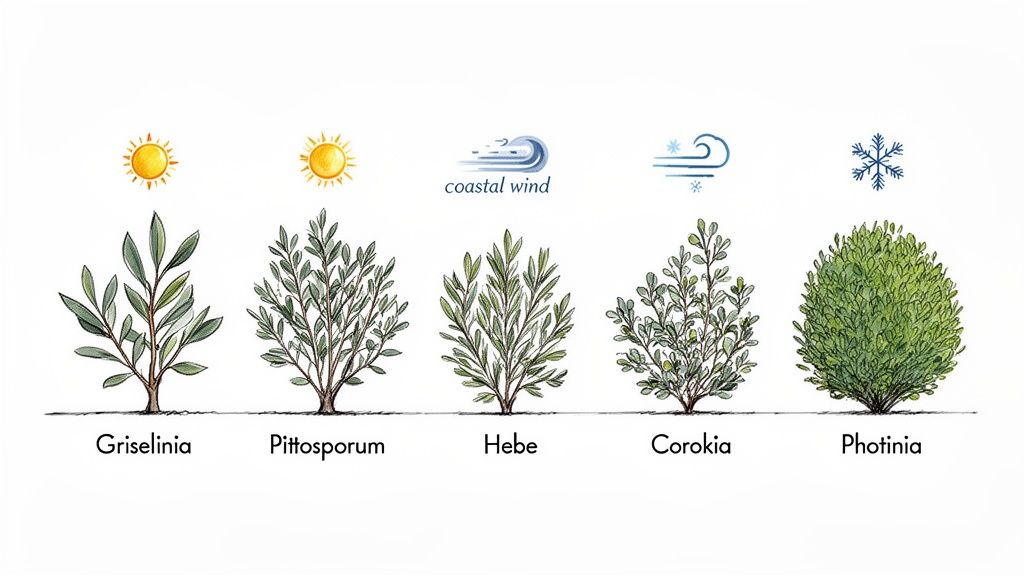
Here, we'll walk through some of the most popular and reliable hedging plants you’ll find in Kiwi gardens. We’ll cover beloved natives that feel right at home and hardy exotics that have proven their worth in our backyards for generations.
Beloved NZ Natives For Hedging
Native plants just look right in a Kiwi garden. They're naturally adapted to our soils and weather, which means less fuss with watering and feeding once they’re settled in. Better yet, they provide vital food and shelter for our native birds and insects, turning your boundary line into a thriving little ecosystem.
-
Griselinia littoralis (Kāpuka or Broadleaf): If there’s a king of Kiwi hedges, this is it. Griselinia is adored for its lush, apple-green leaves and dense growth habit. It grows relatively quickly, is incredibly tough in coastal spots, and clips into a beautifully solid screen. It just asks for well-drained soil and a bit of sun, though it'll handle some shade.
-
Pittosporum tenuifolium (Kōhūhū): A truly versatile favourite, Pittosporum comes in many stunning forms like the popular 'Silver Sheen' or 'Stephens Island'. Its small leaves and dark stems create a fine-textured, elegant look that’s hard to beat. It's a fast grower, puts up with wind and dry spells, and responds brilliantly to a good trim.
-
Corokia cotoneaster (Wire Netting Bush): For something tougher with a bit more architectural grit, Corokia is an outstanding choice. Its tangled, wiry branches and tiny leaves form a unique, rustic screen that’s almost impenetrable once established. It's exceptionally hardy, shrugging off everything from coastal salt spray to inland frosts.
A native hedge does more than just define a boundary; it weaves your garden into the wider New Zealand landscape. Choosing natives helps to restore local biodiversity, one backyard at a time.
If you're in a hurry to get some privacy, we’ve put together a specific list of the speediest options. Check out our guide on the best fast-growing hedges in NZ to get that screen up in record time.
Hardy Exotic Favourites
Exotic plants can bring a completely different feel to your garden. They offer classic forms, vibrant colours, and flowering interest that can complement any style of home, from a traditional villa to a sharp, modern build.
-
Photinia 'Red Robin': Famous for its brilliant crimson new growth each spring, Photinia is a real showstopper. It’s a fast-growing evergreen that provides a dense screen and a stunning seasonal display. A tough and reliable plant, it handles most NZ climates well but does best with good air circulation to keep leaf spot at bay. Regular trimming only encourages more of that fiery red foliage.
-
Buxus sempervirens (English Box): This is the ultimate choice for formal, low borders or intricate parterre gardens. Buxus is slow-growing, with tiny, deep green leaves that allow it to be clipped into precise, sharp shapes. Its timeless elegance is simply unmatched for creating structure and definition, but it does demand well-drained soil to avoid root issues.
-
Camellia sasanqua: Want a hedge that puts on a show? Look no further. Sasanqua Camellias are beautiful evergreens that produce a profusion of flowers from autumn right through our New Zealand winter, just when the garden needs a lift. They form a dense, glossy green screen and can be pruned formally or left for a more natural look. They prefer slightly acidic soil and a bit of shelter from the harsh afternoon sun.
-
Prunus laurocerasus (Cherry Laurel): Known for its big, glossy, bright green leaves, Laurel builds a substantial and robust hedge very quickly. It's incredibly hardy, tolerating deep shade, poor soils, and dry conditions once it's established. Its vigorous growth means you'll get a thick screen in no time, but be prepared—it needs at least one firm prune a year to keep it from getting carried away.
By thinking about your region's unique conditions and the specific look you’re after, you can confidently choose from this fantastic lineup. Whether you go native or exotic, the right plant will reward you with a beautiful, functional living feature for years to come.
How to Plant Your Hedge for a Flying Start
Getting your hedge planted correctly is the single most important thing you can do to guarantee it grows into the dense, green screen you’re dreaming of. Think of it as laying the foundation for a house—get it right from day one, and you’ll save yourself a world of headaches later on. A little bit of prep and the right technique will set your plants up for a lifetime of strong growth.
Don't worry, even if you're a total beginner, it's a straightforward process. We'll break it down into simple, manageable steps, from getting the soil ready to that final, satisfying watering-in.
Timing Is Everything: The Best Season to Plant
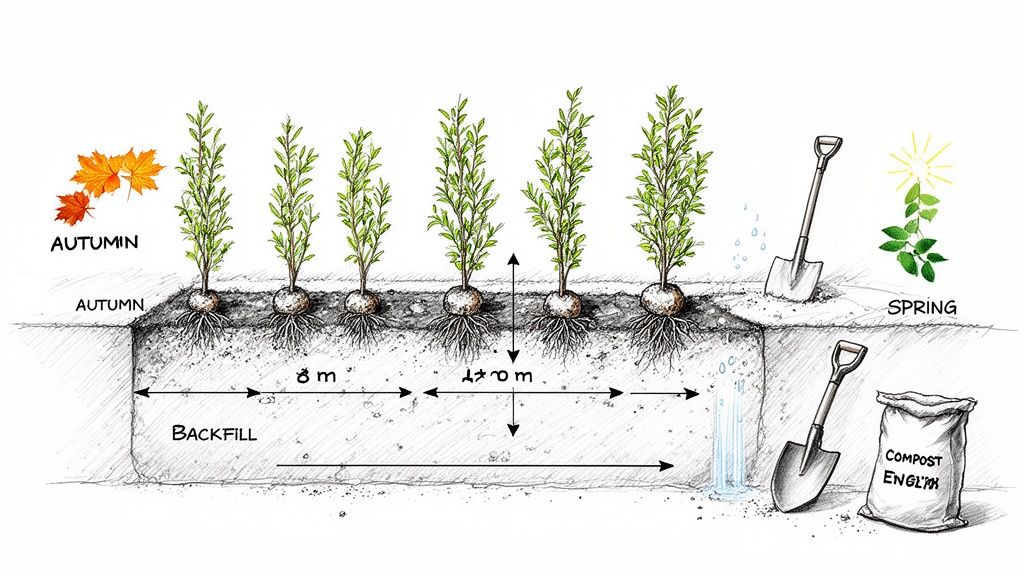
Here in New Zealand, you’ve got two golden windows for planting a new hedge: autumn (March to May) and spring (September to November). Planting in these milder seasons gives your hedge a crucial head start.
Planting in autumn is fantastic because it allows the roots to settle in and establish over the cooler, wetter winter. By the time summer rolls around, they’re ready for it. Spring planting is also a great option, giving the plants plenty of time to get their feet under them before the peak heat arrives.
Try to avoid planting in the middle of summer. The intense sun can scorch young plants and dry out their roots before they’ve even had a chance to get going. Likewise, the depths of winter can be risky in frosty parts of the country where a hard freeze can damage vulnerable new growth.
Prepare the Ground for Success
Great soil is the secret to a great hedge. Before you pick up a spade, spend some time preparing the entire planting area properly. It makes a world of difference.
First, clear the area of every last weed and bit of grass. They’ll only compete with your new plants for water and nutrients. Next, dig over the soil along your planned hedge line, breaking up any big, solid clumps. A garden fork is your best friend here—it aerates the soil beautifully without wrecking its natural structure.
If you’re dealing with heavy clay, which is common across much of New Zealand, now’s your chance to improve it. Digging in plenty of organic matter like compost or well-rotted manure will work wonders for drainage and add vital nutrients. For a deeper dive into creating the perfect garden bed, check out our detailed guide on preparing soil for plants.
Dig a Trench, Not Individual Holes
This is a non-negotiable rule for a truly successful hedge. It might seem easier to dig a separate hole for each plant, but trust me, it’s a mistake. Individual holes act like little pots, confining the roots and stopping them from knitting together into a single, robust barrier.
Instead, you need to dig one continuous trench along the entire length of your planned hedge.
- Width: Make the trench at least 45-60cm wide. This gives the roots plenty of loosened soil to spread out into.
- Depth: Aim for a depth that’s roughly the same as the plant's root ball, usually around 30-40cm deep.
This shared trench is the key. It encourages the roots to spread out and interconnect, which is exactly what you want for a strong, unified hedge. It also means every plant gets the same soil conditions, promoting nice, even growth down the whole line.
Planting Your Hedge Step-by-Step
With your trench ready to go, you're on to the rewarding part.
- Check Your Spacing: Before you start, lay your plants out alongside the trench to get the spacing just right. It’s so much easier to adjust them now than after they’re in the ground.
- Position the Plants: Place each plant in the centre of the trench. The crucial part is making sure the top of its root ball sits level with the surrounding ground—planting too deep can cause the stem to rot.
- Backfill the Trench: Gently push the soil back in around the roots. Firm it down with your hands or the heel of your boot to get rid of any big air pockets.
- Water In Thoroughly: Give your new hedge a really good, deep soak. This settles the soil around the roots and gives them the moisture they desperately need to get started.
- Mulch Generously: The final touch is a 5-7cm layer of mulch, like bark chip or compost, along the base of the hedge. Mulch is your new hedge's best friend—it smothers weeds, holds onto precious moisture, and keeps the roots cool.
Mastering Hedge Maintenance and Pruning
You’ve planted your hedge, and it’s a great start. But the real magic, the secret to a living fence that looks incredible for decades, comes down to how you care for it. Think of planting as setting the stage; the ongoing maintenance is the performance that everyone remembers. Getting a handle on a few simple trimming and care techniques is what protects your investment and keeps your hedge looking lush, healthy, and sharp.
This is where we take the guesswork out of trimming, turning what can seem like a chore into a genuinely satisfying part of gardening. It's all about knowing when to snip and what your hedge needs as it grows up.
Formative Pruning vs Regular Trimming
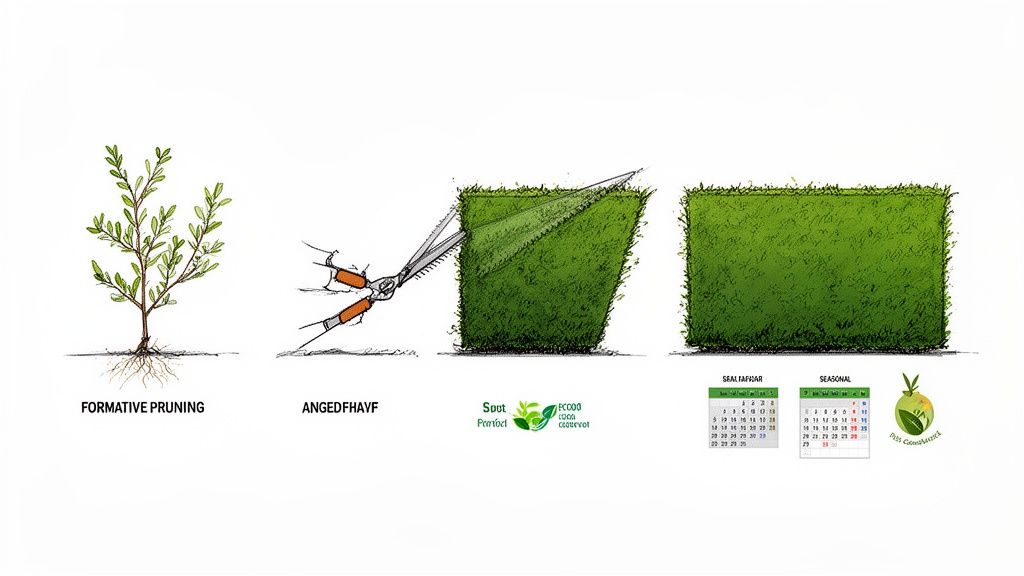
Not all cuts are created equal. How you treat a young hedge finding its feet is completely different from how you'll manage a mature, established one. Nailing this difference is the key to building a dense, robust hedge right from the ground up.
Formative pruning is all about the first couple of years. The goal here isn't height; it's bushiness. By regularly tipping the main growing stems, you're telling the plant to send out side shoots, building a thick, interwoven structure from the base. It feels wrong to cut a plant you want to grow tall, I know, but trust me—this early sacrifice pays off big time with a solid hedge that has no pesky gaps later on.
Regular trimming, on the other hand, is for established hedges. This is pure maintenance. You’re keeping the hedge at the height and width you want, maintaining that clean shape, and encouraging a dense leafy exterior. This is the classic hedge trimming that makes a garden look truly polished.
Your Seasonal Hedge Care Calendar
In New Zealand, working with the seasons is everything. This simple calendar is tailored to our Southern Hemisphere climate and will keep your hedge happy year-round.
- Spring (September - November): This is go-time for growth. Give your hedge a good feed with a balanced, slow-release fertiliser. Once that first big burst of new growth has toughened up a little, it’s the perfect time for the main structural trim of the year.
- Summer (December - February): Growth will still be humming along. A light trim in mid-to-late summer will keep formal hedges looking sharp and tidy up any stragglers. Just try to avoid any heavy pruning in the peak of the heat.
- Autumn (March - May): Things start to slow down now. This is a great time for a final light tidy-up before winter rolls in, but steer clear of any hard pruning. You don't want to encourage soft new growth that could get zapped by the first frosts.
- Winter (June - August): Most hedges are dormant. This makes it the ideal window for any major renovation jobs or hard pruning on overgrown deciduous hedges, as the plant is resting and won't be as stressed.
A well-kept hedge is more than just a pretty face; it’s an ecological powerhouse. With sustainability becoming more important in Kiwi gardens, it's cool to know that a single linear metre of a dense native hedge can soak up 10-15 kg of CO2 each year.
Common Pests and Diseases
Even the healthiest hedge can run into trouble. Learning to spot the signs early makes everything easier to manage.
- Aphids: These tiny sap-suckers love to hang out on fresh new growth. A strong jet of water from the hose can often knock them off, or you can turn to a natural insecticidal soap.
- Scale Insects: These critters look like little bumps on the stems and leaves. If you've only got a few, you can scrape them off by hand. For bigger infestations, a horticultural oil spray applied in winter does the trick.
- Leaf Spot Fungi: Often seen on plants like Photinia, this shows up as dark spots on the leaves. The best defence is good air circulation, so a bit of thinning can help. Also, try to avoid watering over the leaves. For a deep dive on this popular plant, check out our guide on caring for Photinia 'Red Robin' hedge plants.
- Root Rot: This is the big one, and it's almost always caused by waterlogged, poorly drained soil. Honestly, the only real cure is prevention. Get that soil preparation right when you first plant.
To really nail your hedge maintenance, having the right gear is a game-changer. Finding the best tree pruning tools will make a huge difference in how your hedge looks. A sharp pair of secateurs, shears, and a reliable trimmer give you clean cuts that heal faster and reduce the risk of disease.
Your Hedging Questions, Answered
Even the most seasoned gardeners run into questions when it comes to getting a new hedge in the ground. Here, we tackle some of the most common queries we hear from Kiwis, breaking down the practical details that make the difference between a hedge that’s just ‘okay’ and one that’s truly spectacular.
Let's dive into the nitty-gritty of spacing, speedy growers, and the secrets to a perfect prune.
How Far Apart Should I Plant My Hedge?
Getting your spacing right is a bit of a balancing act. You want the plants close enough to form a solid screen, but with enough elbow room to grow happily. For popular choices in New Zealand like Griselinia, Pittosporum, and Photinia, a good rule of thumb is to plant them somewhere between 75cm and 1 metre apart. This sweet spot gives them space to flourish without getting overcrowded, while still letting them knit together into a dense wall within a few seasons.
For those classic, sharp-edged formal hedges using plants like Buxus (Boxwood) or Lonicera, you need to tighten things up. Planting them just 30-40cm apart is what encourages that tight, compact growth you’re after. Remember, planting too far apart will leave you with gappy, see-through patches, but planting too close forces the plants to compete for light and nutrients, which can lead to a stressed-out, unhealthy hedge down the track.
What Is the Fastest Growing Hedge for Privacy in NZ?
When you need privacy and you need it yesterday, a few plants really stand out. For sheer speed in most New Zealand gardens, you can't go past Pittosporum varieties like 'Silver Sheen' or 'Stephens Island'. These are absolute champions, easily putting on over a metre of growth a year. You can expect a decent screen from them in just two to three years.
Another lightning-fast option is the Leighton Green conifer (Cupressocyparis leylandii), but be warned: its vigorous nature means it demands regular trimming to stop it from taking over. If you're after a tough native that gets a serious move on, some of the more robust varieties of Corokia and Coprosma also establish very quickly, giving you a resilient and fast-filling screen.
When Is the Best Time to Prune My Hedge in NZ?
The timing of your trim is everything. For most of our go-to evergreen hedges like Griselinia or Buxus, the best time for the main annual haircut is in late spring, right after that big, energetic flush of new growth has toughened up a bit. You can always follow up with a lighter tidy-up in late summer to keep things looking sharp.
A key rule to remember: Avoid any heavy pruning in late autumn. This can stimulate soft new growth that is highly vulnerable to being damaged by the first winter frosts.
And for hedges grown for their stunning flowers, like Camellias or Escallonia, the rule is even simpler: always prune them immediately after they finish flowering. If you cut them at any other time, you risk snipping off the very buds that will become next year's beautiful show.
Ready to create the perfect living boundary for your garden? Jungle Story is New Zealand's premier online plant marketplace, connecting you with trusted local growers offering an incredible selection of hedging plants. Find everything from fast-growing natives to classic formal shrubs and have them delivered right to your door. Explore our extensive range and start building your dream hedge today at https://junglestory.co.nz.