
Thinking of transforming a room from just a space with furniture into a vibrant, living sanctuary? Often, all it takes is one addition. A single large indoor plant can do just that, acting as a piece of living architecture to completely redefine your space. It's more than just putting 'a big plant' in a corner; it's about embracing a genuine statement piece that brings scale, personality, and a whole new atmosphere into your home.
Why a Single Large Plant Can Redefine Your Space
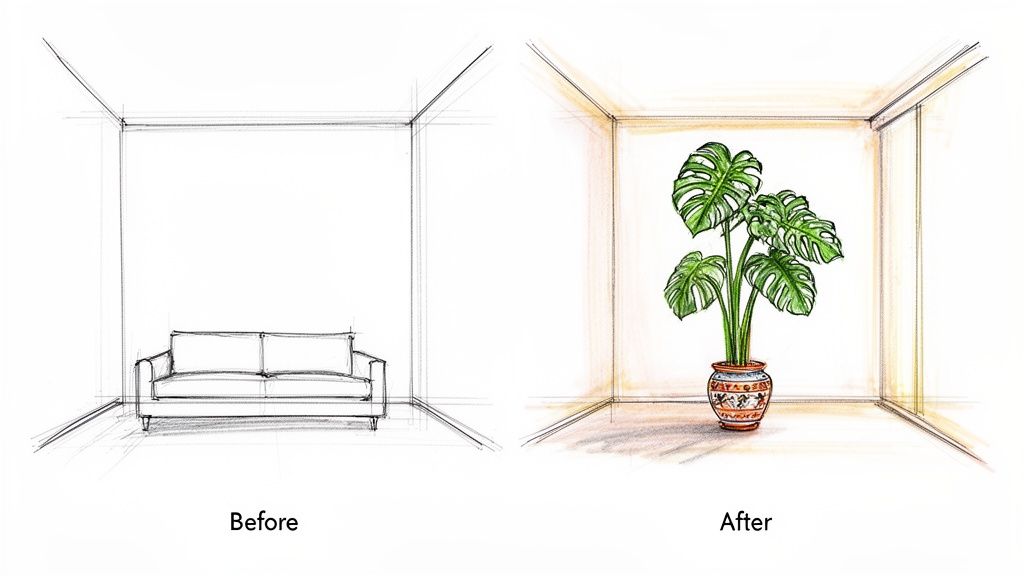
Here in New Zealand, bringing the outdoors in is a huge part of our lifestyle, and a magnificent plant is one of the most powerful ways to connect with nature inside. This is especially true for city apartments or homes without much of a garden—it can become your own personal slice of the jungle.
The move towards using greenery for both looks and health benefits is really taking off. Homes are the biggest market for indoor plants, with living rooms, bedrooms, and kitchens being the most popular spots. This isn't just a local trend; the global indoor plants market is set to grow from USD 17.26 billion in 2024 to a massive USD 28.52 billion by 2033. If you're interested, you can dive deeper into the growing indoor plant market through recent industry reports.
But the appeal of a large indoor plant goes way beyond just decoration. It’s an investment in your home's wellbeing.
The Immediate Impact of Scale
A tall, sculptural plant like a Bird of Paradise or a sprawling Monstera Deliciosa does so much more than fill an empty corner. It naturally draws your eye upward, creating the illusion of higher ceilings and a more open, airy room. Unlike a collection of smaller bits and pieces that can make a space feel cluttered, one significant plant provides a clean, powerful focal point.
Think of it as a living sculpture. Its shape, texture, and colour interact with your furniture and the light in a way that static objects just can't match, adding a dynamic, ever-changing layer to your interior design.
Bringing Life and Energy Indoors
There’s an undeniable energy that a thriving plant brings to a room. It’s not just a feeling, either—plants actively improve their environment. Studies have shown they can boost moods, spark creativity, and lower stress. A large specimen delivers these benefits on a much grander scale, helping to create a calming oasis where you can properly switch off and relax.
By thoughtfully choosing and placing a single large plant, you’re not just decorating; you’re curating an atmosphere. You are making a deliberate choice to infuse your home with life, style, and a tangible connection to the natural world.
This guide is here to demystify the process of choosing and caring for an impressive indoor giant. We want you to feel confident and excited to start your own green adventure.
How to Choose Your Perfect Green Companion
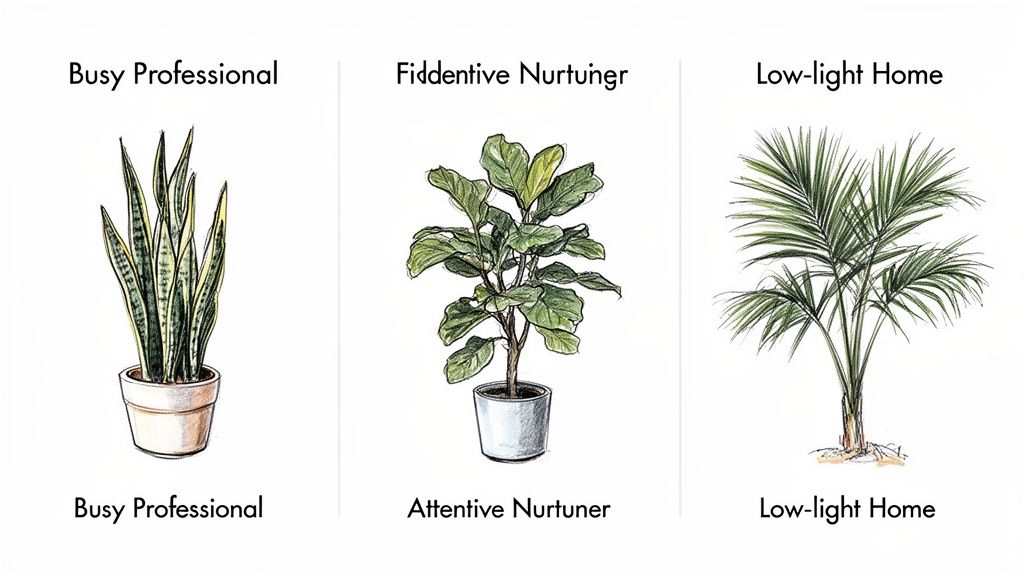
Choosing a large indoor plant isn’t just about picking the one you see all over Pinterest. It’s more like honest-to-goodness matchmaking. The secret to success is finding a plant whose needs are a perfect fit for what you and your home can realistically provide.
Instead of getting overwhelmed by a never-ending list of species, let’s break it down. We'll focus on the three things that really matter: the light in your home, your personal care style, and your lifestyle. Get these right, and you'll find a green companion that doesn't just survive, but truly flourishes.
Decoding Your Home’s Light
Light is the single most important ingredient for a happy plant, and it's where most new plant parents get a bit stuck. You hear terms like 'bright indirect light' and it can all feel a bit vague, but it’s simpler than it sounds. It’s all about the quality of the light, not just its presence.
Here’s a quick guide to assessing the light in your New Zealand home:
-
Bright Direct Light: This is intense, unfiltered sun that hits a spot for several hours a day. In a Kiwi home, this is usually right in front of a north-facing window where the sun streams in. Only a few tough characters like succulents can handle this without their leaves getting scorched.
-
Bright Indirect Light: This is the absolute sweet spot for most tropical large indoor plants. It's light that's bright enough to cast a soft shadow, but the sun's rays aren't hitting the leaves directly. Think of a spot a metre or two back from that sunny north-facing window, or closer to an east-facing one that only gets the gentle morning sun.
-
Medium Light: This describes a room that’s well-lit but doesn't get any direct sun at all. It might be a room with a south-facing window or a spot that's several metres away from the main light source. Heaps of resilient plants do just fine here.
-
Low Light: This is often mistaken for 'no light'. A low-light area is still bright enough for you to read a book comfortably. It’s usually a corner far from any windows, a hallway, or a room with very small, shaded windows.
Here’s a simple trick: hold your hand up about 30cm from a surface. If you see a crisp, well-defined shadow, you’ve got bright light. If the shadow is soft and fuzzy, that’s medium light. If it's very faint or barely there, you’re in a low-light zone.
Find Your Ideal Statement Plant Match
To make things even easier, here's a quick comparison of some of our favourite large plants. This should help you narrow down the perfect green companion for your space and schedule.
| Plant Name | Light Requirement | Watering Needs | Good for Beginners? | Pet Safe? |
|---|---|---|---|---|
| Snake Plant (Sansevieria) | Low to Bright Indirect | Infrequent (every 3-4 weeks) | Yes | No |
| Fiddle Leaf Fig (Ficus lyrata) | Bright Indirect | Moderate (weekly) | No | No |
| ZZ Plant (Zamioculcas) | Low to Bright Indirect | Infrequent (every 3-4 weeks) | Yes | No |
| Rubber Plant (Ficus elastica) | Medium to Bright Indirect | Moderate (every 1-2 weeks) | Yes | No |
| Monstera Deliciosa | Bright Indirect | Moderate (weekly) | Yes | No |
| Kentia Palm (Howea) | Medium to Bright Indirect | Moderate (every 1-2 weeks) | Yes | Yes |
Remember, this table is a starting point. Every home is different, but it gives you a solid idea of which plants are most likely to thrive with you.
Finding Your Plant Parent Persona
Now, let's have an honest chat about your lifestyle. How much time and attention can you really give your plant? This is the key to a happy relationship. Are you a set-it-and-forget-it type, or do you find joy in a daily watering ritual?
Figuring out your persona will point you straight to the perfect plant.
The Busy Professional
Your schedule is packed, and you might travel a bit. You need a plant that’s tough, forgiving, and basically thrives on a bit of neglect. A weekly check-in is about all you can manage.
- Your Match: Go for the hardy survivors like the Snake Plant (Sansevieria) or the ZZ Plant (Zamioculcas zamiifolia). These guys store water in their leaves and roots, so they can handle infrequent watering and a huge range of light conditions. They practically love being forgotten.
The Attentive Nurturer
You actually enjoy the process of looking after things. For you, plant care is a relaxing, rewarding hobby. You don't mind a plant with a few specific quirks and you're keen to learn its unique language.
- Your Match: You're ready for a classic like the Fiddle Leaf Fig (Ficus lyrata). It needs consistent watering, just the right amount of bright indirect light, and can be a bit fussy if you move it around. The payoff? A stunning, sculptural plant that becomes the centrepiece of any room.
The Relaxed Decorator
You’re here for the aesthetics. You want a beautiful plant to enhance your decor, but you don't want the stress if you forget to water it every now and then. Style without the hassle is the goal.
- Your Match: The Rubber Plant (Ficus elastica) or the Monstera Deliciosa are perfect for you. They’re both visually striking but pretty easy-going. They like bright, indirect light and prefer their soil to dry out a bit between waterings, making them a stylish and low-stress addition to your home.
Meet New Zealand's Favourite Statement Plants
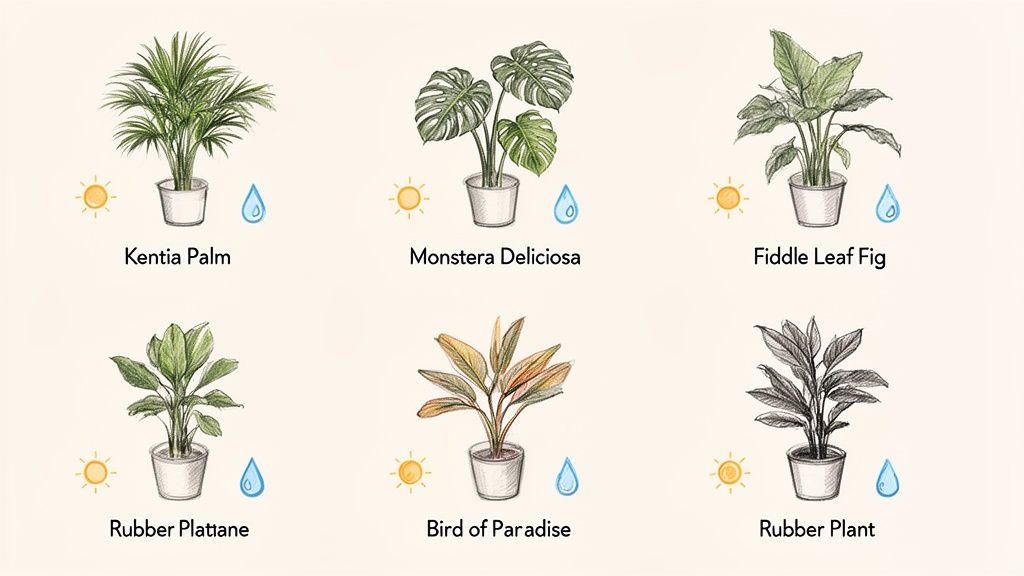
Alright, now that you’ve got a handle on your home’s environment and what kind of plant parent you are, let's get you acquainted with some of the gentle giants that thrive in Kiwi homes. These aren't just bits of greenery; they're characters, each with its own personality that can completely transform a room.
We’ve pulled together a few of New Zealand's favourite large indoor plants – every one of them is a superstar. Think of this as a friendly meet-and-greet to help you find the perfect green companion.
The Elegant Kentia Palm
The Kentia Palm (Howea forsteriana) is the absolute picture of quiet elegance. With its slender trunks and graceful, arching fronds, it brings a classic, almost old-world charm to a space. It’s perfect for softening those hard corners or adding a sophisticated vertical touch next to a bookshelf or your favourite armchair.
What makes the Kentia so great is that, unlike many palms, it’s remarkably tolerant of lower light. This makes it a brilliant choice for those spots that don't get flooded with sun. It’s also slow-growing and resilient, so it won’t demand constant attention. A true long-term friend.
-
Quick Care Card
- Light: Prefers medium to bright indirect light but handles lower light levels well.
- Water: Give it a good drink when the top 5cm of soil feels dry.
- Humidity: Happy with average home humidity, but will enjoy the odd misting.
- Kiwi Care Tip: Don't be surprised when its growth slows right down during our cooler winter months (June to August). This is totally normal, so make sure you pull back on watering during this time.
The Iconic Monstera Deliciosa
You know this one. With its huge, glossy leaves full of those famous splits and holes (a feature called fenestration), the Monstera Deliciosa brings a wild, tropical vibe inside. It's often called the Swiss Cheese Plant, and it’s a fast grower when it's happy, quickly turning into a spectacular, jungle-like focal point.
The Monstera is surprisingly easy-going, making it a fantastic first large plant for anyone new to this. Its bold leaves cast stunning shadows and create a lush atmosphere that feels both retro and totally modern. If you want to dive deeper, check out our full Monstera plant care guide for New Zealand homes.
-
Quick Care Card
- Light: Loves bright, indirect light. Direct sun will scorch those beautiful leaves.
- Water: Water when the top 5-7cm of soil is dry. It's much better to under-water than over-water.
- Humidity: Your standard home humidity is fine, but it really loves a boost.
- Kiwi Care Tip: During the spring and summer growing season (September to April), you might see a new leaf unfurl every few weeks. Come winter (June to August), it'll take a well-deserved break.
The Coveted Fiddle Leaf Fig
Ah, the Fiddle Leaf Fig (Ficus lyrata). It’s the undisputed darling of the interior design world, and for good reason. With its massive, violin-shaped leaves and distinct tree-like shape, it makes a seriously bold architectural statement. This isn't a plant that just fades into the background; it demands attention and rewards good care with stunning, sculptural beauty.
It definitely has a reputation for being a bit of a diva, but for many plant lovers, that's part of the appeal. The secret is consistency. Find a bright spot it loves, and then do your best not to move it.
-
Quick Care Card
- Light: Needs loads of bright, indirect light. A spot near a north- or east-facing window is usually perfect.
- Water: Water consistently once the top few centimetres of soil are dry. It absolutely hates having wet feet.
- Humidity: Prefers higher humidity.
- Kiwi Care Tip: The Fiddle Leaf is famous for dropping leaves when it's unhappy. Keep a close eye on it, especially in winter when you need to cut back on watering to avoid root rot.
The Dramatic Bird of Paradise
If you’re after a truly dramatic, upright statement piece, look no further than the Bird of Paradise (Strelitzia nicolai). Its massive, banana-like leaves shoot up on strong, vertical stems, creating a powerful silhouette that draws your eye upwards and adds a sense of grandeur to a room.
This plant gives you an instant "tropical resort" feel. It’s pretty robust and can get seriously tall indoors, making it ideal for rooms with high ceilings or large, empty walls that need a living work of art.
-
Quick Care Card
- Light: A real sun-worshipper. It loves bright light and can even handle a few hours of direct morning sun.
- Water: Keep the soil consistently moist (but not soggy) during the growing season.
- Humidity: Average humidity is fine, but it will always appreciate more if you can provide it.
- Kiwi Care Tip: Those huge leaves are total dust magnets. Gently wipe them down with a damp cloth every few weeks to keep them clean and help the plant breathe properly.
Choosing a plant is about more than just aesthetics. It’s about inviting a new personality into your home. Each of these green giants has a distinct character, and finding the one that clicks with you is the first step to a long and happy relationship.
The Resilient Rubber Plant
The Rubber Plant (Ficus elastica) offers a moodier, more contemporary look with its deep green or even burgundy leaves. The large, glossy foliage provides a beautiful, sophisticated contrast against lighter walls and decor.
This is one of the toughest members of the Ficus family. It's an excellent, forgiving choice if you love the look of a Fiddle Leaf Fig but want something a bit more low-maintenance. It’s a reliable grower that will reward you with beautiful new leaves without kicking up a fuss.
-
Quick Care Card
- Light: Prefers bright, indirect light but is quite adaptable to medium light.
- Water: Let the soil dry out a bit between waterings.
- Humidity: Tolerates average household humidity without any issues.
- Kiwi Care Tip: New leaves emerge from a colourful sheath at the very top of the plant. As tempting as it is, try not to touch this delicate new growth until the leaf has fully unfurled on its own.
Mastering the Art of Large Plant Care
Bringing a large plant home is a real investment—not just in your decor, but in the life and feel of your space. While their sheer size can feel a bit intimidating at first, you’ll quickly find that looking after these gentle giants is often easier than you think. The secret isn't a complicated, rigid schedule; it's all about learning to watch, understand, and respond to what your plant is trying to tell you.
Caring for large indoor plants is less about memorising complex rules and more about getting a feel for a few key principles. Once you nail the basics of water, light, food, and a bit of tidying up, you'll be well on your way to building a confident and rewarding relationship with your new green flatmate.
The Golden Rule of Watering
If there's one mistake new plant parents make, it's showering their plants with too much love—specifically, too much water. It's a classic, well-intentioned error, but it's also the quickest path to trouble.
Think of it this way: a plant's roots need to breathe just as much as they need to drink. When the soil is permanently soggy, you're essentially drowning them. This leads straight to root rot, a nasty condition where the roots decay, stop absorbing nutrients, and can eventually kill the whole plant. The best approach is always "less is more."
Before you even think about picking up the watering can, check the soil first. The easiest way is the good old finger test: just push your index finger about 5-7cm deep into the potting mix. If it feels damp, wait. If it's dry at that depth, it's time for a drink.
Understanding Light and Location
Light is just as vital as water. Every plant has its own preference, which is why it’s so important to match your plant to the light you actually have. Take a day to be a light detective in your chosen spot. Does it get soft morning light or the harsh glare of the afternoon sun?
Your plant’s leaves are fantastic communicators. If they start turning yellow and dropping off, you might be overwatering. On the other hand, if they look pale, faded, or bleached, they could be getting sunburnt by too much direct light. And if new growth seems small and spaced out, your plant is probably begging for a brighter spot. Watching for these clues lets you make small tweaks before a little issue becomes a big problem.
Feeding Your Gentle Giant
Think of fertiliser as a vitamin boost for your plant, giving it the nutrients it needs to push out all that lush, healthy growth. But timing is everything. Here in New Zealand, the main growing season for most indoor plants runs from spring right through to autumn (roughly September to April).
This is when your plant is in active growth mode and will get the most out of a good feed. During the cooler, darker winter months (June to August), most plants hit the pause button and go into a state of dormancy. Feeding them during this rest period can do more harm than good, as the unused nutrients just build up in the soil.
- Growing Season (Spring/Autumn): Feed your plant every 4-6 weeks with a balanced liquid fertiliser. Just follow the dilution instructions on the packet.
- Dormant Season (Winter): Stop feeding altogether. You can start up again in spring as soon as you spot the first signs of new growth.
The Importance of Pruning and Maintenance
Pruning isn't just for roses in the garden; it's a super simple way to keep your large indoor plants looking sharp and encourage healthier, fuller growth. Don't be shy about snipping off any yellowing or dead leaves with a clean, sharp pair of scissors or secateurs. This instantly tidies up the plant and, more importantly, redirects its energy towards making new, healthy foliage.
It's also a great idea to regularly wipe down those big, beautiful leaves with a damp cloth. Dust builds up surprisingly fast, and a thick layer can block light and make it harder for the plant to photosynthesise (breathe). This simple cleaning habit keeps your plant looking vibrant and healthy.
And if you're ever planning a move, you'll want to make sure your leafy investment arrives in one piece. Learn how to pack plants for moving safely to protect them on the journey.
The growing love for indoor greenery is part of a bigger picture. In New Zealand, the Garden Supplies Retailing industry generated $621.9 million in 2025, with plants as the number one revenue source. As our cities grow and more Kiwis find themselves in homes with smaller gardens (or none at all!), the desire for indoor green oases has skyrocketed, making online plant shops the perfect solution for urban dwellers.
Of course, great plant health starts from the ground up. Using a high-quality potting mix that provides the right balance of drainage and nutrients is fundamental. For a deeper dive, check out our guide on choosing the best indoor potting mix for your statement plant.
How to Style Your Statement Plant Like a Pro
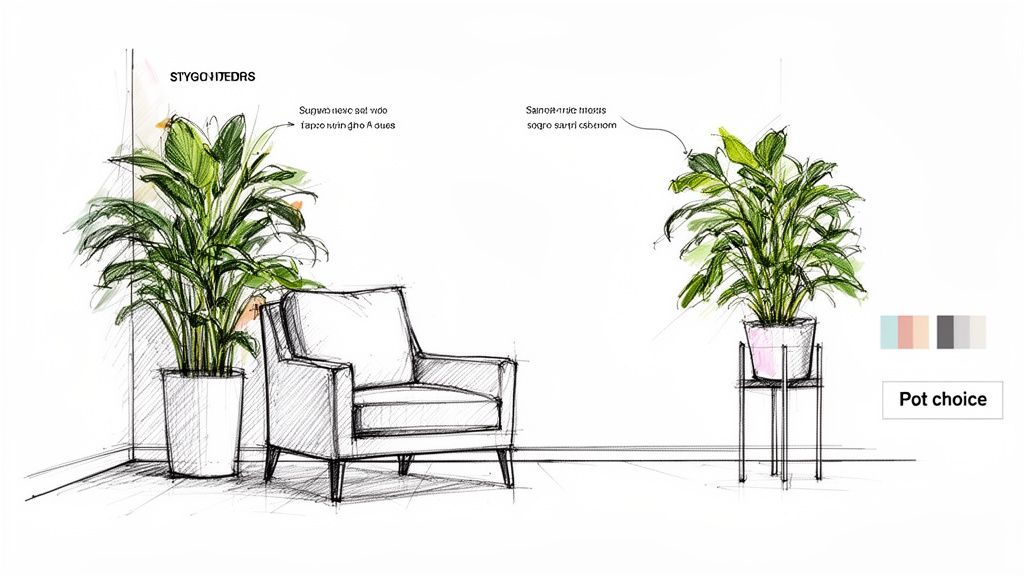
A large plant is so much more than just a bit of green in a pot; it's a living, breathing piece of decor. The secret to unlocking its real magic is learning how to weave it into the fabric of your home. With a few simple ideas, you can use your new statement plant to completely transform the whole vibe of a room.
The first step is placement. This isn't just about finding an empty corner—it's about thinking how your plant can actively shape and enhance the space around it.
Using Plants as Design Tools
Large indoor plants are brilliant for solving common design puzzles. Their organic shapes and lush textures bring a softness and energy that no piece of manufactured furniture can ever quite replicate.
Here are a few of our favourite ways to use them:
-
Create a Focal Point: Pop a bold plant like a Bird of Paradise or a classic Monstera somewhere it can really own the space. This could be next to the sofa, beside a fireplace, or right in the entranceway to give guests a stunning green welcome.
-
Soften Hard Corners: Most rooms are full of sharp angles and straight lines. A plant with gentle, arching fronds, like a lovely Kentia Palm, can instantly soften those corners, making the whole room feel more inviting and pulled together.
-
Frame Furniture: Try placing a tall, elegant plant on either side of a key piece of furniture—think a console table, your bedhead, or even the TV. This technique frames the object, creating a beautiful sense of symmetry and purpose in the layout.
-
Act as a Natural Divider: In open-plan spaces, a line of tall plants or one really bushy one can create a subtle visual break between different zones. It's the perfect way to define the lounge from the dining area without putting up a wall.
When you start treating your plant like a structural element, you move from just decorating a room to actually designing it. The right placement can balance a space, guide the eye, and add wonderful layers of interest.
Choosing the Perfect Pot
Never underestimate the pot! It's just as important as the plant itself. Think of it as the bridge connecting the natural greenery to your home's interior style. The right pot completes the picture, but the wrong one can feel out of place.
When you're choosing, consider both colour and texture. A simple, neutral pot in white, grey, or terracotta really lets a vibrant plant shine. On the other hand, a colourful pot can add a fantastic pop of contrast. For a bit more help finding the perfect home for your plant, check out our guide to choosing the right https://junglestory.co.nz/blogs/plant-blogs/indoor-plant-pots.
If you’re going for a specific look, exploring Tropical Bedroom Decoration Ideas can offer some brilliant inspiration for blending large plants into your design. And for the final flourish, try the "Rule of Three"—grouping three plants of different heights and textures together creates a lush, curated look that feels perfectly balanced and natural.
Troubleshooting Common Large Plant Problems
Sooner or later, every plant owner runs into a little bit of trouble. A yellowing leaf here or a sudden droop there can feel like a personal failing, but trust me, it’s not.
Think of these signs less as a crisis and more as a conversation. Your plant is just trying to tell you something! Learning to interpret what it’s saying is the real secret to becoming a confident plant parent and catching small issues before they become big problems.
Instead of reaching for the panic button, take a breath and just observe. Your large indoor plants are giving you constant feedback about their light, water, and general happiness. The trick is to notice the clues and figure out what they mean.
What Your Plant Is Trying to Tell You
Most of the time, common problems come down to just a few core things—usually water, light, or some tiny, uninvited guests. Before you do anything drastic, take a moment to play detective. Often, a simple little tweak is all it takes to get your green friend looking happy again.
Here are a few of the most common signals and what they usually mean:
- Yellowing Leaves: This is hands-down the most frequent sign, and it almost always points back to water. If the leaves are yellow and feel a bit mushy, especially near the base, you're almost certainly overwatering. If they’re yellow but also dry and crispy, and it’s the lower leaves dropping off, your plant is probably thirsty.
- Brown, Crispy Tips: A classic symptom of air that’s just too dry. Many of our favourite tropical giants come from humid jungles and aren't huge fans of the dry air in the average Kiwi home, especially when the heater is blasting in winter.
- Sudden Drooping or Wilting: When a plant that was perky yesterday suddenly looks sad and floppy today, its first cry for help is usually for water. Feel the soil. If it’s bone dry a few centimetres down, a good, deep drink should have it looking chipper again in just a few hours.
Decoding Your Plant's Distress Signals
Sometimes, you need a quick reference to figure out what's going on. This little chart should help you connect the dots between what you're seeing and what your plant actually needs.
| Symptom (What You See) | Possible Cause | How to Fix It |
|---|---|---|
| Yellow, mushy leaves (often at the base) | Overwatering | Let the soil dry out completely. Water less frequently going forward. |
| Yellow, crispy leaves (often lower ones) | Underwatering | Give the plant a thorough watering until it drains. Check soil more often. |
| Brown, dry leaf tips or edges | Low humidity | Mist the leaves, group plants together, or use a pebble tray or humidifier. |
| Sudden, dramatic wilting or drooping | Thirst / Dry Soil | Water thoroughly. The plant should perk up within a few hours. |
| Stunted growth and faded colour | Not enough light | Move the plant to a brighter spot with more indirect sunlight. |
| Fine, spider-like webbing on leaves | Spider Mites | Wipe leaves with a damp cloth and spray with neem oil solution. Isolate the plant. |
| Annoying little black flies around the soil | Fungus Gnats | You're likely overwatering. Allow the top 5cm of soil to dry out between waterings. |
| White, cottony spots on stems/leaves | Mealybugs | Dab them off with rubbing alcohol on a cotton bud. Treat with neem oil. |
Remember, this is just a starting point. The key is to observe your plant and its environment, and you'll quickly get the hang of reading its signals.
Tackling Common Pests in New Zealand
Even the cleanest, healthiest homes can sometimes play host to plant pests. It just happens. Here in New Zealand, there are a couple of common culprits you’re most likely to encounter on your indoor jungle journey.
The most common are fungus gnats—those pesky little flies that seem to love buzzing around your plant’s soil. They thrive in consistently damp conditions, so seeing them is a huge clue that you might be a bit too generous with the watering can. Your best defence is simply letting the top few centimetres of soil dry out completely before watering again.
Another one to keep an eye out for is spider mites. These teeny-tiny arachnids are tough to see with the naked eye, but you'll spot their work: fine, delicate webbing, usually on the undersides of leaves or where the leaf meets the stem. They cause damage by sucking the sap from the leaves, leaving behind a faded, stippled pattern.
The best first line of defence against most common pests is also one of the simplest and most organic. A simple mix of neem oil and a drop of dish soap in water, sprayed all over the plant (especially under the leaves), is incredibly effective. It disrupts their life cycle without bringing harsh chemicals into your home.
Your Large Indoor Plant Questions Answered
Even with all the right information, the thought of actually getting a massive plant through your front door can bring up a few last-minute worries. We get it. Here are some of the most common questions we hear from fellow Kiwi plant lovers, answered to help you feel totally ready for your new green giant.
How Do I Get a Very Large Plant Into My Apartment?
This is probably the number one question we hear! Before you click 'buy', it’s a brilliant idea to get out the measuring tape. Check your doorways, any lifts you'll need to use, and those tight corners on the stairs.
At Jungle Story, we're old hands at this. We specialise in delivering large specimens right to you, making sure they're safely wrapped up to arrive in perfect shape. For the really big ones, though, having a friend on standby to help you manoeuvre it into that perfect spot is always a smart move.
Is It Normal for My Plant to Stop Growing in Winter?
Absolutely. It’s completely normal. Here in New Zealand, the shorter days and cooler temperatures from about June to August are a clear signal for most tropical indoor plants to take a break. They slip into a state of dormancy, which means their growth slows right down or even stops altogether.
This is a crucial detail for Kiwi plant parents. During this time, you must reduce your watering frequency and stop fertilising altogether. You can resume your normal routine once you spot new growth in spring, usually around September. This resting period is a natural and healthy part of their annual cycle.
How Often Should I Repot My Large Indoor Plant?
Most established large indoor plants are quite happy staying put for a good while and only need a new pot every 2-3 years. The biggest clue that it's time for an upgrade is when the plant becomes seriously root-bound—you might see a tangle of roots poking out the drainage holes at the bottom.
Repotting can be a bit of a shock for a plant, so you don’t want to do it unless you have to. When the time does come, pick a new pot that’s only about 5-10cm wider in diameter. The best time to tackle this job is in the spring, just as the growing season kicks off.
Ready to find the perfect statement piece for your space? Explore the incredible collection of large indoor plants at Jungle Story and have a beautiful, healthy specimen delivered right to your door. Start your green adventure today at https://junglestory.co.nz.