
So, you think you have a dark corner where no plant could possibly survive? Think again. Those dimly-lit spots in your home aren't a curse for would-be plant parents; they're actually an invitation to explore the world of low-light houseplants. Let's debunk the myth that every plant needs a sun-drenched windowsill to thrive.
Embracing Shadier Spaces in Your Kiwi Home
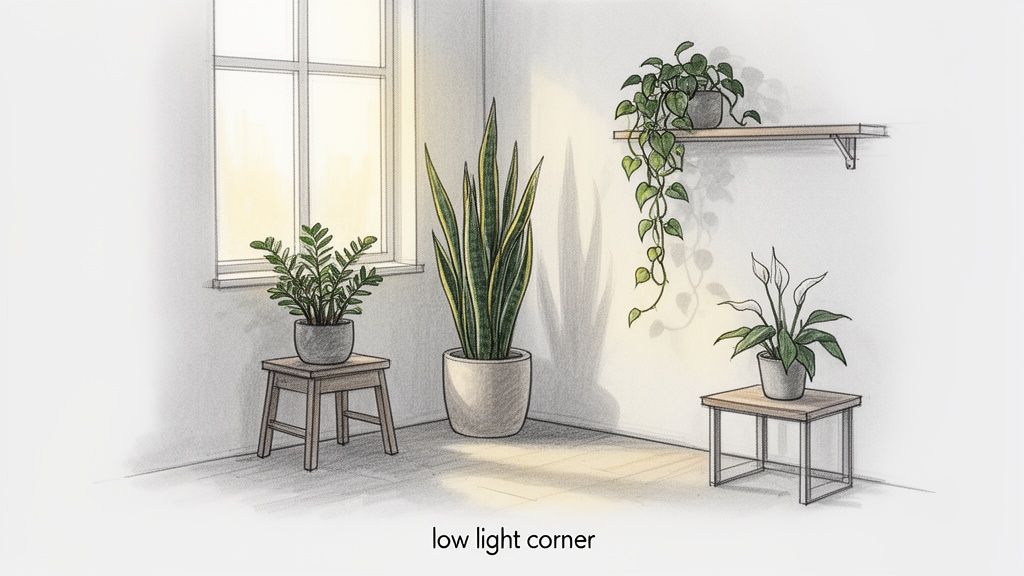
Whether you're in a modern Auckland apartment or a classic Wellington villa, chances are you have a few spots that miss out on direct sun. Maybe it’s a south-facing room, a long hallway, or a corner tucked away behind the sofa. These are the places that low-light plants were made for.
These aren't just plants that tolerate the shade—they genuinely prefer it. They’ve evolved to make the most of minimal light, and cramming them into a sunny spot would do more harm than good.
And Kiwis have caught on. The move to bring greenery indoors is massive, and shade-loving plants are a huge part of it. Trade Me data shows that since December 2013, indoor plant sales have shot up by a staggering 421%. It's clear we're all finding clever ways to green up our living spaces, no matter the lighting situation.
Think of 'low light' not as a challenge, but as a special invitation. It’s your home’s way of asking for specific kinds of green companions—ones that bring texture, life, and colour without needing a spot on the sunniest windowsill.
This guide is here to walk you through it all, helping you turn those once-forgotten nooks into a lush green sanctuary. If you're looking for ways to create those ideal shadier spots, playing around with options like light filtering shades can make a world of difference.
Together, we'll dive into how to:
- Properly figure out the light levels in your home.
- Pick the perfect plants that will love your unique spaces.
- Nail the specific care these shade-dwellers need to flourish.
How to Accurately Read Your Home's Light
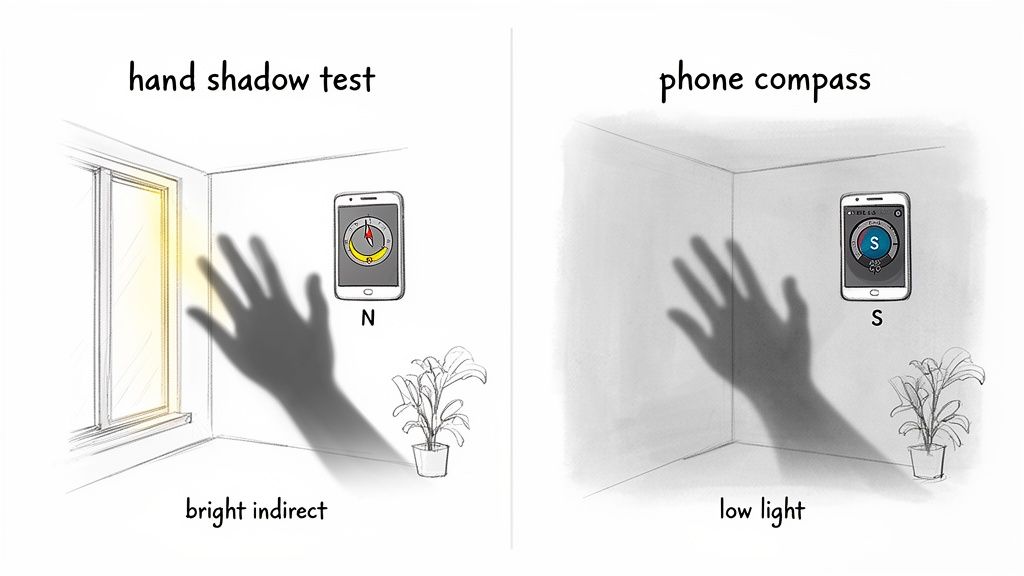
Before you can pick the perfect low-light houseplant, you need to play detective in your own home. Seriously, understanding your specific light conditions is the single most important key to making sure your new green friends don’t just survive, but truly thrive.
The good news? You don’t need any fancy gadgets. Just your eyes, your hand, and a couple of simple tricks.
One of the easiest ways to gauge light is the hand shadow test. Just hold your hand about 30 centimetres away from a plain wall. The shadow it casts tells you everything you need to know about the light intensity in that exact spot.
If you see a fuzzy, faint shadow with really soft edges, you’ve found a low-light area. This is the sweet spot for those genuinely low-light tolerant plants. A sharp, crisp shadow means you’re dealing with bright, direct sun, which will scorch the leaves of most shade-lovers. Anything in between—a noticeable shadow but with soft edges—is your classic medium or bright indirect light.
Finding Your Light Direction
The direction your windows face is a massive deal, especially here in New Zealand. Because we’re in the Southern Hemisphere, the sun travels a different path than what you might read in guides from the US or Europe. Your smartphone’s compass app is about to become your best friend.
- North-Facing Windows: This is the prime real estate. North-facing windows get the most consistent, bright indirect light all day long, perfect for plants that want lots of light but no direct sun.
- East-Facing Windows: These windows get that lovely, gentle morning sun. It's great for many plants, but the light intensity drops off as the day wears on.
- West-Facing Windows: Watch out for these! They get hit with the hot, intense afternoon sun. This can be too much for many houseplants unless you filter it with a sheer curtain or blinds.
- South-Facing Windows: In a Kiwi home, these get the least amount of direct light. This makes them the ideal location for your collection of low light houseplants.
Remember, light changes with the seasons. In our New Zealand winter (June to August), the sun sits lower in the sky. This means light levels drop significantly, and what was once a bright spot might become a medium-light one. Keep an eye on how things shift throughout the year.
By combining the shadow test with your window directions, you can start building a "light map" of your home in your head. This map takes all the guesswork out of the equation, letting you match the right plant to the right place from day one. You’ll be setting yourself—and your new plants—up for a long and happy life together. It’s the true foundation for a thriving indoor jungle.
Meet New Zealand's Favourite Low Light Plants
Alright, now that you've got a handle on your home's lighting, we can get to the fun part: picking out your new green flatmates. The world of low light houseplants is packed with stunning, resilient characters, and I'm going to introduce you to a few of New Zealand's absolute favourites.
These aren't just plants that tolerate the shade; they genuinely thrive in it. They're perfect for bringing a splash of texture and life into those hallways, bathrooms, and dim corners that often feel a bit forgotten.
The Near-Indestructible Snake Plant
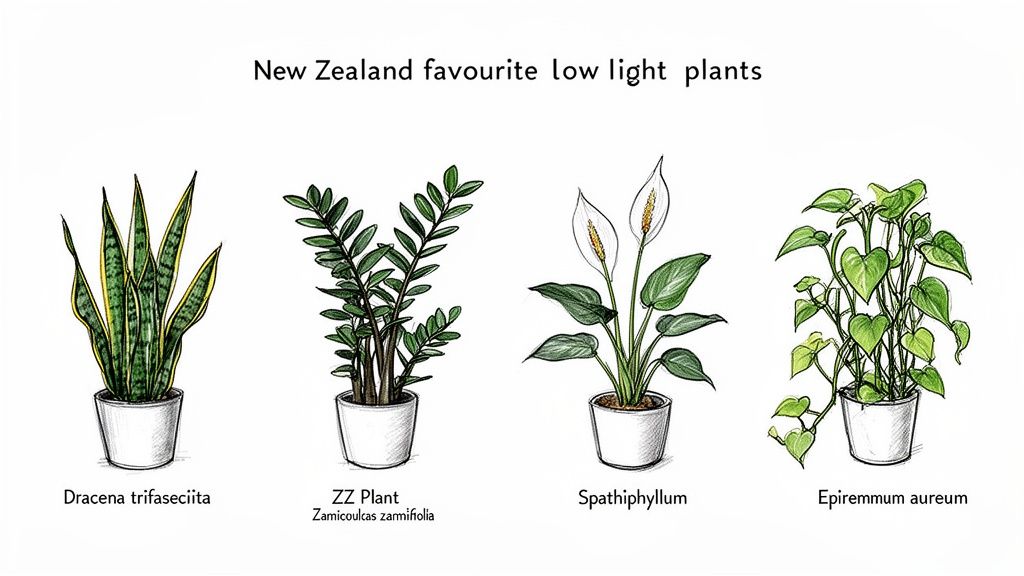
First on the list is the architectural marvel, the Snake Plant (Dracaena trifasciata). With its stiff, upright leaves—often featuring striking yellow edges or cool, mottled green patterns—this plant is as tough as it is beautiful. Honestly, it's the perfect starter plant because it handles a bit of neglect with incredible grace.
Because the Snake Plant stores water in its leaves, it's incredibly drought-tolerant and really, really dislikes being overwatered. This makes it a fantastic low-maintenance choice for busy Kiwis. Stick it in a dim corner, and it'll likely be perfectly content.
The Ever-Popular ZZ Plant
The ZZ Plant (Zamioculcas zamiifolia) is another absolute superstar in the low-light world. You can't miss its glossy, deep-green leaves that sprout from elegant, wand-like stems, giving off an instant lush, tropical vibe. Just like the Snake Plant, it’s exceptionally hardy and can go a while between waterings, thanks to the big, potato-like rhizomes under the soil that hold onto moisture.
It’s also a slow grower, which is great because it won't suddenly outgrow its spot. The ZZ is the definition of a 'set and forget' plant that gives you maximum visual impact for minimal effort.
The Graceful Peace Lily
If you’re after something with a softer, more elegant touch, you can't go wrong with a Peace Lily (Spathiphyllum). Its lush, dark green foliage is gorgeous on its own, but the real showstopper is that iconic white flower—which is actually a modified leaf called a spathe. These blooms can pop up throughout the year, adding a bit of grace to any room.
Peace Lilies are also brilliant communicators. They'll droop quite dramatically when they're thirsty, so you get a clear sign that it's time for a drink. There’s a reason they are a beloved staple in New Zealand homes; The Great NZ Indoor Plant Parent Survey 2022 found that Peace Lilies are owned by a massive 72% of Kiwi plant lovers.
A key thing to remember with Peace Lilies is that they love consistency. They prefer their soil to be evenly moist—but never soggy—and will thank you for the extra humidity you get in a bathroom or kitchen. For a deeper dive, check out our guide on how to care for your Peace Lily.
The Versatile Pothos
Finally, we have the Pothos (Epipremnum aureum), an incredibly versatile and forgiving trailing vine. Its heart-shaped leaves can be solid green or variegated with splashes of white, yellow, or cream, adding a beautiful cascade of colour to shelves, hanging baskets, and bookcases.
Pothos is one of the best low light houseplants for bringing that jungle feeling to your vertical spaces. It's super adaptable and can handle different light levels, though you might notice the variegation fades a little if the light is extremely low. It’s a fast grower, a breeze to propagate, and an absolute must-have for any plant collection.
Top Low Light Houseplants at a Glance
Feeling a bit overwhelmed by the options? Don't worry. To make things easier, I've put together a quick comparison of our top low-light picks. This table breaks down their basic needs to help you find the perfect match for your space and lifestyle.
| Plant Name | Light Tolerance | Watering Needs | Pet Friendly? |
|---|---|---|---|
| Snake Plant | Very Low to Bright, Indirect | Let soil dry out completely | Mildly toxic if ingested |
| ZZ Plant | Very Low to Bright, Indirect | Let soil dry out completely | Toxic if ingested |
| Peace Lily | Low to Medium, Indirect | Keep soil evenly moist | Toxic if ingested |
| Pothos | Low to Bright, Indirect | Let top inch of soil dry out | Toxic if ingested |
Each of these plants brings something unique to the table, whether it's the architectural height of a Snake Plant or the cascading charm of a Pothos. The best part is that they'll all forgive you if you forget to water them now and then, making them wonderful, stress-free companions.
Mastering the Art of Low Light Plant Care
Looking after low light houseplants isn't about complicated routines. It really boils down to one simple idea: less is often more. Because they live in shadier spots, their metabolism is much slower, meaning they sip water and use nutrients far more gradually than their sun-loving friends. This is what makes them so wonderfully low-maintenance, but it's also their biggest vulnerability—they're incredibly easy to kill with kindness.
The single biggest mistake Kiwi plant parents make is overwatering. With less light to power photosynthesis, these plants just don’t get as thirsty. The golden rule is simple but critical: when in doubt, let it dry out. A little bit of thirst is a much smaller problem than drowning the roots.
Perfecting Your Watering Technique
To keep your soil from turning into a soggy mess, you need a reliable way to check how thirsty your plant actually is before you even think about grabbing the watering can. Luckily, the best tool you have is right at your fingertips.
The ‘finger dip test’ is a classic for a reason—it’s foolproof. Just push your index finger about 5 centimetres deep into the soil. If it feels damp or soil sticks to your finger when you pull it out, hold off for a few more days. If it’s bone dry, it's officially time for a drink.
When you do water, give it a proper drenching. Pour water slowly and evenly over the soil until it starts to run freely from the drainage holes at the bottom of the pot. This makes sure every single root gets a chance to hydrate, and then lets all the excess escape, which is key to preventing the dreaded root rot.
Choosing the Right Soil and Feeding Schedule
Great drainage is non-negotiable if you want your low-light plants to thrive. A standard potting mix often holds onto too much water, so it's a good idea to use a chunkier, well-aerating blend. Look for mixes that include things like perlite, orchid bark, or pumice. These ingredients create little air pockets in the soil, helping excess water drain away quickly.
Feeding these plants follows that same 'less is more' philosophy, and it lines up perfectly with New Zealand's seasons.
- Spring and Summer (September - February): This is when they're actively growing. You can give them a light feed once a month using a balanced liquid fertiliser, but make sure to dilute it to half-strength.
- Autumn and Winter (March - August): As the days get shorter and cooler, their growth slows right down, and so does their appetite. It's best to stop feeding them altogether during these months.
By getting a handle on these simple watering, soil, and feeding principles, you'll be well on your way to keeping your leafy friends happy and healthy. And if you're keen to dive deeper into plant nutrition, check out our complete guide to indoor plant fertiliser. It’s all about giving them what they need without overwhelming them.
Solving Common Low Light Plant Problems
Even the most bulletproof low-light plants can start to look a bit sad from time to time. But don't panic—think of it as your plant's way of trying to tell you something. We'll walk through what those signals mean and how to get your green mate back on track.
Most of the time, issues pop up from a simple mismatch in care. And believe it or not, it’s usually from a bit too much love rather than too little. Let's break down the usual suspects and how to sort them out.
Diagnosing Yellowing Leaves
The dreaded yellow leaf is probably the most common cry for help you'll see. It can look alarming, but with low-light plants, it almost always points to one thing: overwatering. The soil is simply staying wet for too long, which suffocates the roots and stops them from soaking up nutrients.
The fix here is patience. Stop watering right away and get your finger in the soil. Don't even think about watering again until the top 5 centimetres feel completely dry. And double-check that your pot has good drainage and isn't sitting in a puddle of water.
Dealing with Crispy Brown Tips
If you're noticing the very tips of the leaves turning brown and crispy, the air is probably a bit too dry. This is a classic issue in Kiwi homes, especially over winter when the heaters are cranking. While these plants don't need much light, many of them come from humid, tropical spots.
To fix this, you just need to bump up the humidity around your plant. Try one of these simple tricks:
- Misting: Give the leaves a light spritz with a spray bottle every couple of days.
- Grouping: Huddle a few of your plants together. They'll create their own little humid microclimate.
- Pebble Tray: Pop the pot on a tray filled with pebbles and a little water. As the water evaporates, it'll raise the humidity right where it's needed.
Correcting Leggy Growth
Is your plant looking a bit stretched out and gangly, with long stems and tiny leaves? This is called etiolation, or just 'legginess'. It's a dead giveaway that your plant is stretching itself thin, desperately reaching for more light. Even a "low-light" plant needs some light to get by.
The solution is straightforward: move it to a slightly brighter spot. It doesn't need to be blasted with direct sun, just a place that gets a bit more ambient light throughout the day. You can also give the leggy stems a trim to encourage the plant to grow back bushier and more compact.
Managing Pesky Fungus Gnats
Those tiny, annoying flies buzzing around the soil are probably fungus gnats. They absolutely love consistently damp soil—it's the perfect place for them to lay their eggs. If you see them, it's another strong clue that you might be overwatering.
To get rid of them, you need to break their life cycle. Let the top layer of soil dry out completely between waterings, which makes it a terrible place for their larvae to live. If you've got a stubborn infestation, you can use sticky traps to catch the adult flies.
Styling Your Home with Low Light Greenery
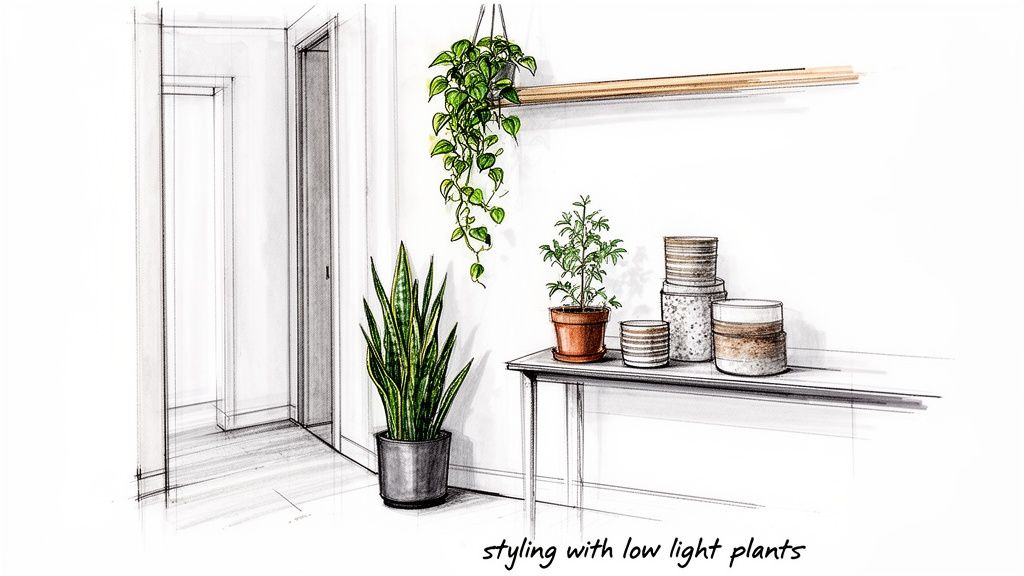
Your low-light houseplants are so much more than just plants; they're dynamic pieces of living decor. Styling with greenery can take a dim, forgotten corner and turn it into the most interesting part of the room, breathing life and personality into your space.
One of the easiest ways to create a bit of drama is to play with vertical space. Try letting a Pothos or another trailing plant cascade down from a high shelf or a hanging basket. It’s a simple trick that draws your eye upward, creating a lush, jungle-like vibe that works wonders in a hallway or the corner of a bedroom.
Creating a Design Statement
For a big impact at floor level, look for plants with strong, architectural shapes. The upright, almost sculptural leaves of a Snake Plant or the glossy, arching stems of a ZZ Plant can act like living art. Pop one in a stylish pot, and it can instantly anchor the whole design of a living room or office.
Here's a little designer secret: group your plants together. When you combine plants of different heights, leaf shapes, and textures, you create a high-impact display that looks thoughtfully curated and intentional.
Of course, the right container is everything. The pot you choose can either blend in or stand out, adding another layer of style to your space. If you're hunting for ideas, we've got a detailed guide on choosing the perfect indoor plant pots.
Don’t be afraid to experiment with where you put things. A single bold plant can command attention all on its own, while a little collection of smaller ones can soften a hard edge or fill an empty nook. By thoughtfully placing your low light houseplants, you can turn any shaded spot into a stunning green statement.
Got Questions? We’ve Got Answers.
We get asked a lot about the ins and outs of caring for low-light plants. Here are some of the most common questions that pop up from our fellow plant lovers in New Zealand.
Can Low-Light Plants Actually Clean the Air?
They absolutely can. Many of the best low-light plants, like the Snake Plant and Peace Lily, are famous for their ability to filter out common toxins floating around our homes.
While you'd need a small jungle to completely purify a large room, every single plant helps contribute to a healthier, happier space to breathe.
How Often Should I Repot My Low-Light Plant?
The short answer? Not very often. Because they grow at a more relaxed pace, you’ll probably only need to repot your low-light plants every 2-3 years.
The easiest way to tell it’s time for a new home is when you spot roots sneaking out of the drainage holes at the bottom of the pot.
Can I Pop a Grow Light in a Really Dark Corner?
You sure can. While these plants are champs at tolerating low natural light, they’ll positively thrive with a bit of extra help from a grow light.
A simple full-spectrum LED is all you need to give them a boost, especially during those darker New Zealand winter months. Once you’ve got the hang of it, you can start thinking about how these gorgeous plants can double as trendy houseplants to really tie a room together.
Ready to bring some green into a shady spot? Find your perfect low-light friend at Jungle Story and transform every corner of your home. https://junglestory.co.nz