
Welcome to our comprehensive guide to New Zealand landscaping ideas, designed specifically for the unique climate and culture of Aotearoa. Whether you're working with a sun-drenched coastal plot in the Hawke's Bay, a lush subtropical corner in Northland, or a dramatic alpine slope in Central Otago, the right design can transform your outdoor space into a personal sanctuary that thrives year-round.
Here in New Zealand, our gardens are more than just decorative spaces; they are an extension of our homes, a place for whānau gatherings, and a vital connection to our stunning natural heritage. This listicle moves beyond generic advice to explore ten distinct landscaping concepts, from creating a native bush haven to designing a sophisticated outdoor entertainment area. Each concept is tailored to thrive in our Southern Hemisphere seasons and diverse regional conditions.
We'll delve into practical, actionable advice, offering specific plant suggestions and material choices that work in our local environment. You will find inspirational examples to help you create a garden that is not only beautiful but also resilient and deeply rooted in the Kiwi way of life. When you've perfected the layout, consider how to bring it to life after dark; to truly elevate your outdoor spaces, explore brilliant landscape lighting design ideas that can highlight your garden's best features. Let's start cultivating your dream outdoor space, one idea at a time.
1. Native Bush Garden
A native bush garden is a landscaping approach that celebrates New Zealand's unique natural heritage by exclusively using indigenous plants. This style aims to recreate the lush, layered feel of Aotearoa's wilderness, incorporating iconic species like kōwhai, harakeke (flax), ponga (tree ferns), and tī kōuka (cabbage trees). It's an authentic design choice that establishes a deep sense of place, connecting your property to the surrounding environment.
This approach is more than just an aesthetic decision; it's a powerful way to support local biodiversity. Native plants provide essential food and shelter for indigenous birds like the tūī and kererū, as well as insects and lizards. This makes it one of the most eco-conscious New Zealand landscaping ideas you can implement. Once established, these gardens are often exceptionally low-maintenance, as the plants are perfectly adapted to local soil types, rainfall patterns, and climate conditions.
How to Implement a Native Bush Garden
Creating a thriving native garden involves thoughtful planning and layering to mimic a natural forest structure.
- Establish a Canopy: Start with taller trees like pōhutukawa (in coastal areas), tōtara, or rimu to form the upper layer. These will provide shelter for smaller plants below.
- Add an Understorey: Introduce medium-sized shrubs and small trees such as pittosporum, coprosma, and hebes. These are hardy and fill out the space, creating density.
- Create a Ground Layer: Use ferns like asplenium, groundcovers, and grasses like carex to cover the soil. This helps retain moisture and provides habitat for invertebrates.
- Use Mulch: Apply a thick layer of mulch (like bark or leaf mould) to suppress weeds, conserve soil moisture, and regulate soil temperature, which is crucial during establishment.
Key Insight: For the best chance of success, plant your natives during the cooler, wetter months of autumn or early spring. This allows their root systems to establish before the stress of summer heat arrives. You can learn more about selecting the right species from this detailed guide to creating an NZ native garden.
2. Coastal Garden Design
Coastal garden design addresses the unique challenges of New Zealand's extensive coastline, where salt spray, strong winds, and sandy soils demand specially adapted plants and hardscaping. This style combines hardy coastal natives and exotics that can withstand harsh maritime conditions while creating relaxed, beach-inspired outdoor spaces. It is perfectly suited for properties from the Coromandel Peninsula to Waiheke Island, embracing the environment rather than fighting against it.
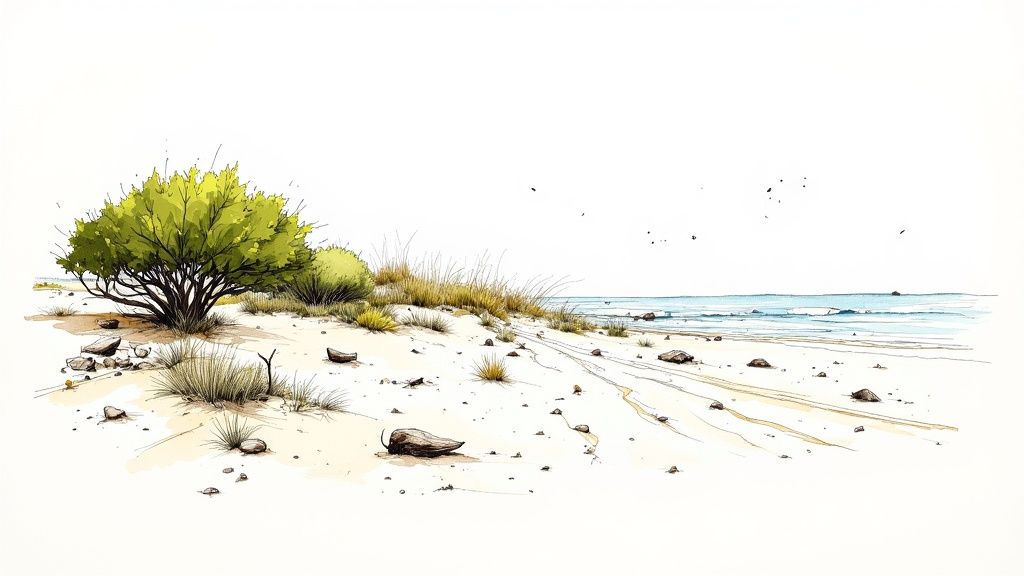
This approach focuses on resilience and harmony with the natural landscape, resulting in a garden that is both beautiful and sustainable. By selecting salt-tolerant plants like pōhutukawa, harakeke, and coprosma, you create a robust ecosystem that thrives with minimal intervention. This makes coastal design one of the most practical and visually stunning New Zealand landscaping ideas for seaside properties. The goal is to build a garden that looks effortless and natural, blending seamlessly with the surrounding dunes and sea views.
How to Implement a Coastal Garden Design
Creating a resilient coastal garden requires a strategic approach that prioritises shelter and soil health before aesthetics.
- Establish a Shelter Belt: Your first priority should be planting a windbreak using tough, wind-resistant native species like griselinia or pōhutukawa. This creates a sheltered microclimate for more delicate plants.
- Improve the Soil: Sandy coastal soils drain quickly and lack nutrients. Work in large amounts of compost and organic matter to improve water retention and fertility, while still ensuring good drainage.
- Use Heavy Mulch: Avoid lightweight organic mulches that can be blown away by strong winds. Instead, opt for heavier materials like gravel, pebbles, or crushed shells to suppress weeds and retain soil moisture.
- Choose Hardy Plants: Select species naturally adapted to salt spray and wind. Besides natives, consider Mediterranean plants like rosemary, lavender, and succulents, which often perform well in these conditions.
Key Insight: When establishing a coastal garden, timing is crucial. Plant new additions in autumn when winds are generally calmer and rainfall is more reliable. This gives plants several months to develop strong root systems before the stresses of summer sun and wind arrive.
3. Alpine and Rock Garden
An alpine and rock garden is a specialised landscaping style that captures the rugged beauty of New Zealand's high-country environments, like the Southern Alps. This approach uses hardy, compact plants, dramatic rock formations, and gravels to recreate a miniature mountain landscape. It is an ideal solution for sloped sites, areas with poor soil, or anyone looking to create a visually striking, low-water garden with strong architectural form.
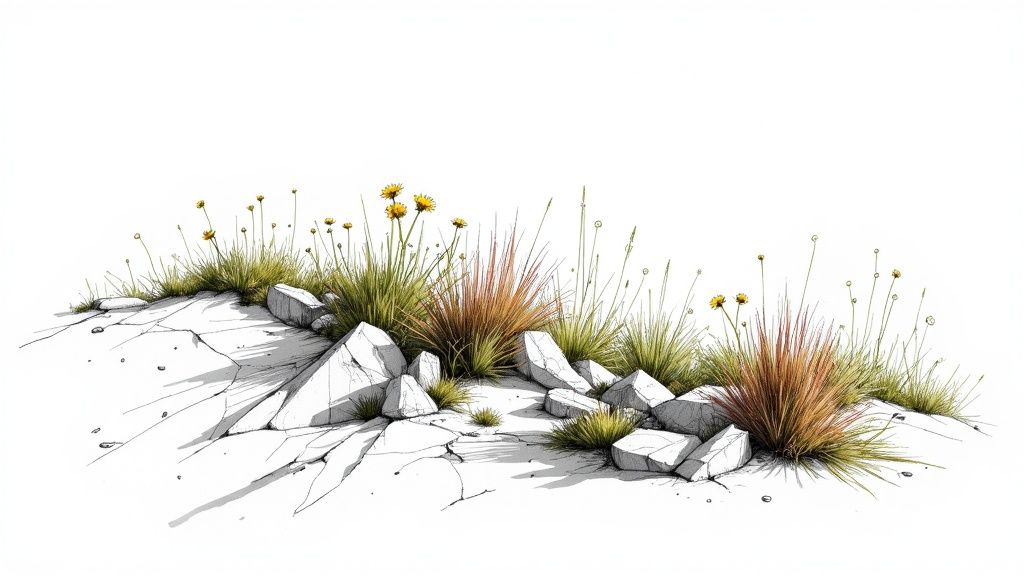
The beauty of this style lies in its celebration of resilience and texture, showcasing plants adapted to tough, free-draining conditions. It features native tussock grasses, hebes, and specialised alpine flora that thrive between carefully placed rocks. This design is not only aesthetically pleasing but also practical, as it requires minimal irrigation once established and offers year-round interest. It's one of the most durable New Zealand landscaping ideas for challenging garden spots.
How to Implement an Alpine and Rock Garden
Building a successful alpine and rock garden hinges on creating the right conditions and selecting appropriate plants.
- Prioritise Drainage: The most crucial element is excellent drainage. Create a base of at least 30 cm of coarse gravel or scoria beneath your topsoil and rock layer to prevent waterlogging.
- Place Rocks Naturally: Position large rocks first, burying them by at least one-third to make them look as though they are emerging naturally from the ground. Tilt them slightly backwards to direct rain towards the plant roots.
- Use a Gritty Soil Mix: Create planting pockets between the rocks and fill them with a lean, gritty mix. A good combination is one part garden loam, one part compost, and two parts coarse sand or fine gravel.
- Select Suitable Plants: Choose tough alpine species, dwarf conifers, succulents, and native grasses like Chionochloa rubra (red tussock). Group plants with similar light and water needs together.
Key Insight: Use local stone, such as schist in Central Otago or volcanic rock in the North Island, to create an authentic regional character. After planting, apply a top-dressing of fine gravel or stone chips to protect plant crowns from rot, suppress weeds, and retain moisture in the soil.
4. Edible Forest Garden (Permaculture)
An edible forest garden, or food forest, applies permaculture principles to create a productive, self-sustaining ecosystem that mimics a natural woodland. This innovative approach layers fruit and nut trees, berry bushes, perennial vegetables, and herbs to create a garden that is not only beautiful but also provides a year-round harvest. It's a popular choice in New Zealand's environmentally-conscious communities, turning a backyard into a low-maintenance, food-producing haven.
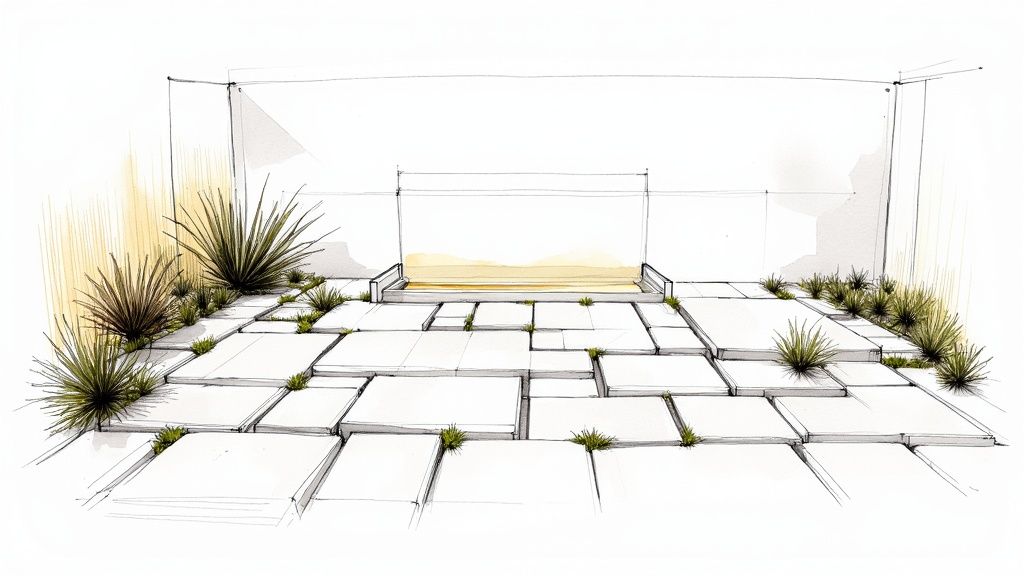
This style moves beyond simple vegetable patches by creating a resilient, interconnected system where plants support each other. It reduces the need for weeding, watering, and pest control once established, making it one of the most sustainable New Zealand landscaping ideas available. By building healthy soil and fostering biodiversity, a food forest provides fresh, organic produce right at your doorstep, with prominent examples found at places like the Koanga Institute in Wairoa and various community gardens across the country.
How to Implement an Edible Forest Garden
Creating a successful food forest involves strategic layering and building plant communities, often called guilds.
- Design Your Canopy: Start with the tallest layer, planting fruit or nut trees like apples, plums, or macadamias as the backbone of your system.
- Add Shrub and Bush Layers: Incorporate productive shrubs such as blueberries, currants, and feijoas. Feijoas and tamarillos can even be used to create an attractive and edible hedge.
- Introduce Herbaceous Plants and Groundcovers: Plant a mix of perennial vegetables (like asparagus and rhubarb), culinary herbs, and groundcovers like strawberries or alpine mints.
- Incorporate Nitrogen-Fixers and Soil Builders: Integrate plants like comfrey, clover, and lupins within your guilds. These "support species" enrich the soil, attract beneficial insects, and help suppress weeds.
- Mulch Heavily: Apply a thick layer of organic mulch (straw, wood chips, or compost) to retain soil moisture, build fertility, and reduce maintenance.
Key Insight: Start small to avoid feeling overwhelmed. A simple herb spiral or a single "guild" planted around a fruit tree is a fantastic entry point into permaculture gardening. Observe your property's sun patterns and water flow before planting to ensure each plant is in its ideal location for maximum productivity.
5. Contemporary Minimalist Garden
A contemporary minimalist garden is a sophisticated landscaping style that champions clean lines, uncluttered spaces, and a refined plant and material palette. This approach complements modern New Zealand architecture by extending the home's interior aesthetic into the outdoors, creating seamless, architectural living spaces. It focuses on the principle of "less is more," using striking focal plants, geometric shapes, and negative space to create a powerful sense of calm and order.
This design is highly intentional, where every element has a purpose and a place. It's an ideal choice for urban courtyards, such as those seen in Auckland or Christchurch city rebuilds, and hillside properties in Wellington where terracing can create clean, functional levels. Far from being boring, this style creates impact through texture, form, and the interplay of light and shadow. The organised nature of these designs makes them some of the most sought-after New Zealand landscaping ideas for busy homeowners seeking a high-impact, low-clutter outdoor retreat.
How to Implement a Contemporary Minimalist Garden
Achieving a successful minimalist garden requires disciplined design choices and a focus on high-quality execution.
- Select a Limited Palette: Choose just a few key plant species and repeat them throughout the design for a cohesive, rhythmic effect. Use a simple colour scheme, often dominated by greens, greys, and whites.
- Invest in Quality Materials: Use high-grade materials like architectural concrete, hardwood decking, or large-format pavers. The simplicity of the design means the quality of the materials is highly visible.
- Create Strong Lines: Emphasise clean, geometric lines in pathways, garden beds, and built structures. Maintain crisp, well-defined edges between the lawn, paving, and garden beds.
- Use Architectural Plants: Incorporate plants with strong sculptural forms as focal points. Think tī kōuka (cabbage trees), succulents like agave, or pleached trees (trees trained to a screen-like form).
- Incorporate Strategic Lighting: Use uplighting to highlight the form of feature trees or to graze textured walls at night, adding drama and extending the garden's usability after dark.
Key Insight: The success of a minimalist garden hinges on its structure and maintenance. Automated irrigation systems are invaluable for precise watering without clutter, and regular, sharp maintenance is crucial to preserve the clean lines and uncluttered aesthetic.
6. Mediterranean Drought-Tolerant Garden
A Mediterranean-style garden brings the relaxed, sun-drenched aesthetic of Southern Europe to New Zealand, creating a space that is both beautiful and resilient. This approach is perfectly suited to drier regions like Hawke's Bay, Marlborough, and Central Otago, combining gravel paths, terracotta pots, and a palette of silvery-green foliage with fragrant, sun-loving plants. It's a design that thrives in our long summer days while demanding minimal water once established.
This style focuses on plants adapted to hot, dry summers and mild, wet winters, mirroring conditions found in many parts of Aotearoa. By selecting species like lavender, rosemary, olives, and succulents, you can create a sensory-rich environment that is also incredibly water-wise. This makes it an excellent choice for gardeners seeking a low-maintenance yet highly atmospheric landscape. For those interested in highly water-efficient designs, understanding the principles of xeriscaping can provide a solid foundation for this approach.
How to Implement a Mediterranean Drought-Tolerant Garden
Creating a successful Mediterranean garden in New Zealand involves prioritising sun, drainage, and texture.
- Prioritise Drainage: Most Mediterranean plants detest "wet feet." Improve soil structure by adding grit or compost, or build raised beds and mounds to ensure sharp drainage.
- Use Gravel and Stone: Incorporate light-coloured gravel mulch, pebble paths, and stone retaining walls. These materials reflect sunlight, suppress weeds, retain soil moisture, and provide the classic Mediterranean look.
- Select Sun-Loving Plants: Choose iconic species like olive trees, cypress, lavender, rosemary, santolina, and rockrose (Cistus). Mix in native drought-tolerant plants like astelia or tussock grasses for a unique local twist.
- Group by Water Needs: Arrange plants with similar water requirements together. This allows for more efficient watering during the establishment phase and simplifies long-term care.
Key Insight: The best time to plant a Mediterranean garden in New Zealand is during autumn. The cooler temperatures and increased rainfall give plants several months to establish strong root systems before the heat and stress of summer arrive. You can find more inspiration for creating a resilient garden with these low-maintenance garden ideas.
7. Subtropical Paradise Garden
A subtropical paradise garden capitalises on the warm, humid, and often frost-free conditions found in many parts of New Zealand, particularly in the upper North Island. This style aims to create a lush, exotic retreat filled with bold foliage, vibrant flowers, and dramatic textures. By using plants like palms, gingers, bromeliads, and large-leafed specimens, you can transform your backyard into a dense, jungle-like sanctuary that feels like a permanent holiday escape.
This design is perfect for creating a private, immersive environment that envelops you in greenery. The large leaves and dense planting provide excellent screening and a cooling effect during hot summer months. It's one of the most visually impactful New Zealand landscaping ideas for those in warmer climates, offering year-round interest and a powerful, resort-style aesthetic. The key is selecting plants that thrive in local conditions, creating a layered canopy that protects more delicate species below.
How to Implement a Subtropical Paradise Garden
Achieving a convincing subtropical look requires strategic plant selection and soil preparation to support lush growth.
- Establish a Canopy: Begin with hardy palms like the nikau or bangalow palm, or fast-growing trees to create shelter. This canopy will protect tender understorey plants from harsh sun and wind.
- Layer with Bold Foliage: Add mid-level plants with large, dramatic leaves. Consider species like taro (Alocasia), canna lilies, and bird of paradise (Strelitzia) for texture and form.
- Incorporate Colour and Detail: Weave in vibrant flowering plants such as hibiscus, ginger lilies (Hedychium), and clivia. Use bromeliads and orchids attached to trees to add an authentic jungle feel.
- Improve Your Soil: Subtropical plants are often heavy feeders. Amend your soil generously with compost and organic matter, and apply a thick layer of mulch to retain moisture and suppress weeds.
Key Insight: Wind can easily shred the large, beautiful leaves of subtropical plants, ruining the aesthetic. Plant a windbreak of tough, fast-growing hedges like griselinias or pittosporums on the windward side of your garden to provide essential protection. For a curated list of plants that excel in this style, explore this guide to growing tropical plants in NZ.
8. Cottage Garden Style
A cottage garden brings traditional English charm to a New Zealand setting, creating an atmosphere of romantic, informal abundance. This style moves away from rigid structure, embracing a 'controlled chaos' aesthetic with dense plantings of perennials, roses, and self-seeding annuals. It emphasizes colour, fragrance, and texture, resulting in a vibrant, layered garden that feels both nostalgic and inviting, perfectly softening the lines of a classic Kiwi villa or a modern home.
This approach is about creating a sensory experience, with fragrant flowers spilling over pathways and a constant succession of blooms from spring through autumn. It's a style that feels personal and lived-in, reflecting a passion for plants and nature. While it looks unstructured, a successful cottage garden requires careful planning to ensure continuous colour and to manage the vigorous growth. This is one of the most beloved New Zealand landscaping ideas for those wanting to create a productive and beautiful space, often incorporating herbs and vegetables among the flowers.
How to Implement a Cottage Garden Style
Creating that effortlessly abundant look involves thoughtful plant selection and a relaxed approach to design.
- Establish a Backbone: Use classic roses, both climbing and shrub varieties, to provide structure and a romantic focal point. These form the permanent framework of the garden.
- Layer with Perennials: Plant in generous drifts using odd numbers for a natural look. Start with hardy perennials like salvias, geraniums, catmint, and delphiniums to provide the bulk of the colour and texture.
- Embrace Self-Seeders: Allow plants like aquilegia, foxgloves, and poppies to self-seed. This helps fill gaps and contributes to the spontaneous, unplanned feel of the garden, though you will need to remove unwanted seedlings regularly.
- Soften the Edges: Use low-growing plants like alyssum, violas, or lamb's ear (Stachys byzantina) along pathways and border edges to create a soft, overflowing effect.
- Feed the Soil: Cottage gardens are hungry. Add a generous layer of compost annually and use mulch to retain crucial soil moisture and suppress weeds.
Key Insight: To keep your cottage garden looking its best, deadhead flowers regularly throughout the flowering season. This simple task prevents plants from setting seed too early and encourages a second, or even third, flush of blooms, prolonging the vibrant display well into autumn.
9. Outdoor Living and Entertainment Area
Reflecting New Zealand's famous indoor-outdoor lifestyle, an outdoor living and entertainment area is designed as a functional and seamless extension of the home. This landscaping concept combines durable hardscaping like decks and patios with features such as outdoor kitchens, fire pits, and comfortable seating. It creates a versatile, all-season space for dining, socialising, and relaxing, perfectly catering to the Kiwi way of life.
This idea goes beyond a simple patio; it’s about creating a true "outdoor room" that is both beautiful and highly practical. These spaces add significant value and usability to a property, whether it's a modern Auckland home with bi-fold doors leading to a covered louvre deck or a Queenstown lodge with an alpine-view spa and fire pit. Implementing one of these sophisticated New Zealand landscaping ideas allows you to maximise your property's potential and enjoy the outdoors in comfort throughout the year.
How to Implement an Outdoor Living Area
Creating a successful outdoor entertainment zone requires careful integration of shelter, amenities, and ambience.
- Define Zones: Plan distinct areas for different activities. Create a dining zone near the kitchen, a comfortable lounging area around a fire feature, and perhaps a separate, sunnier spot for morning coffee.
- Provide All-Weather Shelter: Install a pergola with a retractable roof, a fixed louvre system, or a covered veranda to provide protection from both intense sun and rain, making the space usable in any season.
- Integrate Amenities: For ultimate convenience, include built-in features like a barbecue station or a full outdoor kitchen with a sink and fridge. Ensure outdoor power points and integrated lighting are planned from the start.
- Use Strategic Planting: Use evergreen screening plants like griselinia or pittosporum for year-round privacy. Soften hardscaped edges with lush, low-maintenance planting to create a relaxed, inviting atmosphere.
Key Insight: Prioritise shelter from the prevailing wind. Even on a warm day, a persistent breeze can make an outdoor space uncomfortable. Use solid screens, hedging, or clever orientation of structures to create a calm, sheltered microclimate for your entertainment area. You can find inspiration for fire features from specialists like Engel Firepits NZ.
10. Rain Garden and Eco-Drainage Systems
A rain garden is a cleverly designed garden depression that addresses New Zealand's increasing stormwater challenges by working with nature, not against it. This eco-drainage approach involves creating shallow basins planted with water-tolerant species to capture, filter, and slowly absorb rainwater runoff from roofs, driveways, and other hard surfaces. It’s an effective and beautiful way to reduce flooding, prevent pollutants from entering our waterways, and create a resilient, low-maintenance landscape.
This system is becoming a vital component of modern urban design, with councils across Aotearoa encouraging or even requiring them in new developments. Initiatives like Auckland Council's Healthy Waters programme and Christchurch's red zone regeneration showcase their effectiveness. By integrating one into your property, you're implementing one of the most practical and environmentally beneficial New Zealand landscaping ideas, turning a drainage problem into a thriving garden feature that supports local biodiversity.
How to Implement a Rain Garden
Creating a functional rain garden requires careful site selection and construction to manage water flow effectively.
- Siting and Sizing: Position the garden at least 3 metres away from building foundations in a naturally low-lying area. The basin should be sized to handle the runoff from a typical rainfall event, with a gentle slope for safe water entry.
- Plant Selection: Choose hardy native plants adapted to wet and dry cycles. Species like oioi (jointed wire rush), tī kōuka (cabbage tree), and certain carex varieties are excellent choices as they thrive in these conditions.
- Layering Materials: Excavate the area and fill it with a free-draining soil mix, often a blend of sand and compost. This medium is key to filtering contaminants and allowing water to soak in efficiently.
- Managing Overflow: Always include a planned overflow point, like a pipe or a stabilised channel, to direct excess water safely away during extreme downpours, preventing the system from being overwhelmed.
Key Insight: Rain gardens are not ponds; a well-designed system should drain completely within 24 to 48 hours after a storm. This prevents waterlogging and ensures it doesn't become a breeding ground for mosquitoes, making it a safe and functional addition to any garden.
Top 10 New Zealand Landscaping Styles Comparison
| Garden Type | Implementation Complexity 🔄 | Resource Requirements ⚡ | Expected Outcomes 📊 | Ideal Use Cases 💡 | Key Advantages ⭐ |
|---|---|---|---|---|---|
| Native Bush Garden | Moderate - needs specific soil, patience | Moderate - native plants can be costly | Supports native biodiversity, resilient garden | Urban & rural low-maintenance, wildlife-friendly spaces | Low water use, minimal maintenance, cultural value |
| Coastal Garden Design | Moderate - requires windbreaks setup | Moderate - salt-tolerant plants & materials | Wind protection, erosion control, coastal wildlife | Coastal locations exposed to salt spray and wind | Low irrigation, erosion control, suits beachside |
| Alpine and Rock Garden | High - rock placement and drainage plans | High - sourcing rocks and alpine plants | Drought-tolerant, year-round texture | Slopes, poor soils, cool regions | Excellent drainage, frost-hardy, low maintenance |
| Edible Forest Garden (Permaculture) | High - requires detailed planning and knowledge | Moderate to high - diverse plantings and systems | Year-round food production, improved soil health | Sustainable food production, ecological gardening | Abundant harvest, low chemicals, promotes ecosystem |
| Contemporary Minimalist Garden | Moderate - professional design often needed | High - quality materials and architectural plants | Clean, sophisticated look, low maintenance | Modern homes, small urban spaces | Low water, year-round consistency, value-adding |
| Mediterranean Drought-Tolerant Garden | Moderate - soil amendments and plant grouping | Moderate - drought-tolerant plants and gravel | Water-efficient, fragrant garden with culinary herbs | Hot, dry NZ regions with full sun | Very low water use, attracts pollinators, low maintenance |
| Subtropical Paradise Garden | High - frost protection and ongoing care | High - tropical plants with higher water needs | Fast growth, lush privacy, high biodiversity | Frost-free northern NZ areas | Resort feel, quick impact, year-round greenery |
| Cottage Garden Style | Moderate - ongoing deadheading and care | Low to moderate - self-seeding plants and perennials | Romantic, colourful, pollinator-friendly | Informal, rural and urban nostalgic gardens | Inexpensive, forgiving style, multi-season interest |
| Outdoor Living and Entertainment Area | High - structural build and weatherproofing | High - kitchens, fire features, furniture | Extends living space, year-round social areas | Family lifestyle, temperate climate outdoor entertaining | Adds property value, multi-functional, weather adaptable |
| Rain Garden and Eco-Drainage Systems | High - technical design and soil engineering | Moderate to high - specialised plants, soil mix | Stormwater management, water quality improvement | Urban areas, sustainable development | Reduces flooding, filters pollutants, supports wildlife |
Bringing Your Vision to Life
You have now journeyed through ten distinct and inspiring New Zealand landscaping ideas, each a blueprint for transforming your outdoor space into a personal sanctuary. From the rugged, untamed beauty of a native bush garden to the structured elegance of a contemporary minimalist design, the possibilities are as diverse and captivating as Aotearoa itself. We have explored how to create resilient coastal retreats that withstand salt and wind, how to build productive edible forests based on permaculture principles, and how to design stunning subtropical paradises that make every day feel like a holiday.
The true power of this exploration lies not in choosing just one path, but in understanding the principles behind each. Realising your dream garden is about more than just aesthetics; it is a deep and rewarding process of connecting with your environment. It involves understanding your specific microclimate, from the sun-drenched slopes of Hawke's Bay to the cooler, rain-fed soils of the West Coast. It means selecting plants and materials that will not only survive but thrive, creating a sustainable and harmonious ecosystem that works with nature, not against it.
Key Takeaways for Your Landscaping Journey
As you move from inspiration to implementation, remember these core principles that underpin all successful New Zealand landscaping ideas:
- Site-Specific Design is Paramount: Your garden's success hinges on a design that honours your specific location. Consider your sun exposure, soil type, wind patterns, and rainfall. A Mediterranean garden thrives in a dry, sunny spot, while a rain garden is a perfect solution for a damp, low-lying area.
- Embrace Native Flora: Integrating native plants is one of the most impactful choices you can make. They are perfectly adapted to our local conditions, support native wildlife like tūī and kererū, and anchor your garden with an unmistakable Kiwi character. From the architectural form of a tī kōuka (cabbage tree) to the delicate fronds of a ponga (silver fern), natives offer unparalleled texture and form.
- Functionality Drives Form: A beautiful garden is also a usable one. Think about how you want to live in your space. Do you need a dedicated area for entertaining, a safe play zone for the kids, or a quiet corner for reflection? The layout of your paths, patios, and planting beds should directly support your lifestyle.
- Blend and Borrow Elements: Don't feel confined to a single style. The most compelling gardens often combine elements from different themes. You could, for instance, use the drought-tolerant plants of a Mediterranean scheme within the clean, structured layout of a contemporary garden. Similarly, a productive edible garden can be softened with the informal, romantic planting style of a cottage garden. The goal is to create a space that feels uniquely yours.
Your Actionable Next Steps
Embarking on a landscaping project can feel daunting, but breaking it down into manageable steps makes the process achievable and enjoyable.
- Observe and Analyse: Spend time in your garden at different times of the day and year. Note where the sun falls, which areas are windy, and where water pools. Take soil samples to understand its composition. This observation phase is the foundation of a successful design.
- Define Your Vision: Revisit the ten ideas presented in this article. Which one resonates most with you? Create a mood board with images, plant lists, and material textures. This will serve as your visual guide and help you maintain a cohesive look.
- Start Small: You don't have to tackle the entire garden at once. Begin with a single garden bed or a small corner. This allows you to experiment with plant combinations and techniques, building your confidence as you go. A small, well-executed project is far more rewarding than a large, unfinished one.
Ultimately, crafting your garden is a journey of creativity and discovery. It is an opportunity to express your personality, enhance your property's value, and create a living, breathing extension of your home. By thoughtfully applying these New Zealand landscaping ideas, you can cultivate an outdoor space that not only looks spectacular but also enriches your life for years to come.
Ready to turn your landscaping dreams into reality? Jungle Story is New Zealand's premier online marketplace for all your gardening needs, connecting you with trusted local sellers. Find the perfect native ferns, subtropical palms, or hardy coastal plants to bring your unique vision to life, all in one place.