
Walk into any garden centre in New Zealand, and you’re almost guaranteed to find bags of potting mix with peat moss listed as a key ingredient. It's often talked about as a bit of a miracle additive for gardeners, but what exactly is it?
Think of it less as 'soil' and more as a unique, sponge-like material that has formed over thousands of years in wetland bogs. Gardeners love it for its remarkable ability to improve the structure of their soil.
What Is Peat Moss and Why Is It So Popular?
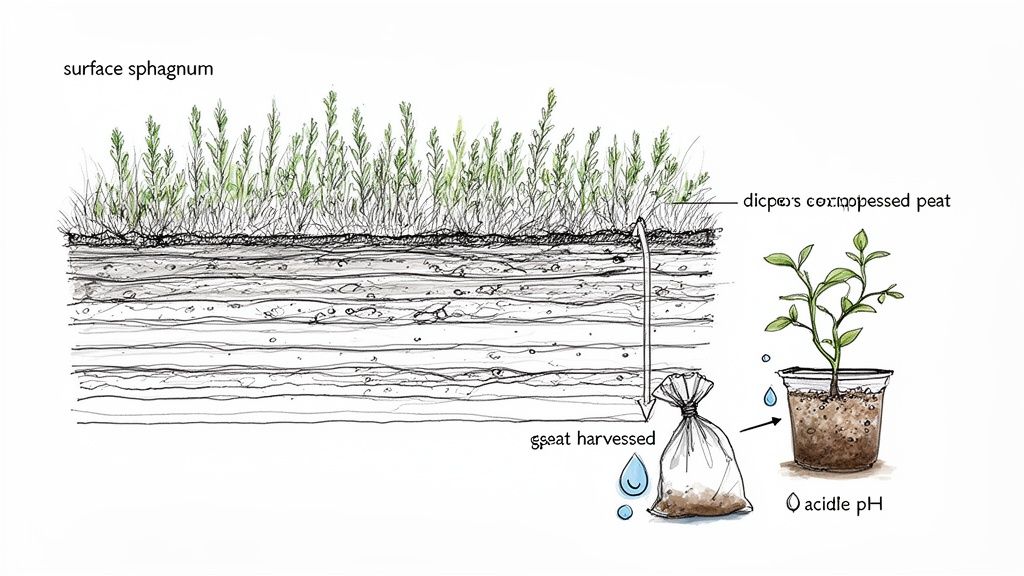
At its heart, peat moss is just the partially decomposed remains of sphagnum moss and other organic bits and pieces. This whole process happens incredibly slowly in cold, waterlogged, and oxygen-poor environments we call peat bogs. Over millennia, layers of this stuff build up, creating a fibrous, light, and seriously absorbent substance.
The journey from a bog to a bag in your local garden store involves draining the bog, harvesting the layers of peat, and then drying, screening, and packaging it. This process is what makes it such a consistent and widely available product for gardeners all across Aotearoa.
The Three Superstar Qualities of Peat Moss
The popularity of peat moss is no accident. It all comes down to three standout properties that make it incredibly useful for Kiwi gardeners, especially given our varied climate and soil types.
First up is its incredible ability to hold water. Peat moss can soak up to 20 times its own weight in water, acting like a tiny natural reservoir in your potting mix or garden bed. For anyone dealing with unpredictable rainfall or dry spells, this quality is a game-changer. It helps keep plant roots consistently moist, meaning you water less and your plants are less stressed.
Second, peat moss is naturally sterile. It contains very few microorganisms, weed seeds, or nasty pathogens. This makes it a perfect medium for starting delicate seedlings, as it gives them a clean, safe environment to get established without competition or the threat of disease.
Peat moss is essentially a blank slate. Its sterility means you're in control of the growing environment, which is crucial when you're propagating sensitive plants or raising seedlings that are vulnerable to common soil-borne fungi.
Finally, it has a naturally acidic pH, usually sitting somewhere between 3.5 and 4.5. While this isn't right for every plant, it’s a huge advantage for the acid-loving species that thrive in New Zealand gardens.
- Azaleas and Rhododendrons: These vibrant shrubs need acidic soil to properly absorb nutrients and produce those stunning blooms we all love.
- Blueberries: If you want a successful blueberry crop, acidic soil is non-negotiable. Peat moss is an easy way to get you there.
- Camellias: Another garden favourite, camellias flourish in the acidic conditions that peat moss helps create and maintain.
These three qualities—water retention, sterility, and acidity—make peat moss a powerful tool in any gardener's toolkit. However, as we'll get into, its benefits come with some significant environmental questions that are leading many Kiwi gardeners to look for more sustainable alternatives. This sets the stage for a deeper look into its practical uses, drawbacks, and the ongoing conversation about its place in modern, eco-conscious gardening.
Weighing the Pros and Cons for Your Garden
Peat moss definitely brings some handy benefits to the garden, but it's certainly not a one-size-fits-all solution. Getting to grips with both its strengths and its weaknesses is the key to figuring out if it’s the right fit for your projects—whether you’re tending a veggie patch in Canterbury or designing a native garden up in Northland.
Its long-standing popularity is built on some solid advantages that really shine in New Zealand's varied climates. But those upsides come with some practical and ecological strings attached that every thoughtful gardener should weigh up.
Let's break down the good and the not-so-good so you can make a smart choice for your plants, and for the planet.
The Clear Advantages of Using Peat Moss
The main reason so many gardeners reach for peat moss is its incredible ability to hold water. It can soak up and hang onto an amazing 20 times its own weight in moisture, acting like a natural sponge right there in your soil. This is a massive help during our dry summer months, meaning less time spent watering and helping your plants push through those heat waves.
Another big plus is that it’s naturally sterile and acidic. Because it's free of pesky weed seeds and microorganisms, it gives delicate seedlings a clean, safe start, protecting them from fungal diseases like damping off. Its low pH is also a dream for acid-loving plants like azaleas, camellias, and blueberries, helping them get the nutrients they need to thrive.
For anyone starting seeds or growing plants that crave acidic soil, peat moss delivers a predictable and effective medium. It creates a controlled environment where vulnerable young plants can get a strong head start, away from common soil-borne nasties.
The Practical Drawbacks for Kiwi Gardeners
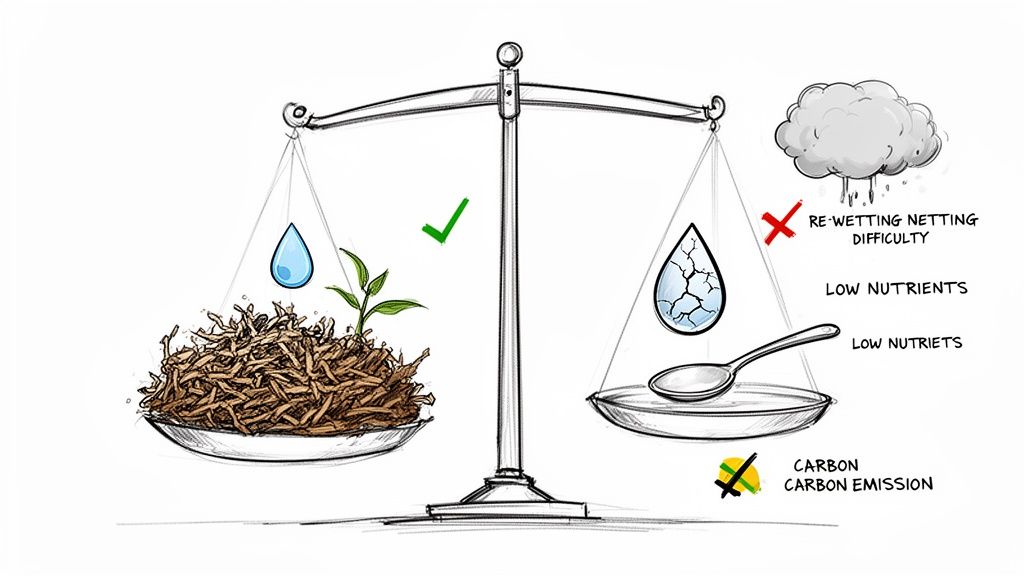
For all its benefits, peat moss has some real downsides. One of the most frustrating things is how it behaves when it completely dries out—it becomes hydrophobic. If a pot with a lot of peat in it dries out entirely, the peat can actually repel water, making it a serious mission to get it wet again. Water will just bead up and run off the surface instead of soaking in, leaving your plant's roots high and dry.
On top of that, peat moss contains almost zero nutrients. While it’s brilliant for improving soil structure and holding moisture, it offers nothing in the way of food for your plants. To grow healthy veggies or flowers, you have to add in fertilisers or nutrient-packed goodies like compost. Think of it as a soil conditioner, not a meal.
To help you see it all at a glance, here’s a quick summary of the main points to consider.
Peat Moss at a Glance: Benefits vs Drawbacks
| Feature | Benefit (Pro) | Drawback (Con) |
|---|---|---|
| Water Retention | Holds up to 20x its weight in water, reducing watering frequency. | Becomes hydrophobic when completely dry, repelling water. |
| Nutrient Content | None; provides a blank slate for customised feeding. | Contains virtually no nutrients, requiring added fertilisers. |
| Sterility | Free of weed seeds and pathogens, great for seed starting. | Lacks beneficial microbes found in healthy soil. |
| Acidity (pH) | Naturally acidic, perfect for acid-loving plants like blueberries. | Unsuitable for plants that prefer alkaline or neutral soil. |
| Structure | Lightens heavy clay soils and adds body to sandy soils. | Can compact over time, reducing aeration. |
This table shows the trade-offs you're making. Peat offers control and moisture retention but demands more from you in terms of feeding and careful watering.
Balancing Benefits and Environmental Costs
The biggest issue with using peat moss NZ wide is, without a doubt, its environmental impact—a topic we'll dive into more deeply later on. Harvesting peat means draining ancient wetland ecosystems called bogs, which are incredibly important carbon sinks that store huge amounts of carbon dioxide.
When these bogs are drained and the peat is harvested, all that stored carbon gets released into the atmosphere, which contributes to climate change. The process also destroys unique habitats for all sorts of specialised plants and wildlife. This heavy environmental toll is pushing many Kiwi gardeners to look for more sustainable alternatives.
Ultimately, deciding whether to use peat moss means weighing its undeniable garden benefits against its ecological footprint and its practical limits. For some specific jobs, it’s still a very effective tool, but it's no longer the only game in town for creating a thriving New Zealand garden.
The Environmental Footprint of Peat Harvesting
While peat moss has some definite upsides for certain gardening jobs, the conversation takes a sharp turn when we look at its environmental cost. This isn't some far-off global issue; it's happening right here in Aotearoa. Peat bogs, where all peat moss comes from, aren't just patches of dirt to be dug up. They're ancient, vital ecosystems—and some of the most powerful carbon warehouses on the planet.
Think of a peat bog as a giant, natural sponge that’s spent thousands of years soaking up carbon. As sphagnum moss and other plants die in these swampy, low-oxygen conditions, they can't fully decompose. Instead, they get trapped, locking their carbon away. This incredibly slow process makes peatlands ridiculously good at storing carbon, holding more per acre than even rainforests.
But when these bogs are drained for harvesting, that ancient cycle is brought to a screeching halt. The water is pumped out, exposing millennia of stored organic matter to the air for the first time. This triggers rapid decomposition, releasing huge amounts of stored carbon dioxide (CO2) and other greenhouse gases straight into the atmosphere, directly fuelling climate change.
The Impact on Carbon Sinks and Climate Change
That massive release of carbon is the single biggest environmental fallout from peat harvesting. Globally, peatlands are estimated to store a staggering 550 billion tonnes of carbon—that’s more than all other types of vegetation in the world combined. When we disturb them, we're essentially cracking open a massive carbon vault and letting it all escape.
This process flips a powerful carbon sink—an ecosystem that absorbs more carbon than it releases—into a carbon source. And the damage isn't just a one-time thing. Drained peatlands can continue to leak CO2 for decades, long after the harvesting machinery has gone.
This is a serious problem for New Zealand as we work towards our climate goals. Every tonne of CO2 released from a drained bog is another tonne we have to account for, making the protection of our remaining wetlands a critical part of our environmental strategy.
Local Consequences for New Zealand's Ecosystems
While New Zealand's peat industry is relatively small, its environmental footprint is anything but. We have two main peat producers, one in Waikato and one in Southland, that together harvest around 50,000 cubic metres of peat every year. This operation alone is estimated to release 6,400 tonnes of CO2 annually—roughly the same emissions as 3,500 petrol cars driving for a full year. Taking a wider view, the impact of all drained peatlands in NZ contributes a startling 8-10% of our country's net greenhouse gas emissions.
"I compare it to cutting down old-growth forests. Sure, you can plant new trees, but it will take a long time to get [peatland] back to the way it was." - Linda Chalker-Scott, author of The Informed Gardener.
This quote nails it. Peat is essentially non-renewable. It accumulates at a snail's pace of about 1 millimetre per year. That means a bog harvested today won't recover for many, many generations, if it ever does.
Loss of Precious Biodiversity
Beyond the carbon problem, peat bogs are unique and fragile habitats. They are home to a highly specialised lineup of plants and animals that have adapted to the acidic, waterlogged conditions—species that often can't survive anywhere else.
- Unique Plant Life: Think carnivorous plants, specific types of orchids, and mosses that thrive only in these boggy environments.
- Insect and Bird Habitats: These wetlands are crucial breeding grounds and homes for rare insects, amphibians, and wading birds.
When a bog is drained, the entire ecosystem collapses. That unique biodiversity is lost, and the land is changed forever. Trying to restore a peat bog is an incredibly slow, difficult, and expensive process with no guarantee of success. This destruction of habitat is a serious loss, diminishing the natural heritage of our landscapes. It's exactly why so many gardeners are now looking for sustainable alternatives. A fantastic place to start is by making your own rich soil amendment; our guide on how to start composting at home can show you how.
So, the decision to use peat moss nz goes far beyond your garden gate. It connects the choices we make in our backyards to global climate patterns and local conservation efforts. Understanding this true cost is the first step toward making better, more environmentally conscious decisions—empowering us to nurture our gardens while also protecting the planet.
Exploring Sustainable Alternatives to Peat Moss
The great news for Kiwi gardeners is that moving away from peat moss doesn’t mean compromising on quality. In fact, the alternatives are fantastic, eco-friendly options that your plants will absolutely love. These sustainable materials offer similar, and often superior, benefits without the hefty environmental price tag.
By getting to know the strengths of each alternative, you can start creating custom potting mixes and garden bed amendments perfectly suited to your plants' needs. Let's dig into the best peat-free options available right here in New Zealand.
Coconut Coir: The Versatile Peat Substitute
One of the most popular and effective alternatives is coconut coir. This is simply the fibrous material found between the hard inner shell and the outer coat of a coconut. Once considered a waste product, it’s now celebrated for its excellent properties as a growing medium.
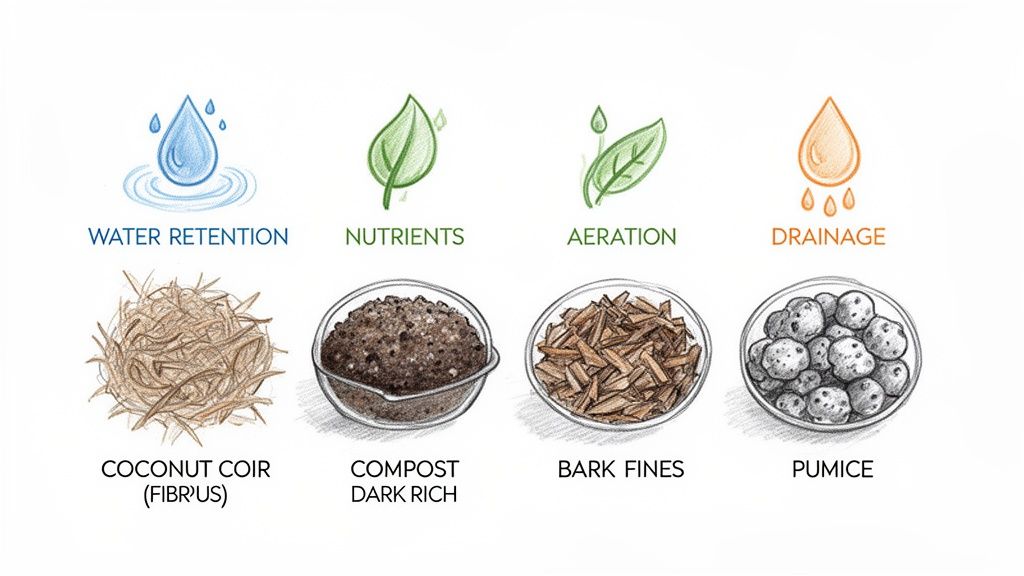
Like peat, coir is fantastic at holding water, ensuring your plant roots have a consistent supply of moisture. Unlike peat, however, it rehydrates easily if it dries out, so you don't have to worry about that frustrating hydrophobic effect. It also has a more neutral pH, making it suitable for a wider range of plants without needing adjustments.
Coir is typically sold in compressed bricks, which are easy to store and expand significantly when you add water. It provides excellent aeration for roots, promoting strong, healthy growth. Just be aware that it contains very few nutrients, so you’ll need to supplement it with compost or a balanced fertiliser.
Compost: The Nutrient-Rich Soil Builder
If peat moss is a blank slate, compost is a five-star meal for your garden. This "black gold" is decomposed organic matter teeming with beneficial microbes and essential nutrients. It's the ultimate soil conditioner and a cornerstone of sustainable gardening.
While peat offers structure, compost offers structure and sustenance. It improves soil texture, helps retain moisture, and feeds your plants over time. Using high-quality compost reduces the need for chemical fertilisers, creating a healthier soil food web that supports worms, fungi, and bacteria.
Compost does everything peat can do for soil structure—and so much more—without damaging the environment. It is the ultimate organic garden amendment: renewable, affordable, and sustainable.
You can make your own compost at home from kitchen scraps and garden waste, or purchase it in bags from local garden centres. It’s an essential ingredient for any peat-free potting mix or garden bed, bringing life and vitality to your soil.
Bark Fines and Pumice: For Drainage and Airflow
While coir and compost handle moisture and nutrients, other materials are needed to ensure good aeration and drainage. This is where locally sourced products like bark fines and pumice come into their own, acting as the structural backbone of a good potting mix.
- Bark Fines: These are small, shredded pieces of bark, often from pine trees grown in New Zealand's forestry industry. They add organic matter that breaks down slowly, creating air pockets in the soil that prevent compaction and allow roots to breathe.
- Pumice: This lightweight volcanic rock is brilliant for improving drainage. Its porous structure helps prevent waterlogging, which is crucial for plants prone to root rot, such as succulents and many native NZ species.
Combining these elements with coir and compost allows you to create a perfect, well-balanced growing medium from scratch. And if you're exploring sustainable gardening, you might also be interested in other eco-friendly projects, like creating a greenhouse with reclaimed materials, to further reduce your environmental footprint.
Comparing Peat Moss Alternatives for Your Garden
Choosing the right material really depends on what you're trying to achieve in your garden. This table gives you a quick comparison to help you select the best sustainable alternative for your projects.
To boost your soil's health even further, consider the benefits of using a quality liquid feed. Learn more in our guide to seaweed fertiliser in NZ.
| Material | Water Retention | Aeration | Nutrient Content | Best For |
|---|---|---|---|---|
| Peat Moss | Very High | Good | Very Low | Acid-loving plants, seed starting |
| Coconut Coir | High | Excellent | Very Low | General potting mixes, hydroponics |
| Compost | Good | Good | High | Enriching garden beds, feeding plants |
| Bark Fines | Moderate | Excellent | Low | Improving structure, orchid mixes |
| Pumice | Low | Excellent | None | Improving drainage for succulents |
By mixing and matching these sustainable ingredients, you gain complete control over your soil's properties. This approach not only empowers you to be a more effective gardener but also makes a positive choice for the environment, proving that great gardens don’t have to cost the earth.
How Sustainable Sphagnum Moss Is Changing the Game
As Kiwi gardeners get more clued up on the environmental cost of traditional peat moss, a genuinely exciting and renewable alternative is making waves. The best part? It has deep roots right here in Aotearoa. This solution is sustainably harvested Sphagnum moss, and it’s a world away from the peat you might be used to.
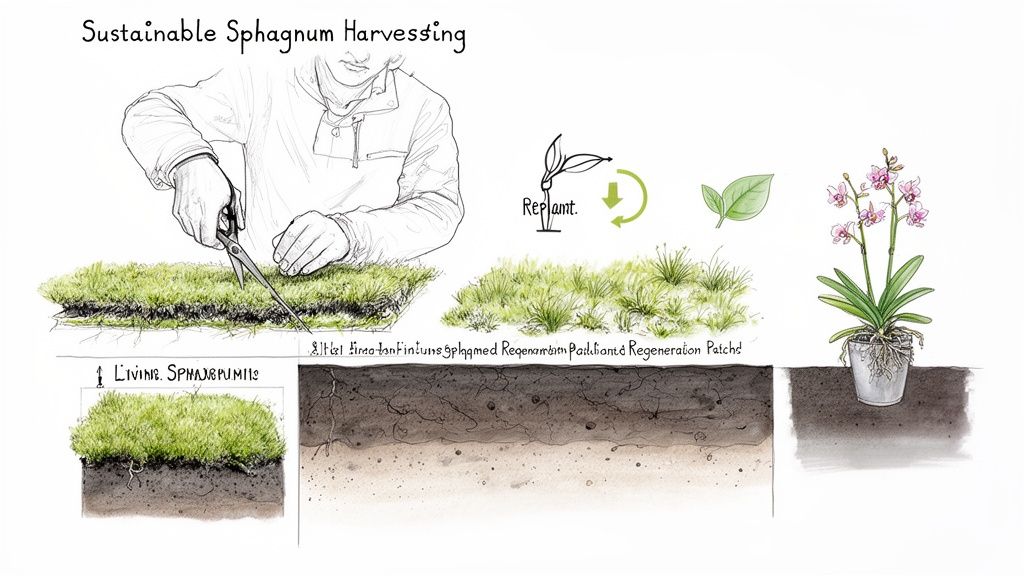
Imagine a wetland bog as a sort of living layer cake. The top is a lush, green-and-gold carpet of living Sphagnum moss. Underneath that lies the peat – the dark, decomposed stuff that’s been building up for thousands of years. The crucial difference is how we get it: peat is mined, but living Sphagnum can be farmed.
This isn't just a small detail; it changes everything. Instead of draining and digging up a whole ecosystem, sustainable Sphagnum harvesting means carefully collecting only that top, living layer. The peat bog below is left completely untouched, allowing it to keep doing its job storing carbon and supporting a unique ecosystem.
A Kiwi Innovation in Sustainable Horticulture
New Zealand, especially the West Coast of the South Island, has been working with this amazing resource for a long time. Commercial Sphagnum moss harvesting has been a key industry here for decades, and its potential is well-recognised. In fact, studies have shown just how resilient these wetlands are. Some harvested sites saw their moss content bounce back to 71% in just a handful of years. You can read up on the history and recovery of the industry for a deeper dive.
Today's sustainable practices have turned this process into a truly green alternative. Harvesters carefully ‘prune’ the top layer of moss, often by hand, leaving plenty behind to regrow quickly. Some are even pioneering new methods, like re-seeding small moss fragments across the area to speed up the regeneration even more.
This careful approach shifts Sphagnum from a limited resource into a fully renewable one. It’s a brilliant example of Kiwi innovation, balancing what we need for our gardens with a real respect for our natural world.
Sustainable Sphagnum harvesting works with the wetland's natural cycles, not against them. By treating the moss as a regenerating crop, we can access a premium growing medium while keeping the ancient peat bog—and its stored carbon—safely underground.
The Perfect Medium for Speciality Plants
So, what makes this sustainably harvested Sphagnum so good for our plants? It turns out it has all the great qualities of peat moss, and then some.
- Exceptional Water Retention: It acts like a natural sponge, holding an incredible amount of water to keep thirsty plants happy.
- Superior Aeration: The long, fibrous texture creates little air pockets around the roots, giving them plenty of oxygen and stopping them from getting waterlogged.
- Natural Sterility: It's naturally sterile and even has antiseptic properties, which helps protect delicate new roots from nasty pathogens.
These traits make it the absolute top choice for fussy plants that need that perfect balance of moisture and air. Orchids, carnivorous plants, and epiphytes like bromeliads absolutely love growing in pure Sphagnum moss. It's also fantastic for air layering and propagating cuttings, giving new roots a clean, supportive home to get started in.
By choosing sustainably sourced peat moss nz alternatives like Sphagnum, we're not just getting a better product for our plants; we’re supporting a system that protects our precious wetlands for generations to come.
Choosing the Right Growing Medium for Your Garden
Figuring out what to grow your plants in is one of the biggest decisions you'll make as a Kiwi gardener. It’s not about finding a single ‘good’ or ‘bad’ product, but about understanding your options so you can choose what’s best for your plants and for Aotearoa’s precious environment.
This really comes down to matching the right material to the right job. If you’re starting delicate seeds in late winter (roughly June to August), a sterile, peat-free medium like coconut coir is a fantastic choice. It gives your seedlings a clean start, free from the risk of common soil-borne diseases.
Making an Informed Choice
But when you need to enrich large garden beds, nothing beats the power of a really good compost. It slowly releases essential nutrients and builds a thriving soil ecosystem teeming with beneficial microbes—something sterile mediums just can’t do. You can learn more about this in our complete guide to soil for plants.
If you do decide to use peat moss nz for certain acid-loving plants like blueberries or rhododendrons, the key is to be strategic. Just a small amount mixed into your soil can create the acidic conditions they love without making peat your go-to for everything else.
The reality is that New Zealand's peatlands are under serious pressure. We’ve lost a huge area of our natural wetlands, and the drained peatlands that remain contribute up to 6% of our country's agricultural greenhouse gas emissions. That figure alone shows just how big an impact their degradation has. For a deeper dive, you can explore the full report on NZ's peatland resources.
The key takeaway is learning to create your own peat-free or ‘peat-reduced’ mixes. By doing this, you align your passion for gardening with a commitment to protecting New Zealand's unique environment.
Every small, thoughtful change we make adds up. By choosing alternatives or simply using less peat, you’re helping to preserve our remaining wetlands and lower our collective carbon footprint, making sure our gardens are truly a force for good.
A Few Common Questions
Getting your hands dirty with soil amendments can bring up a lot of questions. Let's dig into some of the most common queries we hear from Kiwi gardeners about peat moss nz and its greener alternatives, so you can feel confident in your choices.
Can I Just Swap Coconut Coir for Peat Moss?
For most things you’ll do in the garden, yes, coconut coir is an excellent and far more sustainable substitute for peat. It holds water just as well, but with one great advantage: it’s easy to re-wet if it ever dries out completely. Coir also has a neutral pH, making it a great all-rounder for a huge variety of plants.
That said, it isn't always a perfect one-for-one swap. Coir is pretty much nutrient-free and sometimes needs a good rinse before you use it to wash away any natural salts. And for those plants that absolutely crave acidic soil—like your beloved blueberries—peat still has a slight edge unless you're prepared to amend the coir. Really, it all comes down to what your specific plant needs to thrive.
How Do I Make My Own Peat-Free Potting Mix?
Mixing your own peat-free potting blend is one of the most satisfying things you can do as an eco-conscious gardener. It's surprisingly easy and gives you total control to create the perfect home for your plants.
Here’s a fantastic, all-purpose recipe to get you started:
- One part coconut coir for brilliant moisture retention.
- One part high-quality compost or worm castings to pack in the nutrients.
- One part pumice or perlite to make sure the mix has great drainage and aeration.
From there, you can tweak it as you need. For succulents or native plants that need their roots to stay dry, just add a bit more pumice. For hungry vegetables like tomatoes, an extra scoop of compost will give them the fuel they need.
Crafting your own mix isn't just about ditching peat; it's about taking complete control over what your plants grow in. You're ensuring they get exactly what they need while doing your bit for a healthier gardening ecosystem.
Where Does the Peat Moss in New Zealand Shops Come From?
The peat moss you see in garden centres around New Zealand is a bit of a mixed bag. Some of it is sourced right here in Aotearoa, with two main commercial peat producers operating in the Waikato and Southland regions.
But a fair chunk of it is also imported, mostly from countries with massive peat reserves like Canada. If you're wondering where a particular bag comes from, just check the packaging for its country of origin. It’s a simple way to make a more informed choice, especially if you’re thinking about the carbon footprint of shipping bulky stuff halfway around the world.
Ready to build the perfect foundation for your plants? Explore the extensive range of premium potting mixes, soil amendments, and beautiful plants at Jungle Story. Find everything you need to create a thriving, sustainable garden. https://junglestory.co.nz