
Meet the Calathea ornata, a plant that truly makes a statement. Known by its much more descriptive name, the Pinstripe Plant, this tropical beauty is loved for its deep green leaves that look like they've been delicately hand-painted with fine, pink lines. It's the kind of plant that brings a touch of the exotic and dramatic right into your New Zealand home.
Discover The Pinstripe Plant
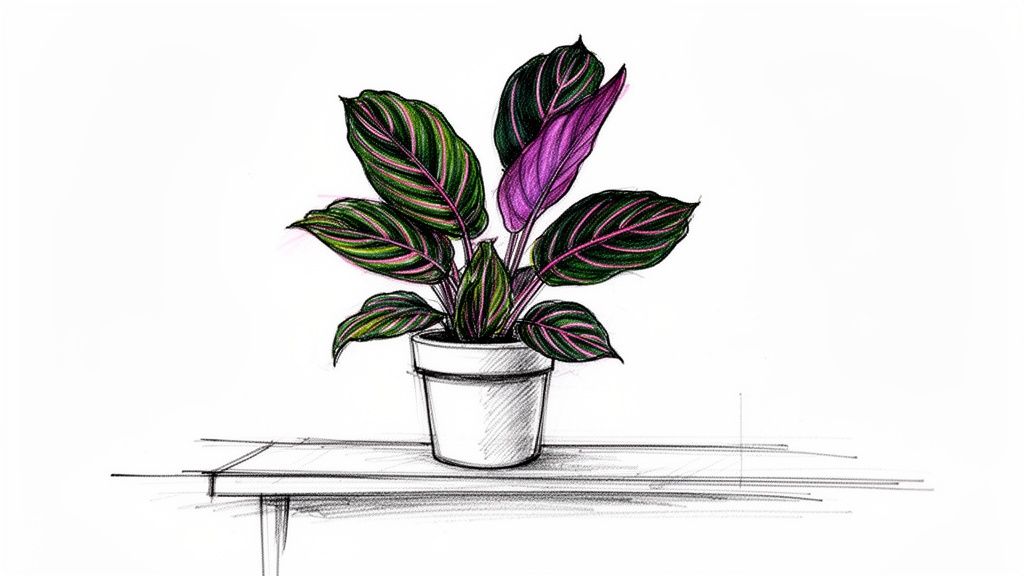
If you're diving into the world of indoor plants, it won’t be long before you come across the captivating Calathea ornata. This isn't just a static piece of decor; it’s a living, breathing piece of art that moves and interacts with its environment, making it a seriously rewarding plant for beginners and seasoned collectors alike.
Its common name, "Pinstripe Plant," is a perfect fit. Those delicate, almost brush-stroked patterns are what make it so special. The vibrant pink lines pop against the dark green backdrop, creating a stunning contrast that’s sure to catch the eye and start a few conversations.
Before we get into the nitty-gritty, here's a quick look at what your Pinstripe Plant needs to be happy.
Pinstripe Plant Care At A Glance
Use this quick reference table to understand the essential needs of your Calathea ornata before we dive into the details.
| Care Aspect | Ideal Conditions in New Zealand |
|---|---|
| Light | Bright, indirect sunlight. Keep away from direct sun. |
| Watering | Water every 1-2 weeks; keep soil consistently moist but not soggy. |
| Humidity | Prefers high humidity (60% or more). Mist regularly or use a humidifier. |
| Temperature | Happy in temperatures between 18°C - 27°C. |
| Soil | A well-draining potting mix that retains some moisture. |
| Fertiliser | Feed with a balanced liquid fertiliser every 4 weeks during spring/summer. |
This table gives you the basics, but understanding why your plant needs these conditions is the key to helping it truly flourish.
A Tropical Treasure From South America
The story of the Calathea ornata starts deep in the rainforests of South America, specifically on the humid, shaded forest floors of Colombia and Venezuela. This tropical background is what makes it one of the most sought-after houseplants here in New Zealand.
In the wild, this plant can stretch up to an impressive 2.7 metres tall. Don't worry, though—indoors, it stays a much more manageable size, usually reaching about 90 centimetres in height and width.
Knowing where it comes from gives us the best clues for its care. It's used to the dappled light that filters through a thick jungle canopy, so it will thank you for a spot away from harsh, direct sun that can easily scorch its beautiful leaves.
The Rhythm Of A Prayer Plant
One of the most magical things about the Calathea ornata is its daily movement, a trait it shares with others in the Marantaceae family, famously known as "prayer plants." This behaviour, called nyctinasty, is a fascinating natural rhythm you can watch unfold every day.
- During the day: Its leaves lie relatively flat, angled downwards to soak up as much indirect light as they can.
- At night: The leaves slowly rise and fold upwards, almost like hands closing in prayer. This movement also shows off the stunning, deep purple undersides of the leaves.
This daily ritual isn't just for show. It’s the plant’s clever way of maximising light and conserving energy. Watching this gentle dance is one of the real joys of owning a Calathea and a great sign that your plant is healthy and happy.
Getting a handle on these basics—its tropical roots, its manageable size, and its unique daily movements—is the first step to becoming a confident Calathea parent. Its dramatic foliage is similar to other members of its family, and you might also be interested in our guide to caring for the equally striking Calathea Dottie.
Creating The Ideal Tropical Environment Indoors
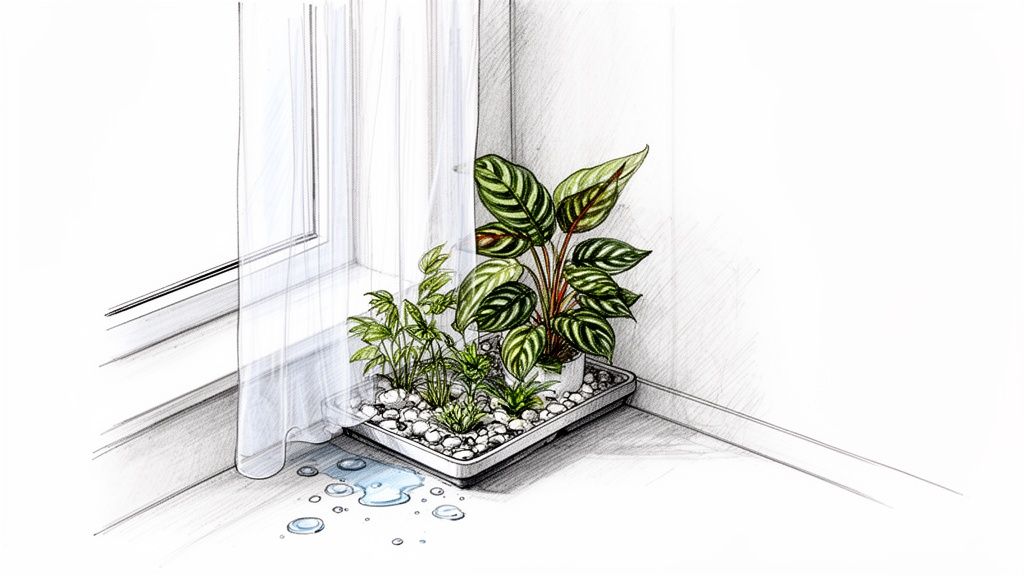
Keeping a Calathea ornata happy doesn't require a magical green thumb. The real secret is to do your best to mimic its native home—the warm, humid, shaded floor of a South American rainforest—right inside your New Zealand living room.
Think of it as creating a personal tropical retreat for your plant. Getting this environment right rests on three key pillars: the right light, consistent humidity, and a stable temperature. Nail these elements, and you'll provide the foundation for a healthy, vibrant Pinstripe Plant.
The Perfect Balance Of Light
One of the most common pieces of plant advice is to provide "bright, indirect light," but what does that actually mean in a Kiwi home? For a Calathea ornata, it means finding a spot where the sun's rays won't directly touch its delicate leaves.
Direct sun is the number one enemy of this plant. It acts like a harsh spotlight, scorching the foliage and causing those beautiful, fine pink lines to fade away. To prevent this, think about positioning your plant a metre or two back from a window.
Here are some ideal spots in a typical New Zealand house:
- Near a north-facing window: These windows receive consistent, gentle light throughout the day without the harshness of direct sun.
- Behind a sheer curtain: A thin curtain is a perfect filter, diffusing strong light from east or west-facing windows to create a soft glow.
- In a well-lit room, away from the window: A bright room offers plenty of ambient light without the risk of direct exposure.
The key is to give it enough light for photosynthesis without causing stress. The plant should be able to "see" the sky from its position but not feel the direct heat of the sun on its leaves.
Boosting Humidity For Lush Leaves
Calatheas are true tropical plants, and they crave moisture in the air. Dry air, a common problem in Kiwi homes—especially when heaters are running during the winter months (June to August)—is a primary cause of those dreaded crispy, brown leaf edges.
Your goal is to create a humid microclimate around your plant. Aiming for humidity levels of 50% or higher will keep your Calathea looking its best. Fortunately, achieving this doesn't require turning your home into a sauna.
A simple way to check if your humidity is too low is to observe the leaves. If the edges are turning brown and crispy or the leaves start to curl inwards, your plant is likely begging for more moisture in the air.
You can easily increase humidity with a few simple techniques:
- Regular Misting: Lightly spray the leaves with a fine mist of water a few times a week, or even daily in very dry conditions.
- Pebble Trays: Place the plant pot on a shallow tray filled with pebbles and water. As the water evaporates, it creates a pocket of humid air right where the plant needs it most.
- Group Your Plants: Plants naturally release moisture through a process called transpiration. Grouping your tropicals together allows them to create a shared humid atmosphere.
- Choose a Humid Room: Bathrooms and kitchens are often the most humid rooms in the house, making them excellent locations for a humidity-loving Calathea ornata.
For a more permanent fix, especially if you have a growing collection of tropical plants, you might consider installing a whole-home humidifier.
Maintaining A Cosy Temperature
Originating from a warm climate, the Calathea ornata is not a fan of the cold. It thrives in stable, warm temperatures, which is a key thing for New Zealand growers to manage, particularly during our cooler winters. The ideal temperature range sits between 18°C and 27°C.
Sudden temperature drops or exposure to cold draughts can shock the plant, causing its leaves to droop. To keep your plant comfortable year-round, be mindful of its placement. Avoid spots near draughty doors, open windows, or directly in front of heat pumps or air conditioning units, as these create fluctuating temperatures.
During frosty winter nights, it's wise to move your plant away from cold windowpanes. By providing a consistently warm and stable spot, you'll ensure your Pinstripe Plant remains a happy and healthy centrepiece in your home.
Mastering The Art Of Watering Your Pinstripe Plant
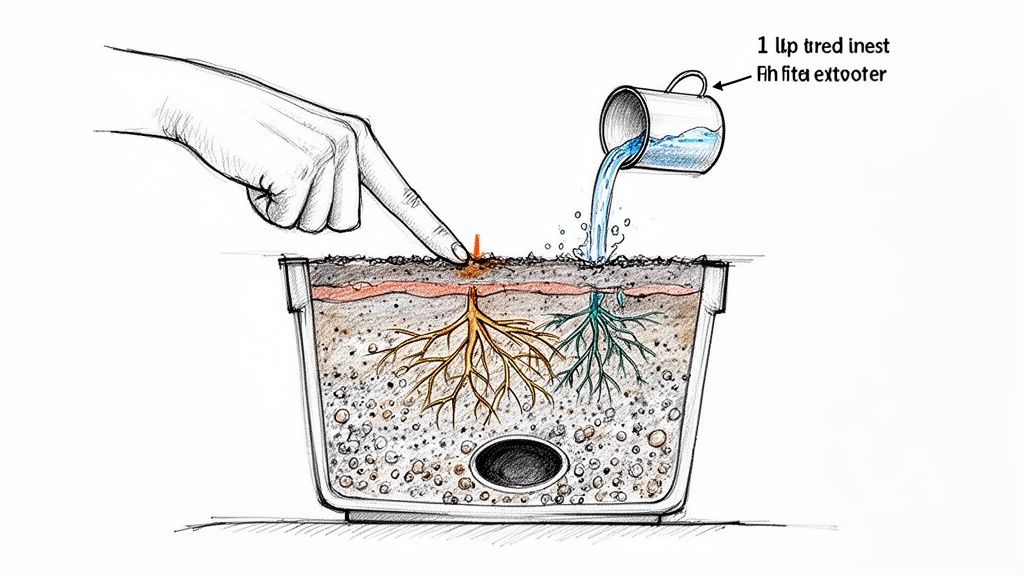
Calatheas have earned a bit of a reputation for being fussy about water, but honestly, mastering their needs is far simpler than the rumours suggest. The real secret isn't some complex schedule; it's a simple rule: keep the soil consistently moist but never waterlogged. Think of a well-wrung sponge—it’s damp, but not dripping wet.
This balance is what it's all about. It mimics the plant's home on the rainforest floor, where the soil is always damp from frequent rain but drains beautifully. Letting the soil swing from bone-dry to completely saturated will only stress your plant out, leading to classic problems like droopy stems or yellowing leaves. Nailing that happy medium is the single most important watering skill you can have for these beauties.
When To Water Your Calathea Ornata
First thing's first: forget about rigid schedules like "water every Tuesday." The only reliable way to know if your Calathea ornata needs a drink is to check the soil yourself. The amount of light, the temperature in your room, and the humidity all change day by day, and so do your plant's water needs.
The best method is the old-school finger-dip test. Just push your index finger about 2-3 centimetres down into the potting mix.
- If the soil feels dry at your fingertip: It’s time to water. This means the top layer has had a chance to dry out a bit, and the roots below are ready for a top-up.
- If you feel any moisture: Hold off. Give it another day or two and check again. Watering now is a one-way ticket to soggy soil.
This simple, hands-on check helps you avoid the number one mistake people make with these plants—overwatering. Soil that's constantly soggy literally suffocates the roots, stopping them from taking in oxygen and rolling out the welcome mat for root rot.
The Quality Of Water Matters
Ever noticed those perfect pinstripe leaves getting crispy, brown edges, even when you’re sure your watering is on point? The culprit might just be your tap water. These plants are quite sensitive to the minerals, chlorine, and fluoride that are common in tap water across New Zealand.
Over time, these minerals build up in the soil and can cause "tip burn," which is just the plant's way of telling you it's not a fan of the chemicals. It's frustrating, for sure, but thankfully, the fix is pretty straightforward.
Giving your Calathea ornata the right kind of water is one of the easiest ways to elevate your care routine from good to great. It directly prevents leaf damage and keeps those vibrant pinstripes looking pristine.
Here are a few better alternatives to water straight from the tap:
- Filtered Water: A standard water filter jug can remove many of the minerals and chemicals that Calatheas are known to dislike.
- Rainwater: Collecting rainwater is a fantastic option. It's free, naturally soft, and perfectly balanced for what your plant needs.
- Distilled or Purified Water: If you want to be absolutely certain, using distilled water means there are no impurities to worry about.
- Aged Tap Water: If you have to use tap water, let it sit out in an open container for at least 24 hours. This little bit of patience allows some of the chlorine to evaporate.
Building The Right Foundation
Finally, even the most perfect watering routine won't work if the foundation isn't right. You need a potting mix and a pot that work together to hit that "consistently moist" sweet spot. The ideal soil for a Calathea ornata is one that holds onto some moisture but also lets any excess water drain away freely.
A high-quality, peat-based potting mix is an excellent place to start, giving you a good balance of moisture retention and aeration. Most importantly, make sure your pot has at least one drainage hole. Without proper drainage, water will just pool at the bottom, leading to the dreaded root rot, no matter how carefully you water.
A Seasonal Guide To Feeding And Repotting
Just like us, your Calathea ornata has its own natural rhythm, with busy periods of growth and quieter times for rest. Tuning into this cycle is the secret to knowing when to feed it and when it might need a bigger home. If you align your care with New Zealand's seasons, you’ll be giving it exactly what it needs to flourish and show off those stunning pinstriped leaves.
Think of it this way: in spring and summer (that’s roughly September through February here in NZ), your plant is in full swing, pushing out lots of new growth. It’s using up a ton of energy, so a little extra nutrition is a great boost.
But once autumn and winter roll around (March to August), things slow right down. The days are shorter and cooler, and your Calathea goes into a sort of hibernation. Trying to fertilise it then is like force-feeding someone who’s not hungry – the leftover nutrients just build up in the soil and can end up burning its sensitive roots.
A Gentle Feeding Schedule
When it comes to fertiliser for a Calathea ornata, less is always more. These plants are quite sensitive, so a gentle touch is the way to go.
During the active growing months of spring and summer, a feed about once a month is perfect. The key, however, is to dilute a balanced liquid houseplant fertiliser to half the strength recommended on the bottle. This gives it just enough of a pick-me-up to support new leaves without risking the dreaded chemical burn, which often shows up as brown, crispy edges on the leaves.
Knowing When To Repot Your Plant
Repotting can feel like a big deal, but it's a vital refresh for your plant, giving its roots fresh soil and more space to stretch out. Your Calathea ornata will probably need a new pot every 1-2 years, or when it starts showing you it's feeling a bit cramped.
Keep an eye out for these tell-tale signs that it's time for an upgrade:
- Roots peeking out of the drainage holes: This is the most obvious clue that it’s run out of room.
- Water rushes straight through the pot: If water drains out almost instantly, it's a sign there's more root than soil, and the plant can't grab a proper drink.
- Growth has stalled: If it’s stopped putting out new leaves during the growing season, its roots might be too constricted to support any more growth.
- It’s tough to get the plant out of its pot: If you have to wrestle it out, the roots have likely formed a tight, dense ball.
The absolute best time to repot is during its active growth phase in late spring, around October or November. This gives your plant the whole summer to recover and settle into its new home.
Step-By-Step Repotting Guide
Once you've decided it's time for a new home, following these simple steps will make the move as smooth as possible for your Calathea.
- Choose the Right Pot: Go for a new pot that’s only 2-5 cm wider in diameter than its current one. A pot that’s too big can hold onto excess water, creating a risk of root rot.
- Prepare Your Mix: Your Calathea loves a soil that’s both moisture-retentive and well-draining. Our guide on choosing the best indoor potting mix has some great tips for getting the blend just right.
- Gently Remove the Plant: Carefully ease the plant out of its old pot. If it’s a bit stuck, a gentle squeeze on the sides of a plastic pot or running a butter knife around the inside edge can help loosen things up.
- Inspect and Loosen the Roots: Have a quick look at the root ball. Trim off any dark, mushy bits, which are signs of rot. Gently tease the roots apart with your fingers to encourage them to grow outwards into the fresh soil.
- Repot and Water: Pop a layer of fresh potting mix in the new pot, centre your plant, and backfill around the sides. Give it a good water until you see it running out the bottom – this helps the soil settle nicely around the roots.
Solving Common Calathea Ornata Problems
Even with the best intentions, your dramatic Calathea ornata might throw a little tantrum now and then. Don’t panic! These signs aren’t failures; they’re just your plant’s way of telling you what it needs. Learning to speak its language is the secret to becoming a confident plant parent.
Think of this section as your personal plant clinic. We'll look at the symptoms first, helping you quickly figure out what's wrong and how to make it right. By catching these early warning signs, you can solve little issues before they become big headaches and keep your Pinstripe Plant looking absolutely stunning.
Your Pinstripe Plant Diagnostic Chart
When your Calathea ornata starts looking a bit under the weather, a quick diagnosis is key. Use this easy troubleshooting table to pinpoint the problem and find the right solution to get your plant back on track.
| Symptom | Most Likely Cause | How To Fix It |
|---|---|---|
| Crispy, brown leaf edges or tips | Low humidity or tap water minerals | Mist regularly, group with other plants, or use filtered/rainwater. |
| Yellowing leaves, especially lower ones | Overwatering | Let the top 5cm of soil dry out completely before watering again. Ensure good drainage. |
| Fine webbing under leaves; tiny dots | Spider mites | Isolate the plant, wash leaves thoroughly, and treat with horticultural oil or insecticidal soap. |
| Droopy, wilting leaves | Underwatering | Give it a good, thorough soak until water runs out the bottom. Check soil more frequently. |
| Faded leaf colour and pattern | Too much direct sunlight | Move it to a spot with bright, indirect light, away from the sun's harsh rays. |
| Small, fly-like insects around the soil | Fungus gnats | Allow the soil to dry out more between waterings and check out our gnat-busting guide. |
Remember, every plant is different, but these are the most common signals your Calathea will send. A little observation goes a long way!
Why Are My Leaf Edges Brown and Crispy?
This is, without a doubt, the most common frustration for Calathea ornata owners in New Zealand. It almost always points to one of two things: low humidity or the quality of your water. The air in our homes, especially with heaters blasting in winter, is a world away from the humid rainforest floor this plant calls home.
On top of that, these plants are fussy about the minerals and chlorine in our tap water. Over time, these build up in the soil and can cause what’s known as “tip burn.”
The Fix:
- Boost Humidity: Give your plant’s leaves a light misting every few days, cluster it with other tropical friends, or place its pot on a tray of pebbles and water. This creates a little humid microclimate.
- Switch Your Water: Try using filtered water or rainwater. If you’re using tap water, let it sit out for 24 hours before watering to allow some of the chlorine to dissipate.
Why Are the Leaves Turning Yellow?
Yellowing leaves (a condition called chlorosis) are a classic cry for help, usually signalling overwatering. It’s so easy to love our plants a little too much with the watering can, but this suffocates the roots, stopping them from absorbing oxygen and nutrients. This can quickly lead to root rot and sad, yellow foliage.
Don't rush to water again at the first sight of a yellow leaf. Always do the finger-dip test first. If the top few centimetres of soil are still damp, hold off for a few more days.
A cycle of going from bone-dry to completely waterlogged can also stress the plant and cause yellowing. The goal is consistent, light moisture, not a rollercoaster of drought and flood.
What Are These Tiny Webs Under the Leaves?
If you spot delicate, silky webbing under the leaves or see tiny specks moving around, you've got a case of spider mites. These common pests absolutely love the warm, dry conditions that Calatheas hate, making them a frequent problem if your plant’s environment isn't quite right.
Spider mites suck the life out of the plant cells, causing the leaves to look stippled, faded, or yellow. An infestation can weaken your plant very quickly if you don't act fast.
How to Get Rid of Spider Mites:
- Isolate: The first thing you do is move the plant far away from your other houseplants to stop the mites from spreading.
- Wash: Take your plant to the shower or use a gentle spray from a hose to wash down the leaves. Pay close attention to the undersides to physically blast the pests off.
- Treat: Apply a good horticultural oil or insecticidal soap, making sure you get total coverage. You’ll likely need to repeat this every week for a few weeks to break their life cycle.
Another pest that loves damp soil is the fungus gnat. If you see little black flies buzzing around your plant, our detailed guide on how to get rid of fungus gnats has all the solutions you need.
How To Propagate And Style Your Plant
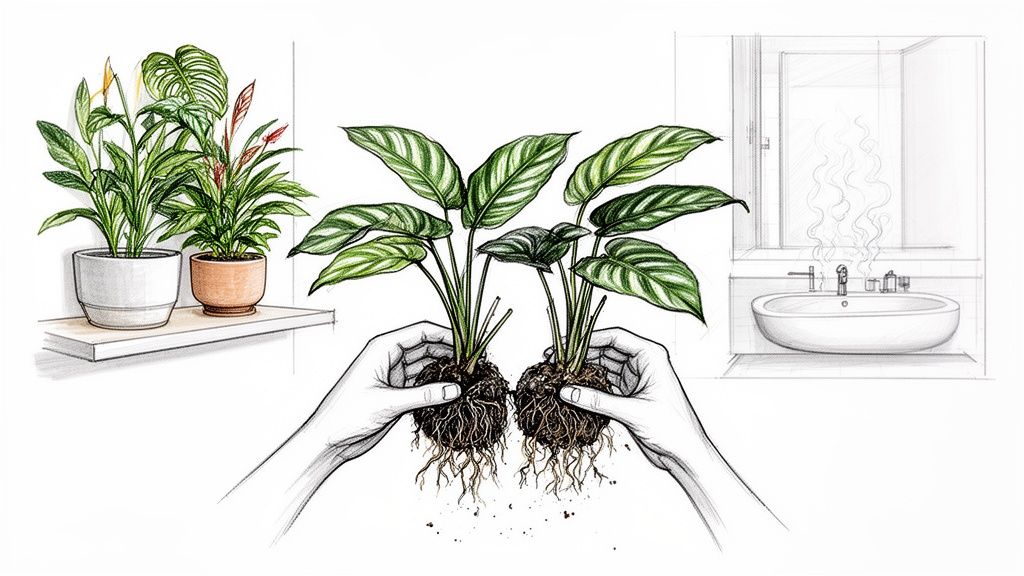
Once you’ve got the hang of the essentials, you can start having some real fun with your Pinstripe Plant. It's a true showstopper, so it deserves a prime spot where those stunning leaves can be properly admired.
Placement is everything when it comes to showing off your plant’s beauty. Let it be the star of a minimalist shelf, where its detailed leaves can really draw the eye. Another great idea is to create a lush indoor jungle by grouping it with other tropicals. This not only looks fantastic but also helps boost the humidity for the entire plant gang.
Creative Styling Ideas
Finding that perfect spot will do wonders for both your plant's health and your home's aesthetic.
- The Bathroom Oasis: A steamy bathroom offers the high humidity a Calathea ornata absolutely craves. It’s a naturally perfect environment where your plant will thrive with very little extra effort from you.
- The Living Room Centrepiece: Pop it on a side table or a dedicated plant stand in your living area. Just keep it out of direct sun, and it will add a sophisticated touch of living art to the room.
- The Office Companion: Its compact size makes it an ideal desk plant, bringing a calming, natural element to your workspace.
How To Propagate By Division
Ready to grow your collection or share the love with a friend? The safest and most reliable way to make more Calathea ornata is through division. The best time to do this is during its regular repotting session in late spring.
Propagating by division is simply separating a mature plant into smaller, self-sufficient plants. Each new section already has its own established root system, which gives it the best possible chance of survival.
Just follow these simple steps:
- Gently Unpot: Carefully slide the entire plant out of its pot. Try to be as gentle as possible to avoid damaging the delicate root system.
- Separate the Roots: Look for natural clumps or sections in the root ball. Gently tease these apart with your fingers, making sure each new section has a healthy cluster of roots and at least a few leaves attached.
- Pot Up the Divisions: Plant each new division into its own pot, filled with fresh, well-draining potting mix.
- Water and Settle In: Give the newly potted plants a thorough watering and place them in a warm, humid spot. This will help them recover from the move and settle into their new homes.
Frequently Asked Questions
Even with the best guide in hand, a few specific questions always seem to pop up when you're getting to know the dramatic Calathea ornata. Here are the most common queries we get from New Zealand plant parents, with quick, clear answers to help you care for your Pinstripe Plant with confidence.
Why Are My Calathea Ornata Leaves Curling?
Curling leaves are your plant's most common signal for thirst. It’s simply the Calathea's way of conserving moisture when it's not getting enough water. Before you panic, just do the classic finger-dip test; if the top few centimetres of soil feel dry, a good, thorough watering should have those leaves unfurled within a day.
But what if the soil is already damp and the leaves are still curling? That usually points to low humidity. Crispy, dry air can make the leaves curl up as a protective measure. If that’s the case, boosting the moisture in the air by misting, grouping plants together, or using a pebble tray is your best bet.
Are Pinstripe Plants Safe For Pets?
Yes, they absolutely are! One of the best things about the Calathea ornata is that it’s non-toxic to cats, dogs, and humans. This makes it a fantastic, worry-free choice for any home with curious pets or small children wandering about.
While a little nibble won't cause any harm, it’s still a good idea to place your plant out of reach. This is less for safety and more to prevent damage to its beautiful, delicate foliage—a playful cat might find those dancing leaves just a bit too tempting to resist.
How Fast Does A Calathea Ornata Grow?
The Pinstripe Plant is what we'd call a slow to moderate grower, which is perfect for indoor spaces as it won’t suddenly take over its spot. During the active growing season here in New Zealand (spring and summer, from September to February), you can expect to see a new leaf unfurl every few weeks if conditions are just right.
Growth slows right down during the cooler, darker months of autumn and winter. Its slow and steady pace means you can enjoy its compact, elegant form for years to come without it becoming unmanageable.
A healthy Calathea ornata will reward you with consistent, beautiful growth during the warmer months. If you notice growth has completely stalled during spring or summer, it might be a sign that it needs a bigger pot or a gentle feed.
Why Won't My New Leaves Unfurl?
It’s always a little frustrating to see a new leaf emerge, only for it to stay tightly rolled up for weeks. This is almost always a sign of not enough humidity. New leaves are incredibly tender and need a very humid environment to help soften their outer casing so they can unfurl properly.
To encourage a stuck leaf to open up, you’ll need to dramatically increase the humidity around the plant. Try moving it to a steamy bathroom for a few days, placing it right next to a humidifier, or giving it a gentle misting every day. Just be sure to avoid manually unrolling it yourself, as you can easily tear the delicate new growth.
Ready to bring this stunning living artwork into your home? At Jungle Story, we have healthy, vibrant Calathea ornata plants ready for their new home. Explore our collection and find the perfect statement piece for your indoor jungle today!