
Dreaming of a garden that is not only beautiful but perfectly suited to New Zealand's unique environment? From the subtropical north to the alpine south, our diverse landscapes offer incredible inspiration. But knowing where to start can feel daunting. This comprehensive guide moves beyond generic advice to explore eight distinct and practical nz landscaping ideas, specifically designed to help you create an outdoor space that thrives in our local climate, supports native biodiversity, and reflects your personal style.
We will delve into detailed concepts, from creating a lush native bush sanctuary to designing a resilient, low-water succulent garden. Each idea is packed with region-specific plant suggestions, actionable tips, and mini-layouts to help you visualise the final result. When planning your outdoor living spaces, consider incorporating durable and aesthetically pleasing elements such as quality timber decking options to create functional zones for relaxation and entertaining.
Whether you have a sprawling lifestyle block in the Waikato, a compact urban courtyard in Wellington, or a classic suburban section in Christchurch, you'll find a concept here to cultivate the garden you've always wanted. Let's dig in and discover how to bring these visions to life, creating a stunning and sustainable Kiwi backyard that you can enjoy for years to come.
1. Native Plant Landscaping with NZ Natives
Native plant landscaping, often called creating a "native bush garden," is one of the most rewarding and sustainable nz landscaping ideas available. This approach focuses on using New Zealand's unique endemic flora, plants that have evolved over millennia to thrive in our specific local climates, soil types, and environmental conditions. The result is a garden that is not only visually stunning and uniquely Aotearoa but also incredibly resilient, requiring less water, fertiliser, and maintenance than gardens filled with exotic species.
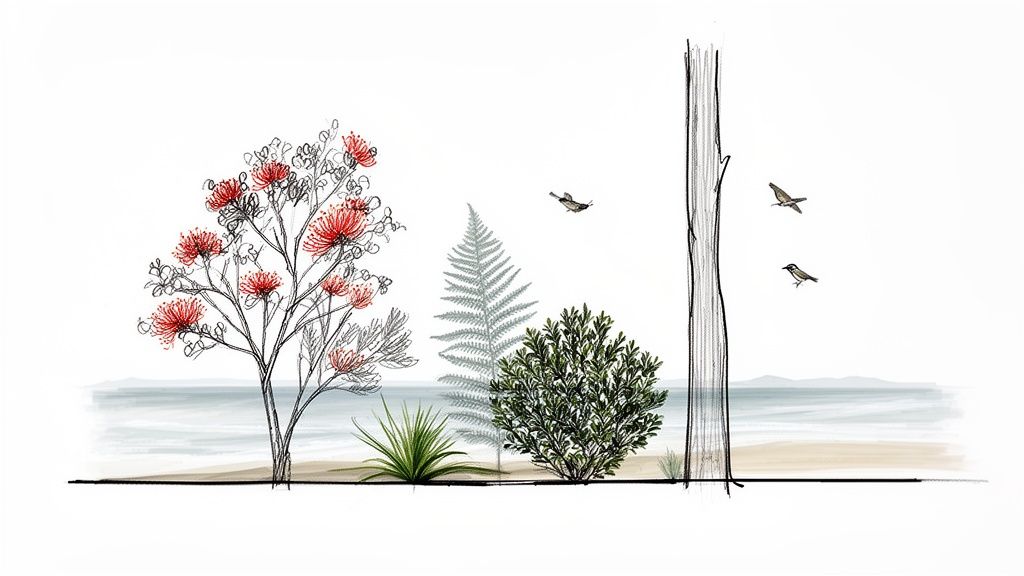
This style is perfect for homeowners who want a low-maintenance garden that supports local ecosystems. By planting natives, you provide essential food and shelter for native birds like the tūī and kererū, as well as lizards and insects. It is a powerful way to contribute to local biodiversity right in your own backyard. From the rugged, wind-swept look of a coastal garden featuring hebes and flaxes to the lush, layered feel of a suburban "forest" with ferns and tī kōuka (cabbage trees), the versatility is immense.
How to Implement a Native Garden
Creating a thriving native garden involves more than just planting a few pōhutukawa. Strategic planning ensures your garden will flourish.
- Start with Your Region: Research plants endemic to your specific area. A plant that thrives in the subtropical Northland climate may struggle in the cooler, drier conditions of Central Otago. Your local council often provides free regional native planting guides.
- Create Structure and Layers: A successful native landscape mimics nature. Use taller species like tōtara or tī kōuka as a canopy, mid-layer shrubs such as pittosporum and corokia for structure, and low-growing groundcovers like Muehlenbeckia axillaris or native grasses to fill in the gaps.
- Group for Efficiency: Place plants with similar water, light, and soil requirements together. This "zoning" makes watering and care far more efficient and ensures each plant gets what it needs without compromise. For more in-depth guidance, you can explore a full guide on creating a NZ native garden.
- Soil Preparation: While natives are adapted to NZ soils, giving them a good start helps. Amending heavy clay or sandy soils with organic compost will improve drainage and nutrient availability, setting your plants up for success.
2. Kauri and Podocarp Grove Design
Creating a landscape that echoes New Zealand's ancient past, a Kauri and Podocarp Grove is a deeply rewarding and visually impressive approach. This design centres on our magnificent native conifers like kauri, rimu, tōtara, and mataī, trees that form the backbone of primordial forests. This style offers a distinct aesthetic that connects a property to its heritage, creating a serene, cathedral-like atmosphere over time. These majestic trees serve as powerful, living focal points with immense cultural significance.
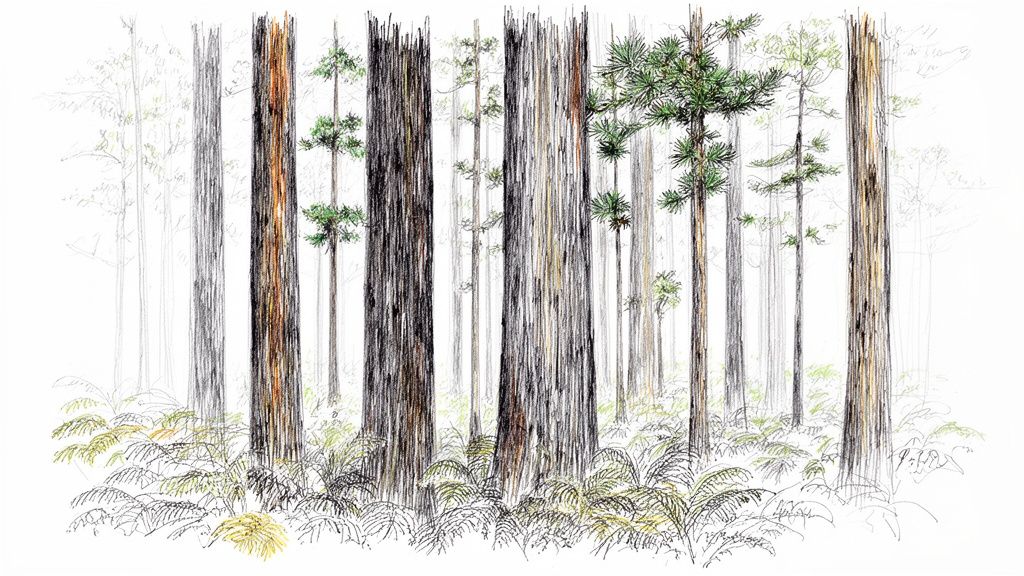
This idea is perfect for those with larger sections or a long-term vision for their garden, seeking to establish a legacy landscape. While mature specimens require substantial space, the grove effect can be achieved in more modest residential settings by using younger trees and carefully selected understorey plantings. It’s a powerful way to cultivate a piece of Aotearoa's natural history, providing a habitat that will support native ecosystems for generations. This is one of the more ambitious nz landscaping ideas, but the pay-off is a truly timeless and enduring garden.
How to Implement a Kauri and Podocarp Grove
Establishing a grove requires patience and planning, as these slow-growing giants need the right conditions to become the legends they are destined to be.
- Plan for the Long Term: These trees will outlive you. Consider their mature size and root systems when planting, ensuring they are well away from buildings, power lines, and plumbing. Visual impact often begins to take shape after 10-15 years, so this is a long-term project.
- Source Healthy, Certified Trees: Kauri dieback is a serious threat. Always purchase kauri from nurseries certified as disease-free. Starting with healthy, well-established specimens (5-10 years old) gives them a stronger chance of successful establishment and faster initial growth.
- Build an Understorey: Replicate the forest floor by planting complementary natives around your feature trees. Use ferns like aspleniums and blechnums for lush ground cover, shrubs like pittosporums and coprosmas for mid-level structure, and smaller trees like horopito to create a rich, layered effect.
- Professional Consultation: The long-term health of these significant trees is paramount. It is wise to consult with an arborist experienced in native tree care for advice on placement, planting techniques, and ongoing maintenance to ensure your grove thrives for decades to come.
3. Drought-Tolerant Succulent Xeriscaping
Xeriscaping is a smart and stylish landscaping approach focused on water conservation, making it one of the most relevant nz landscaping ideas for our changing climate. This method utilises drought-tolerant plants, particularly succulents like aloes, echeverias, and sedums, to create a visually striking garden that requires minimal irrigation once established. The result is a sculptural, modern aesthetic that is both beautiful and environmentally responsible, saving water, time, and money on maintenance.
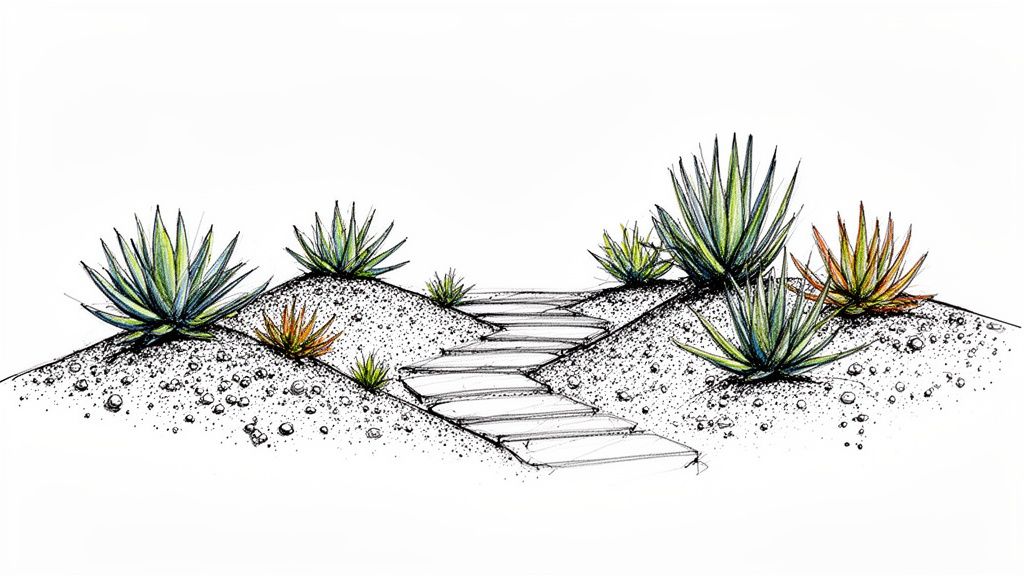
This style is perfectly suited for regions facing water restrictions or with naturally dry, sunny conditions, such as Auckland, the Bay of Plenty, and Hawke's Bay. Xeriscaping moves beyond just gravel and cacti; it’s a design philosophy that incorporates clever planning and a rich palette of textures and forms. From the architectural spikes of agave to the soft, rosette shapes of echeveria and the trailing groundcover of sedums, a succulent xeriscape can be incredibly diverse and full of life, providing a resilient garden that thrives through hot, dry Kiwi summers.
How to Implement a Succulent Xeriscape
A successful xeriscape relies on excellent drainage and thoughtful plant selection. Proper setup is key to creating a self-sustaining garden.
- Prioritise Drainage: Succulents despise "wet feet." Create raised garden beds or mounds using a free-draining soil mix to elevate the roots above any potential waterlogging. Amending existing soil with pumice or sand is essential.
- Use Inorganic Mulch: Instead of bark or compost which retain moisture, use materials like pea gravel, decorative stones, or pumice as a top layer. This type of mulch helps suppress weeds and prevent root rot while reflecting heat.
- Embrace Hardscaping: Integrate non-living elements like pavers, large rocks, and stone walls into your design. These materials complement the sculptural forms of succulents, add visual interest, and reduce the overall area requiring water.
- Water Wisely: Establish new plants with deep, infrequent watering to encourage deep root growth. Once mature, most succulents will need very little supplemental water, often surviving on rainfall alone. For an iconic and hardy choice, you can learn about caring for the popular Jade Plant.
- Create Textural Contrast: Combine succulents of different shapes, colours, and sizes. Mix tall, spiky aloes with low-growing, rosette-forming echeverias and cascading sedums to create a dynamic and visually engaging landscape.
4. Coastal Windbreak and Salt-Tolerant Plantings
Given New Zealand's vast coastline, creating a garden that can withstand relentless salt spray and strong winds is a common challenge. This landscaping style focuses on using hardy, salt-tolerant plants to create both a beautiful garden and a functional windbreak, making it one of the most practical nz landscaping ideas for coastal properties. It involves a strategic selection of plants, from tough native trees to resilient groundcovers, that have adapted to thrive in harsh maritime environments.
This approach is essential for any property near the sea, particularly those within 500 metres of the coast. A well-designed coastal garden not only survives but flourishes, preventing soil erosion and protecting more delicate plants (and your home) from wind damage. The result is a seamless blend of rugged functionality and natural beauty, as seen in the stunning coastal properties from Piha to the Coromandel Peninsula, where layered plantings of pōhutukawa, karaka, and coprosmas define the landscape.
How to Implement a Coastal Garden
Building a resilient coastal garden requires more than just choosing tough plants; it's about creating a layered, living barrier that works with the environment.
- Layer for Maximum Protection: An effective windbreak is built in tiers. Start with tall, robust shelter trees like pōhutukawa or Norfolk pine at the back. Add a mid-layer of dense shrubs like griselinia, pittosporums, or hebes, and finish with low-growing groundcovers like rengarenga lilies or coastal flax to reduce wind turbulence at ground level.
- Plant Perpendicular to the Wind: For the best wind-filtering effect, your main planting lines should be established at a right angle to the prevailing wind direction. This forces the wind up and over your property rather than funnelling it through gaps.
- Improve Sandy Soil: Coastal soils are often sandy, saline, and low in nutrients. Before planting, generously amend the soil with organic compost and mulch. This improves water retention and provides the essential nutrients new plants need to establish strong root systems.
- Start Young and Protect: Younger, smaller plants often establish better in windy conditions than large, mature ones. After planting, consider installing temporary wind protection, such as hessian screens or wind cloth, for the first one to two years to give them a fighting chance to get settled.
5. Māori-Inspired Ethnobotanical Gardens
An ethnobotanical garden is a powerful and deeply meaningful approach to landscaping that honours the indigenous heritage of Aotearoa. This style goes beyond aesthetics, creating a living museum of plants significant to Māori culture. It incorporates traditional food sources (kai), medicinal plants (rongoā), and materials used for weaving (raranga) and other crafts. This is one of the most unique nz landscaping ideas for those seeking a profound connection to the land and its history.
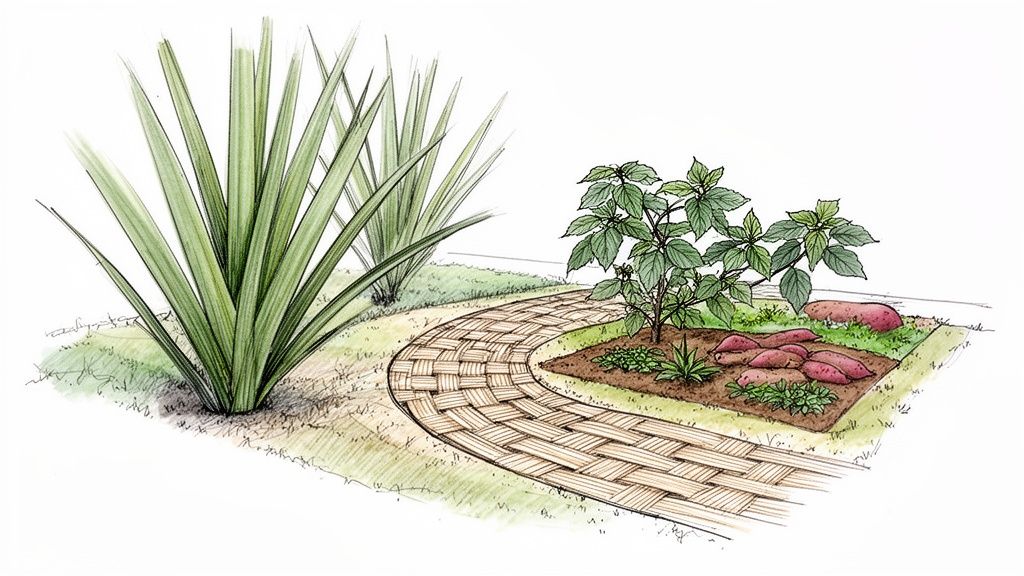
This garden style is perfect for property owners, schools, and community spaces aiming to create an educational and culturally rich environment. It tells a story, connecting people to the traditional uses and ecological importance of New Zealand's native flora. From cultivating kūmara in a traditional puke (mound) system to growing harakeke (flax) for weaving, this landscape serves as a practical, beautiful, and respectful tribute to Te Ao Māori (the Māori world view). The growing interest in Mātauranga Māori (Māori knowledge) has seen this style gain significant popularity.
How to Implement a Māori-Inspired Garden
Creating an ethnobotanical garden requires careful planning, research, and cultural sensitivity. It's a journey of learning as much as it is one of gardening.
- Consult with Mana Whenua: Before you begin, it is crucial to consult with local iwi or mana whenua (local Māori authority). They can provide invaluable guidance on culturally appropriate plants for your region, traditional cultivation methods, and the tikanga (protocols) associated with these taonga (treasures). This ensures your garden is created with respect and accuracy.
- Group Plants by Traditional Use: Organise your garden into sections to enhance its educational impact. Create a rongoā section with plants like kawakawa and horopito, a kai area for kūmara and pōhuehue, and a raranga section dedicated to different varieties of harakeke.
- Tell the Story: Integrate signage or educational materials that explain the significance and traditional uses of each plant. Sharing the pūrākau (stories) associated with the plants transforms the space from a simple garden into a living classroom and cultural touchstone.
- Source Plants Thoughtfully: Obtain your plants from reputable nurseries that specialise in native plants and support indigenous plant conservation. This ensures you are planting healthy, correctly identified specimens that will contribute positively to the local ecosystem.
6. Subtropical Tropical Garden Design
Creating a subtropical or tropical garden is an increasingly popular and achievable one of the standout nz landscaping ideas, particularly for those in the warmer, northern regions of New Zealand. This design style leverages the milder climates of areas like Northland, Auckland, and the Bay of Plenty to cultivate a lush, resort-like atmosphere filled with bold foliage, exotic flowers, and even tropical fruits. The result is a vibrant, year-round green space that feels like a permanent holiday escape, offering a distinct aesthetic that stands apart from more traditional garden designs.
This style is perfect for homeowners wanting to create a dramatic visual impact and a secluded, private oasis. The large leaves of plants like nikau palms, bananas, and taro create dense layers of foliage, providing excellent screening and a sense of enclosure. With New Zealand's warming climate, the viability of these gardens is extending further south, making it a forward-thinking choice for those looking to adapt to changing environmental conditions while cultivating a stunning and productive garden.
How to Implement a Subtropical Garden
A successful tropical-style garden requires careful planning to ensure these often-thirsty and frost-sensitive plants thrive in the New Zealand environment.
- Select Climate-Appropriate Species: While true tropicals can be challenging, many subtropical species flourish here. Opt for hardier varieties like the Nikau palm (Rhopalostylis sapida), Queen palm, and certain types of bananas and canna lilies. For those in cooler parts of the North Island, choose frost-tolerant species to ensure winter survival.
- Create Sheltered Microclimates: Protect your plants from the two biggest threats: frost and wind. Use existing walls, fences, or a canopy of established trees to create a sheltered pocket. This protection can raise the ambient temperature just enough to help more sensitive plants survive a cold snap.
- Focus on Soil and Water: Tropical plants typically demand rich, well-draining soil and consistent moisture. Generously amend your soil with organic compost and consider installing an irrigation system, especially for the dry summer months. A thick layer of mulch will help retain soil moisture and suppress weeds.
- Layer for a Lush Look: Mimic a real rainforest by planting in layers. Use tall palms for the canopy, mid-sized shrubs like hibiscus and gardenias for colour, and large-leafed perennials like hostas and taro at ground level. For more inspiration on choosing the right foundation plants, you can explore the world of palms suitable for NZ.
7. Edible Permaculture Landscape Integration
An edible permaculture landscape is a highly functional and sustainable approach to gardening, transforming your backyard into a productive, self-sustaining ecosystem. This is one of the most forward-thinking nz landscaping ideas, moving beyond simple aesthetics to create a space that provides food, builds healthy soil, and supports biodiversity. It involves strategically integrating edible plants like fruit trees, vegetables, and herbs with companion plants and nitrogen-fixers to mimic the symbiotic relationships found in natural forests.
This style is perfect for homeowners in New Zealand who are passionate about sustainability, food security, and reducing their environmental footprint. Instead of a high-maintenance lawn, you can cultivate a "food forest" that yields fresh produce year-round. This approach works in harmony with nature, creating a resilient garden that requires minimal external inputs like fertiliser or pesticides once established. It's a powerful way to connect with your food source and create a thriving, living system right outside your door, as seen in community gardens and sustainable properties across the country.
How to Implement an Edible Permaculture Garden
Creating a permaculture landscape involves careful observation and thoughtful design to create a garden that largely takes care of itself.
- Observe and Map Your Site: Before planting, map the sun, water, and wind patterns on your property. Understand where water flows, which areas get the most sun in summer versus winter, and which spots are sheltered or exposed. This informs your entire design.
- Design in Zones: Organise your garden into zones based on how often you need to access them. High-maintenance annual vegetables and herbs should be in "Zone 1," closest to the house for easy harvesting. Perennial fruit trees and berry bushes can be in "Zone 2," slightly further out.
- Establish Perennial Structures First: Begin by planting your long-term, structural plants like fruit trees, nut trees, and berry bushes. These form the backbone of your food forest and take the longest to mature.
- Build Soil Health: From day one, focus on soil. Create compost bins, use mulch on all garden beds to retain moisture and suppress weeds, and incorporate nitrogen-fixing plants like clover or native kōwhai to naturally enrich the soil.
- Create Polycultures: Plant in "guilds" or diverse groups rather than monoculture rows. A classic guild might include a central fruit tree, surrounded by nitrogen-fixing shrubs, pest-repelling herbs, and a groundcover that acts as a living mulch.
8. Japanese-Inspired Contemporary NZ Garden Fusion
A Japanese-inspired contemporary garden represents a sophisticated fusion, blending the minimalist and contemplative principles of Japanese design with the unique character of New Zealand's native flora. This is one of the more thoughtful nz landscaping ideas, creating serene outdoor spaces that feel both structured and deeply connected to nature. The approach uses key Japanese aesthetics like asymmetry, balance, and "shakkei" (borrowed scenery) but populates the design with hardy NZ natives.
This style is perfectly suited for modern urban properties, especially in Auckland or Wellington where space is often limited, and the goal is to create a peaceful retreat from city life. Instead of traditional Japanese maples or cherry blossoms, this fusion might feature a sculptural tī kōuka (cabbage tree) or a windswept coastal pōhutukawa as the focal point. The result is a garden that is calming and low-clutter yet distinctly of Aotearoa, valuing negative space as much as the plants themselves.
How to Implement a Japanese-Inspired NZ Garden
Creating this fusion requires careful selection of plants and materials to achieve a sense of deliberate tranquillity.
- Limit Your Plant Palette: Cohesion is key. Select just 3-5 native species with strong architectural forms and use them repeatedly throughout the space. Think Mondo grass for bordering, clipped Corokia for structure, and a single specimen tree for impact.
- Create a Clear Focal Point: Every Japanese-inspired garden has a point of focus. This could be a beautifully shaped native tree like a pittosporum, a striking rock arrangement, or a simple water feature. The rest of the garden should be designed to support this feature.
- Use Quality NZ Materials: Ground your design in its location by using local materials. High-quality gravel from local quarries, river stones, and sustainably sourced timbers like macrocarpa or vitex will create an authentic and enduring aesthetic.
- Frame the View: Use the principle of "shakkei" or borrowed scenery. Strategically place plants and structures to frame views beyond your property line, such as a distant hill, a neighbour's mature tree, or even a compelling piece of architecture, making your garden feel larger.
Comparison of 8 NZ Landscaping Ideas
| Approach | 🔄 Implementation Complexity | ⚡ Resource Requirements & Efficiency | ⭐ Expected Outcomes / Quality | 📊 Key Results / Impact | 💡 Ideal Use Cases / Tips |
|---|---|---|---|---|---|
| Native Plant Landscaping with NZ Natives | Moderate — requires species/site matching and staging | Moderate resources to source natives; low ongoing water & inputs | High — resilient, biodiverse, authentic NZ aesthetic | Lower water/chemical use, long-term cost savings, habitat creation | Residential & restoration; group by water/light, visit local nurseries |
| Kauri and Podocarp Grove Design | High — long timelines, space planning, disease protocols | High — specimen trees, certified sourcing, arborist input | Very high — dramatic focal points, cultural significance, canopy structure | Increases property value, long-term ecosystem development; slow payoff | Large estates/heritage sites; start with younger specimens, follow biosecurity |
| Drought-Tolerant Succulent Xeriscaping | Low–Moderate — drainage prep and careful establishment | Low ongoing water & maintenance; moderate initial soil/gravel amendments | High for water-efficiency and low maintenance; consistent visual interest | 50–80% water reduction, lower maintenance costs, suits poor soils | Water-restricted regions; use raised beds, gravel mulch, wide spacing |
| Coastal Windbreak & Salt-Tolerant Plantings | Moderate — species-specific design, protective staging | Moderate — coastal specialists, soil amendment, temporary wind protection | High — protects property, resists salt/wind, coastal authenticity | Reduced erosion and salt damage, lower heating costs, habitat support | Properties <500m from coast; layer plantings, install temporary screens |
| Māori-Inspired Ethnobotanical Gardens | Moderate — needs cultural research and appropriate design | Moderate — sourcing traditional cultivars, possible iwi consultation | High — culturally meaningful, multipurpose plantings, educational value | Supports indigenous conservation, grant eligibility, educational outcomes | Cultural centres, schools, private gardens; consult local iwi, group by use |
| Subtropical / Tropical Garden Design | Moderate–High — climate management, frost protection planning | High — irrigation, nutrients, specimen palms and maintenance | High — lush resort-like aesthetic, potential fruit production | Increases desirability, year-round foliage, possible economic returns | Northland/Auckland/Bay of Plenty; create microclimates, install irrigation |
| Edible Permaculture Landscape Integration | High — detailed design, zoning, long-term management | Moderate initially (infrastructure, soil-building); low ongoing inputs | Very high — productive, resilient ecosystems, improved soil health | Significant food yields over time, reduced household food costs; 3–5 yr to productivity | Home food production, community gardens; map sun/water, establish perennials first |
| Japanese-Inspired Contemporary NZ Garden Fusion | High — precise design and quality hardscaping required | High upfront (stone/timber/installation); low–moderate plant maintenance | High — calm, meditative, refined aesthetic suited to small sites | Increases property value, low plant turnover, strong visual coherence | Small urban properties, wellness spaces; limit species, use negative space, hire designers |
Cultivating Your Vision: Your Next Steps
We've journeyed through a vibrant tapestry of NZ landscaping ideas, exploring eight distinct approaches to transforming your outdoor space. From the rugged beauty of a native Kauri and Podocarp grove to the structured tranquillity of a Japanese-inspired contemporary fusion, each concept offers a unique lens through which to view your garden's potential. Our goal has been to move beyond generic advice, providing you with actionable strategies and specific plant lists tailored to New Zealand’s diverse climates.
Whether you were drawn to the resilient, low-water appeal of succulent xeriscaping, the practical bounty of an edible permaculture design, or the culturally rich narrative of a Māori-inspired ethnobotanical garden, the common thread is connection. Each of these landscaping styles fosters a deeper connection to our environment, our heritage, and our homes. You've seen how to create a coastal sanctuary that thrives despite salt spray and wind, and how to carve out a lush, subtropical pocket even in a cooler region.
From Inspiration to Implementation
The journey from a great idea to a thriving garden is a practical one. Now is the time to transition from envisioning your landscape to actively creating it. The most successful garden projects are born from careful planning and a clear understanding of your specific site. Before you even lift a spade, take the time to observe and analyse.
Your Actionable Checklist for Getting Started:
- Assess Your Site: Map out your garden's microclimates. Where does the sun hit in the morning versus the afternoon? Which areas are exposed to strong winds? Is your soil sandy, loamy, or heavy clay? Answering these questions is the foundation for all successful NZ landscaping ideas.
- Finalise Your Concept: Revisit the ideas in this article. Which one truly excites you? Feel empowered to blend elements. Perhaps you love the native plant palette but want to incorporate the structured pathways of a Japanese garden. This is your space, so make it uniquely yours.
- Create a Phased Plan: A full landscape transformation can feel overwhelming. Break the project down into manageable stages. Phase one might be preparing the soil and tackling hardscaping, like paths or retaining walls. For larger earthworks or site preparation, you may need to consider options for acquiring the necessary tools and machinery, such as through specialised landscaping equipment hire. Phase two could be planting your larger trees and shrubs, followed by perennials and groundcovers in phase three.
- Source Your Plants Thoughtfully: The quality of your plants will have a direct impact on the success of your garden. Choose healthy, well-established specimens suited to your local conditions. This is where a trusted supplier becomes your greatest asset.
Key Takeaway: The most beautiful and sustainable New Zealand gardens are those that work in harmony with their environment, not against it. By selecting the right plants for the right place and embracing a design that suits your climate and lifestyle, you set the stage for a landscape that will mature beautifully and bring you joy for many years.
Ultimately, crafting a garden is an act of optimism and creativity. It's about building a living, breathing extension of your home that reflects your personality and enhances your daily life. The effort you invest now in planning, soil preparation, and thoughtful planting will be rewarded a hundredfold with a space that nourishes the soul, supports local biodiversity, and becomes a cherished backdrop for future memories.
Ready to bring your vision to life with vibrant, healthy plants? The curated collections at Jungle Story are your ideal starting point for sourcing everything from iconic NZ natives and subtropical wonders to fruitful edible plants. Browse our extensive online range at Jungle Story and find the perfect specimens to anchor your new landscape design.