
Picture this: you step out your back door and are instantly somewhere else. You're not in your Kiwi backyard anymore; you're in a lush, tropical retreat. It's a dream many of us have, and the fantastic news is, it's completely achievable.
With the incredible range of palms NZ gardens can support, you can bring that stunning architectural beauty and exotic feel to almost any patch of land, from the top of the North Island right down to the bottom of the South.
Your Own Slice of Paradise, Right Here in New Zealand
There's a common belief that palm trees are only for the balmy, subtropical climates of the far north. But in reality, New Zealand's temperate climate is surprisingly friendly to a huge variety of palms from all over the world. The real secret isn't about luck; it's about knowing which species will truly thrive in your specific spot, not just survive.
This guide is designed to be your go-to for turning a corner of your garden into a year-round haven. We'll get past the usual misconceptions and arm you with the practical know-how to pick, plant, and look after the perfect palm for you. It’s not just about getting through winter; it’s about creating a living, breathing feature that makes your outdoor space somewhere you truly want to be. Looking at different garden ideas for your NZ home can also spark some great ideas for how to weave them into your landscape.
More Than Just a Pretty Frond
Palms do so much more than just look good. They bring a unique structure and atmosphere to a garden that very few other plants can pull off. Their striking shapes can act as focal points, create dramatic height, or even give you a wonderful sense of privacy and enclosure.
It's also interesting to see how palms feature on a larger scale. While we don't grow them for oil here, there's a definite economic ripple. In 2022, New Zealand's palm oil exports rocketed up by a massive 499%, a huge jump after several years of much lower numbers.
The key is simply understanding the unique needs of different palm species. Once you do that, you can pick a tree that will become a long-lasting, low-maintenance centrepiece for your garden. The right choice can bring you decades of enjoyment.
Whether you've got a sprawling lawn or a tiny urban courtyard, I promise there’s a palm that will fit perfectly. From the grand Canary Island Date Palm to our tough native Nīkau, the possibilities are genuinely exciting.
Choosing the Right Palm for Your NZ Garden

Finding the perfect palm for your garden is a bit like matchmaking. You're looking for a species whose needs are a perfect match for your local environment, setting it up for a long and happy life. New Zealand’s climate is all over the show—from the subtropical humidity of Northland to the frosty winters of inland Canterbury—so a one-size-fits-all approach just won’t cut it.
By getting to know the unique traits of different palms NZ gardeners can grow, you can confidently pick a plant that becomes a stunning feature, not a constant struggle. The big things to consider are frost tolerance, wind resistance, its ultimate height, and how much sun or shade your garden gets.
Palms for Cooler Southern Climates
Don't let the cooler temperatures put you off. Several tough, beautiful palms are more than capable of handling a classic South Island winter or a biting Wellington southerly. These species have adapted to cooler conditions and can shake off a frost once they're well-established.
The Windmill Palm (Trachycarpus fortunei) is the absolute champion of cold hardiness, known to handle temperatures well below freezing. Its compact size and distinctive hairy trunk make it a fantastic choice for smaller gardens.
Similarly, the Chatham Island Nīkau (Rhopalostylis sapida 'Chathamica') is a particularly tough version of our native palm. It’s far more tolerant of cold and wind than its mainland cousins, making it an excellent pick for coastal southern gardens where it brings a uniquely Kiwi architectural feel.
The most common mistake gardeners make is underestimating a palm's final size or overestimating its hardiness. A little research now prevents major headaches later, ensuring you choose a palm that will thrive for decades.
Palms for Warmer Northern Regions
If you're gardening in the upper North Island, the world is your oyster. The range of available palms expands dramatically, with the warm, often humid conditions being perfect for species that scream "tropical paradise."
Here are a few favourites for the warmer zones:
- Bangalow Palm (Archontophoenix cunninghamiana): A fast-growing and incredibly graceful palm with a slender, smooth trunk and a lush crown of feathery fronds. It loves a sunny spot with plenty of moisture.
- Kentia Palm (Howea forsteriana): Famous as an indoor plant, the Kentia is an absolutely stunning outdoor specimen in frost-free areas. It's exceptionally elegant and surprisingly tolerant of lower light and coastal breezes.
- Kermadec Nīkau Palm (Rhopalostylis baueri): A close relative of our native Nīkau, this species grows faster and has a slightly more open crown. For anyone interested in a robust native option, you can find out more about the beautiful Kermadec Nīkau Palm and its suitability for northern gardens.
Palm Suitability Across New Zealand Regions
To help you picture the best fit for your space, it helps to see the top contenders side-by-side. This table breaks down their suitability across different New Zealand regions, focusing on the most critical factors for long-term success.
| Palm Species | Common Name | Ideal NZ Region | Frost Tolerance | Mature Height |
|---|---|---|---|---|
| Rhopalostylis sapida | Nīkau Palm | North Island, Coastal South Island | Light Frost Only | 10-15 metres |
| Trachycarpus fortunei | Windmill Palm | Nationwide, including colder inland | High (-15°C) | 5-10 metres |
| Archontophoenix cunninghamiana | Bangalow Palm | Upper North Island (frost-free) | Low | 15-25 metres |
| Howea forsteriana | Kentia Palm | Upper North Island (frost-free) | Very Low | 10-15 metres |
| Phoenix canariensis | Canary Island Date Palm | Most of NZ, except severe frost | Moderate (-6°C) | 15-20+ metres |
By carefully matching a palm’s natural resilience to your local climate, you set the stage for a spectacular garden feature that will bring you joy for years to come.
Your Guide to Planting Palms and Preparing the Soil
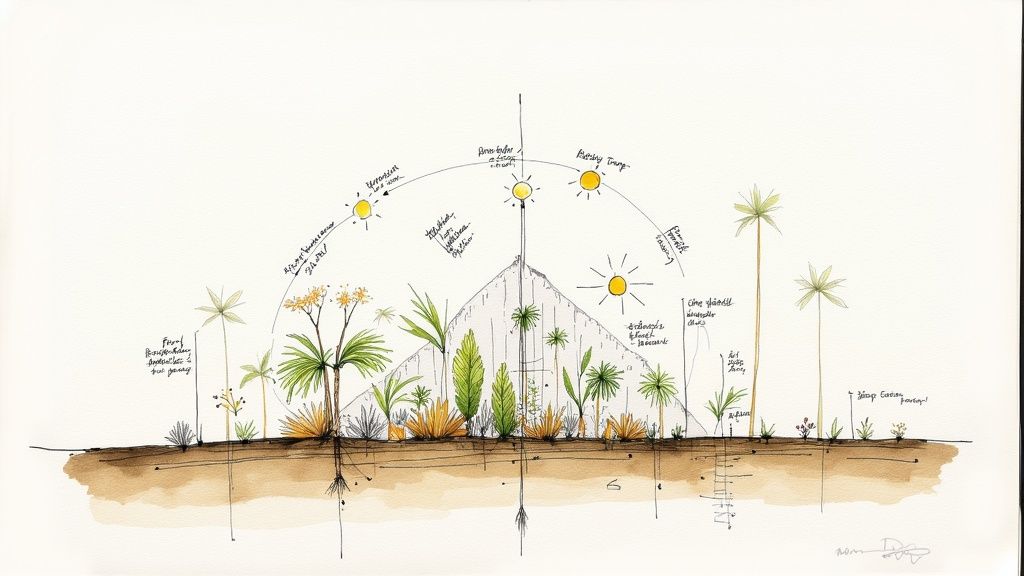
Giving your palm the best possible start is the single most important thing you can do for its future. A little effort upfront pays off massively down the track, setting your plant up with strong roots to thrive for years to come.
Think of it like building a house – it's all about the foundation. For a palm, that foundation is a combination of the right spot and well-prepped soil. Most palms absolutely hate having "wet feet," which is just a gardener's way of saying their roots can't stand sitting in soggy, waterlogged ground. This makes good drainage the number one priority.
Before you even think about digging, have a wander around your garden after a decent downpour. Steer clear of any spots where water pools or the ground stays boggy for ages. It's also wise to think about shelter from the worst of the wind, especially those salt-laced gales we get on the coast that can shred delicate fronds.
Getting the Planting Site Just Right
Once you’ve scouted the perfect location, it’s time to get your hands dirty. A classic mistake is just digging a hole the same size as the pot and plonking the palm in. That’s a recipe for restricted roots and a sad, struggling plant.
Instead, follow these simple steps for a much better result:
-
Dig a Big Hole: Your hole needs to be at least twice as wide and about one-and-a-half times as deep as the palm's container. This gives the roots plenty of loosened soil to spread out into.
-
Beef Up Your Soil: Take the soil you dug out and mix it with a generous amount of organic compost or a quality garden mix. This adds nutrients and, crucially, improves the soil structure for better drainage.
-
Check Your Depth: Pop the palm (still in its pot) into the hole to check the height. The top of its root ball should sit level with, or even slightly proud of, the surrounding ground. Planting too deep is a common killer.
Prepping the soil properly isn’t just a nice-to-do; it's a direct investment in your palm's future. Creating that rich, free-draining environment from day one is the surest way to get the vigorous root system needed to support a magnificent tree.
From Pot to Ground
Carefully slide the palm out of its container, trying not to disturb the root ball too much. If the roots are tightly coiled around the bottom (what we call 'root-bound'), gently tease the lower ones out to encourage them to explore their new home.
Position the palm in the middle of the hole. Backfill with your improved soil mix, tamping it down gently as you go to get rid of any big air pockets. Once it's full, build a small, raised ring of soil around the base of the trunk to create a little moat for watering.
The final step is to give your new palm a really good, deep soaking. This first water is vital – it settles the soil snugly around the roots and helps reduce any transplant shock.
If you're thinking of keeping your palms in containers, our guide on choosing large outdoor plant pots in NZ has some essential tips to set you up for success.
Mastering Year-Round Palm Care in New Zealand
Keeping your palms looking lush and vibrant isn't a one-off job; it's more like a year-round conversation with your plant. The great thing is, once they're settled in, most palms are surprisingly low-maintenance. It’s all about tuning into their seasonal needs to make sure they stay a stunning centrepiece in your garden.
Think of a newly planted palm like a thirsty toddler—it needs frequent, consistent drinks to get its roots established. For that first summer (December to February), get in the habit of checking the soil every few days. If the top 5-10 cm feels dry, give it a deep watering. An established palm, on the other hand, is far more self-sufficient and will only need a good soak during those long, dry spells.
Feeding for Lush Fronds
If you want that deep green, healthy growth, your palms will thank you for regular feeding during their growing season. Here in New Zealand, that’s from spring right through to late summer (September to March), when the plant is actively pushing out new fronds.
A slow-release palm fertiliser is your best mate for this. These are specially made with the right mix of nutrients, including those crucial trace elements like magnesium and manganese that palms really crave.
- When to Feed: Pop some fertiliser down in early spring as things start to warm up, and then again in mid-summer to keep that growth going strong.
- How to Apply: Always follow the directions on the packet. Just sprinkle the granules evenly around the base of the palm (avoiding the trunk) and water it in well.
Feeding isn’t just about making your palm bigger; it’s about making it tougher. A well-fed palm is much better prepared to handle the stress of a dry summer or a chilly winter, keeping its colour and vigour all year long.
Pruning and Tidying Up
One of the most common mistakes Kiwi gardeners make with palms is getting a bit too carried away with pruning. Palms aren’t like other trees. They actually draw nutrients back from dying fronds, so it’s best to leave them alone until they are completely brown and dry.
Once a frond is ready to come off, use a sharp saw or secateurs to cut it off cleanly. Get close to the trunk, but be careful not to damage the trunk itself. Whatever you do, don't be tempted to pull fronds off, as this can tear the trunk and open the door for disease. A quick tidy-up once or twice a year is usually all they need.
Decoding Nutrient Deficiencies
Sometimes, a palm will let you know it’s missing something through the colour of its fronds. Yellowing leaves can often be a sign of a nitrogen or magnesium deficiency. A good palm fertiliser will usually sort this out, but for a quick boost, a dose of Epsom salts (magnesium sulphate) dissolved in water can really help.
It’s interesting to see how the health of our garden palms connects to bigger agricultural markets. For instance, the palm kernels market in New Zealand, which affects local industries like animal feed, is influenced by global production and commodity trends.
By getting into these simple seasonal rhythms of watering, feeding, and tidying, you’ll give your palm the consistent care it needs to absolutely thrive in your garden.
Solving Common Palm Problems in Your Garden
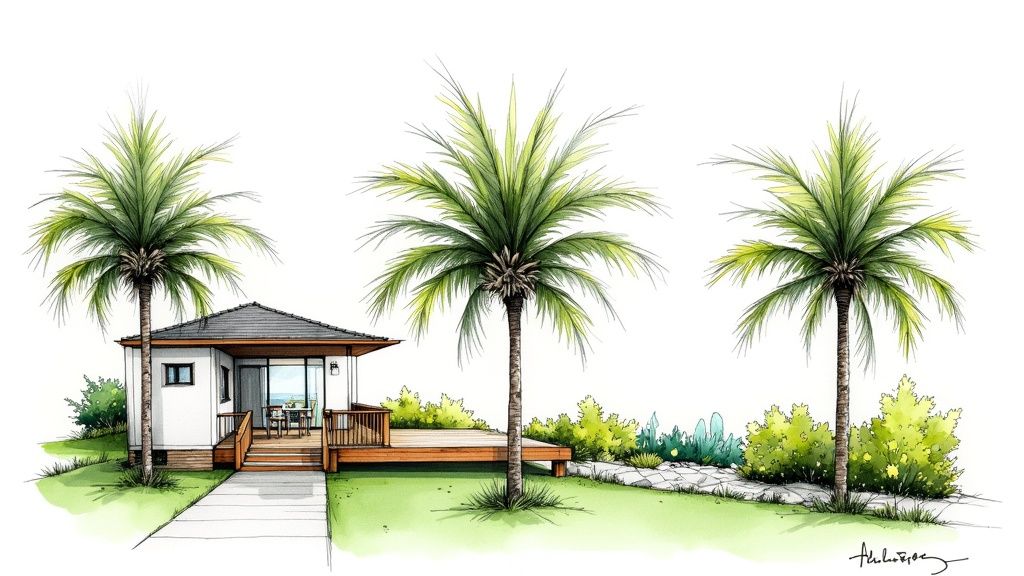
Even with the best intentions, every garden throws a curveball now and then, and palms are no different. Think of this as your go-to field guide for spotting and sorting out the most common troubles that palms NZ gardeners run into. Getting on top of these things early is the secret to keeping your slice of paradise looking its best.
Most palm problems boil down to two things: unwanted guests (pests) or unwelcome conditions (diseases). Learning to spot the subtle signs before they get a real foothold can make all the difference, turning a potential disaster into a minor hiccup you can easily sort.
Identifying and Managing Common Palm Pests
Many of the little critters that bother palms are tiny sap-suckers. Over time, they can really weaken the plant. They’re sneaky, often hiding on the undersides of fronds or deep within the crown, so getting into the habit of having a close look every so often is a great idea.
Your usual suspects will be:
- Scale Insects: These show up as small, hard or waxy bumps stuck to the fronds and stems. They might be brown, black, or white and are brilliant at camouflage, often just looking like part of the plant.
- Mealybugs: These pests look like fluffy, white, cotton-like blobs, usually huddled together in sheltered spots like the base of the fronds. A bad infestation can lead to yellowing leaves and slow, stunted growth.
For a small outbreak, a simple fix is usually the best. You can often just wipe them off with a cloth dipped in soapy water or spray them with horticultural oil. These oils are great because they work by smothering the pests, making them a much friendlier choice for your garden than harsh chemical pesticides.
Tackling Fungal Issues and Diseases
Here in New Zealand, especially in the more humid parts of the country, fungal diseases can pop up during wet or mild weather. These issues are almost always tied to poor air circulation and overly damp conditions—the perfect breeding ground for fungal spores.
Prevention is your best weapon against fungal disease. Simply making sure your palm has good airflow and that you're not overwatering are the two most powerful things you can do. A healthy, happy palm is naturally much better at fighting off problems.
Keep an eye out for signs like dark spots on the fronds (leaf spot) or any rot appearing at the base of the trunk or in the crown. If you do spot something, your first move should be to improve the conditions. Prune away any nearby plants that are crowding your palm to get more air moving around it.
When you water, always aim for the soil at the base and try to keep the foliage dry, especially later in the day when the leaves won’t have time to dry out before nightfall. For a fungal problem that’s already taken hold, a copper-based fungicide can work, but always try changing the conditions first. Often, a small tweak to your care routine is all it takes to solve the problem and keep your palms NZ garden looking spectacular.
Your Questions About Growing Palms in NZ Answered
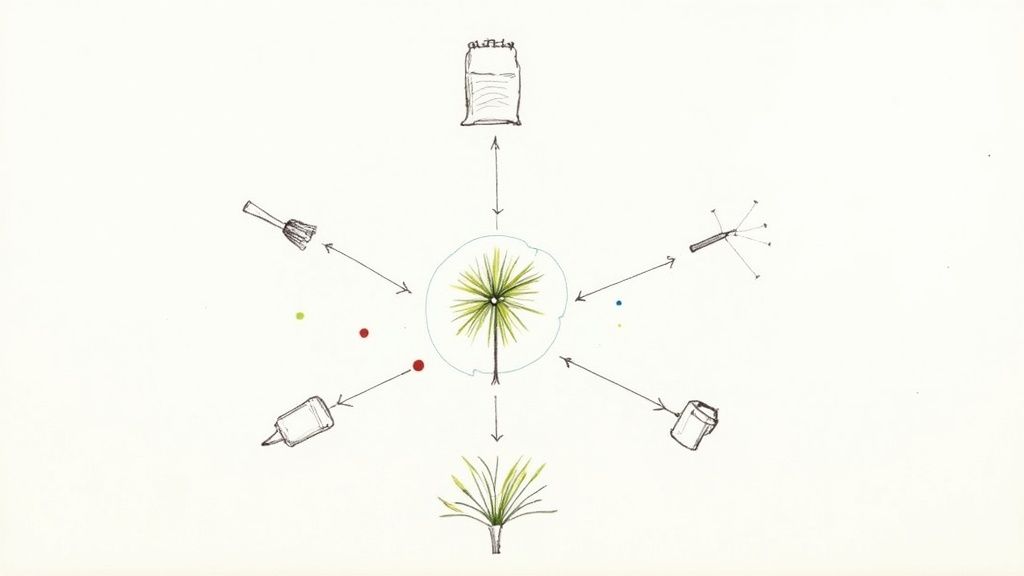
Even with the best guides, there are always those specific questions that pop up right when you're about to dive in and get your hands dirty. We get it. To help clear things up, we’ve put together some of the most common queries we hear from fellow Kiwi gardeners.
Think of this as your quick-fire round to build confidence and tackle any little uncertainties your garden might throw at you.
What Is the Fastest-Growing Palm for an Auckland Garden?
If you're in Auckland and want a tropical canopy fast, the Bangalow Palm (Archontophoenix cunninghamiana) is a brilliant choice. It absolutely loves the warm, humid climate and can really take off, giving you that lush look in just a few years.
The elegant Kentia Palm (Howea forsteriana) is another great option that puts on growth quite quickly up north. For both, the secret is well-drained soil and keeping the water up to them, especially while they're getting established.
Can I Grow a Palm in a Pot on a Windy Wellington Balcony?
You absolutely can! The trick is to pick the right palm for the job. For a blustery Wellington balcony, you’ll want something compact and sturdy, like the Parlour Palm (Chamaedorea elegans) or the Dwarf Date Palm (Phoenix roebelenii). These guys stay at a manageable size and are quite happy living in containers.
To set them up for success, use a good, heavy pot that won’t tip over in a gust. Make sure it has excellent drainage and try to give it a bit of shelter from the absolute worst of the gales to keep the fronds from getting tattered.
How Do I Know When to Water My Palm During a Canterbury Summer?
Forget the calendar; let the soil be your guide. During a classic dry Canterbury summer, the best way to check is to stick your finger about 5-10 cm into the soil. If it feels dry at that depth, it’s time to give it a good drink.
With established palms, a deep, thorough soaking once a week is far better than little and often. It encourages the roots to grow down deep in search of moisture, which in turn makes the plant much more resilient when the next dry spell hits.
New Zealand's native Nikau Palm (Rhopalostylis sapida) has a reputation for being slow and sensitive to transplanting, which is partly deserved. They strongly dislike root disturbance.
The key to getting a Nikau established is to start with a healthy, container-grown specimen from a good nursery. Plant it out in a sheltered, semi-shady spot with rich, moist soil. Once it finds its feet, it’s an incredibly tough and rewarding tree, but patience is a virtue—it grows at its own majestic, relaxed pace.
Will Any Palms Produce Edible Fruit in New Zealand?
While it’s a lovely thought, growing palms like dates or coconuts to the point of fruiting is incredibly difficult in our climate and not really feasible for the home gardener. Some, like the Jelly Palm (Butia capitata), might produce small, fibrous fruits in the warmest parts of the country, but it’s more of a curiosity than a reliable crop.
Here in NZ, we grow palms for their incredible ornamental beauty and the atmosphere they create. On a global scale, of course, the palm industry is huge. It’s interesting to note that in 2025, wholesale palm oil prices in New Zealand are forecast to sit somewhere between US$4.28 and US$9.87 per kilogram, a figure shaped by import costs and international demand. If you're curious, you can read more about the factors influencing palm oil prices.
Ready to find the perfect palm for your garden? Explore the incredible selection from New Zealand's best growers at Jungle Story. We make it easy to buy beautiful, healthy palms online and have them delivered right to your door. Visit us today at https://junglestory.co.nz to start creating your own tropical oasis.